Pilates Studio Aesthetic at Home: 8 Design Moves That Make Your Space Look Like the Class
The pilates studio aesthetic has become one of Pinterest’s most-saved wellness interiors for a reason. Warm wood tones, cork floors, soft natural light, and carefully edited spaces feel calm, elevated, and expensive without trying.
The good news? You don’t need a $5,000 reformer or a commercial studio budget to recreate the look.
The pilates studio aesthetic is a calm, minimalist workout space built around natural materials, soft light, neutral colors, and carefully edited equipment. It feels more like a wellness retreat than a home gym.
I trained in interior design at FIDM in Los Angeles, where color, aesthetics, and space planning were core parts of the curriculum. The same design principles studios use can transform a small corner of your home.
Here are 8 design moves that instantly make a home pilates space look more like the class.
1. Pick a Saturation Lane, Then Build the Whole Palette Inside It
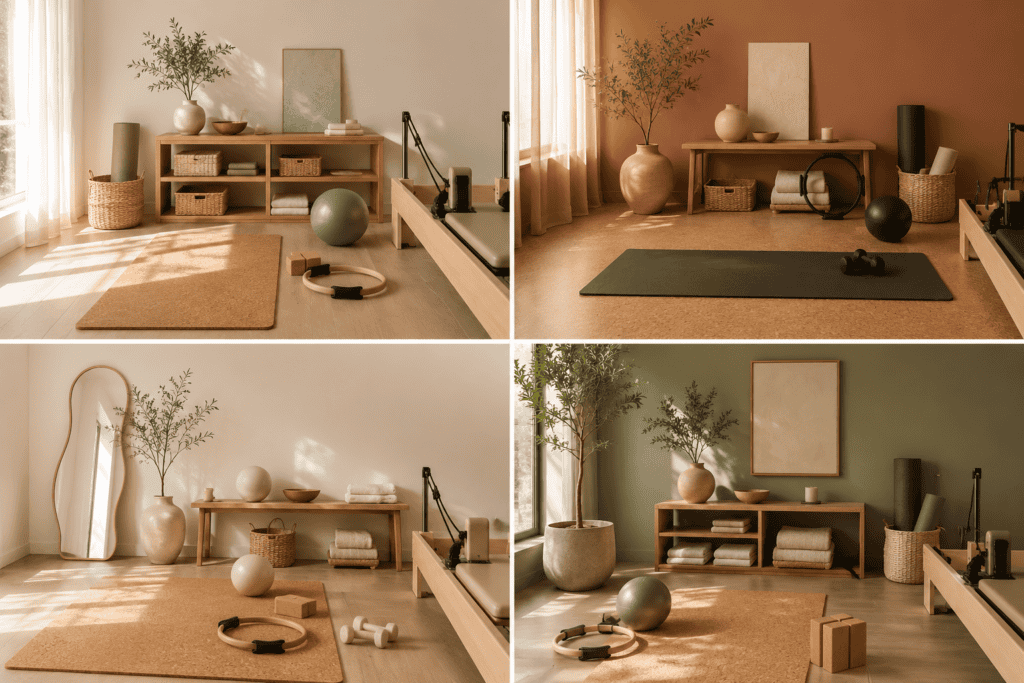
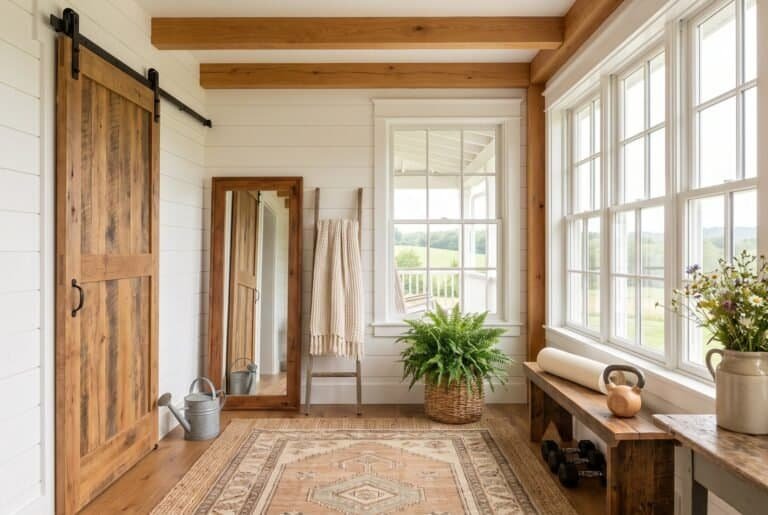
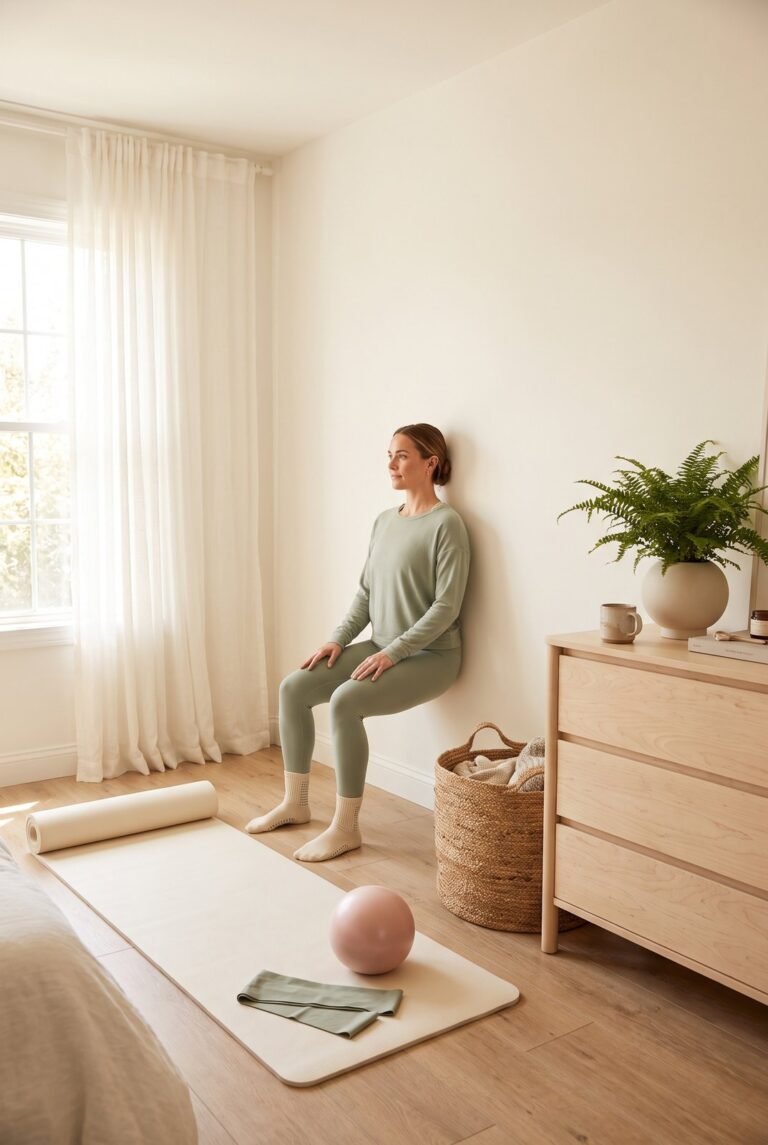
The studio aesthetic is light to mid-saturation across every surface. Cream walls, cork floors, beechwood equipment, soft sage or terracotta accents, linen everything. Nothing pure white. Nothing pure black. Nothing in primary colors.
The principle is match saturation, not color. A studio palette can hold cream, sage, terracotta, oak, and a soft black, as long as every piece sits at roughly the same depth.
Best move: pick three colors that share saturation, then buy everything within them. Cream plus sage plus oak. Terracotta plus cream plus soft black. Linen plus cork plus warm white.
Pro Tip: If a piece looks “off” in the room and you cannot say why, hold a paint chip of your floor up next to it and squint. If one is darker or lighter than the rest at squint distance, the saturation is off, not the color.
2. Replace One Piece of Plastic with Cork or Beechwood
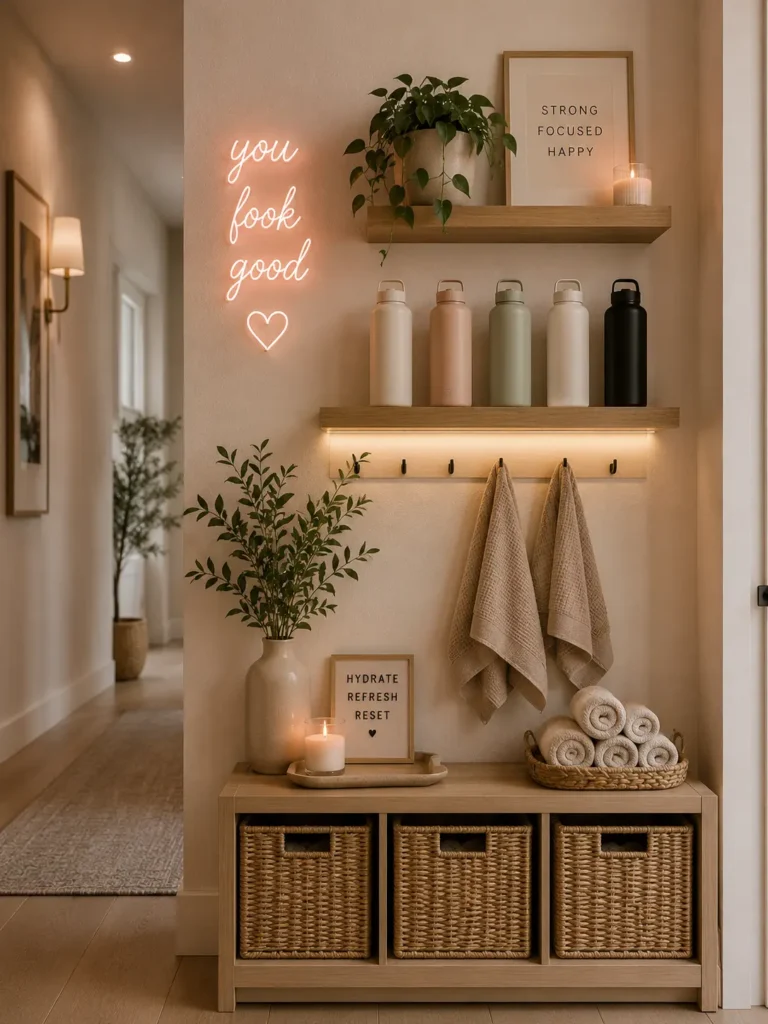
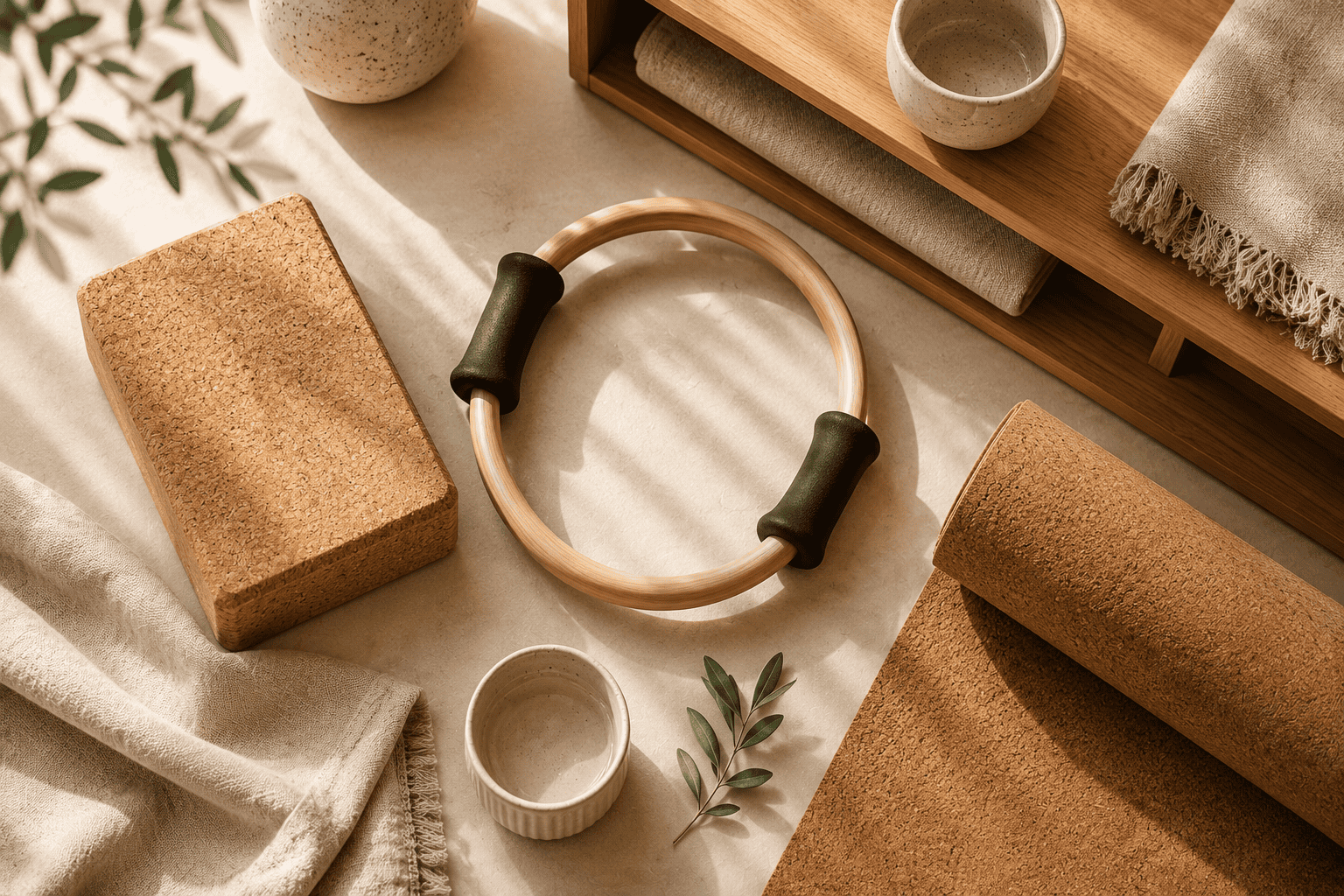
Studios use cork, oak, and beechwood for almost every prop because the materials read as expensive and they age well. The same swap at home is the fastest visual upgrade you can make.
The starter list: – Swap a PVC mat for a cork mat – Swap plastic blocks for cork or oak blocks – Swap synthetic resistance band handles for wood-handled bands – Swap a plastic foam roller for a wood-grain or cork-finish one – Swap a plastic pilates ball for a beechwood ring (a magic circle)
You do not need to replace everything at once. One swap a month. The room shifts faster than you would expect.
Pro Tip: Cork is the toxin-free upgrade as well as the aesthetic one. If you are going to swap anyway, pick the natural-material option. The floor and the props are what your skin actually touches.
3. Use Diffused Natural Light Wherever Possible
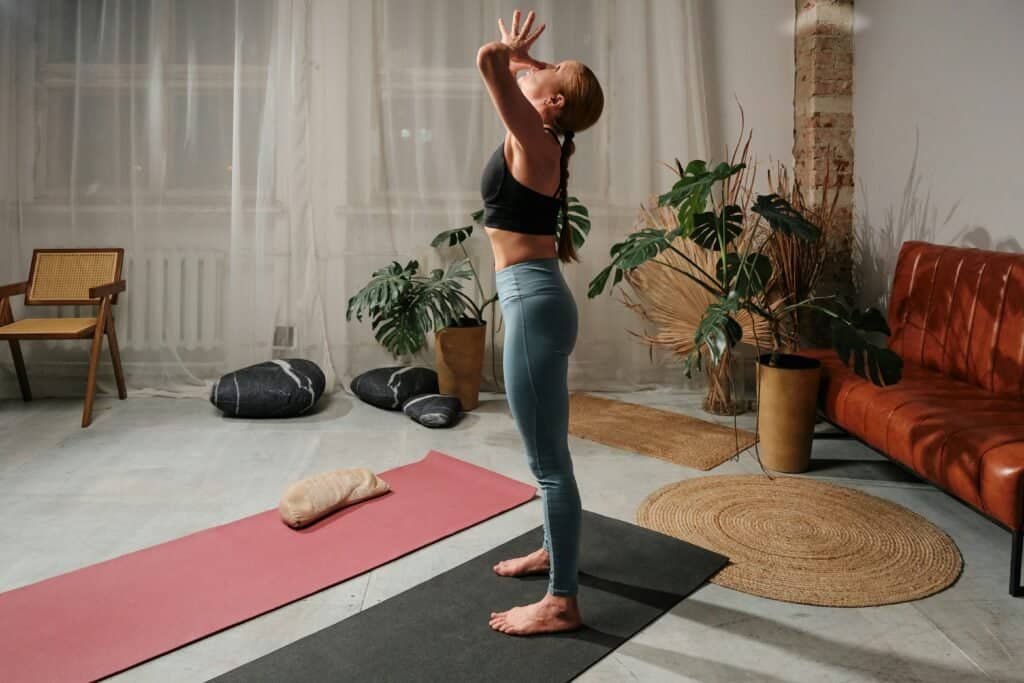
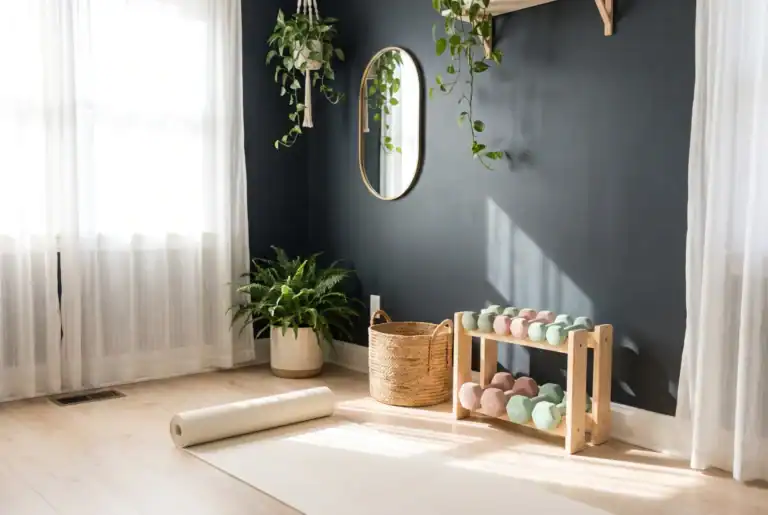
Studios position windows behind the mirror or beside the equipment because soft directional light flatters the room and the bodies in it. At home, the move is the same: get the natural light in, then soften it.
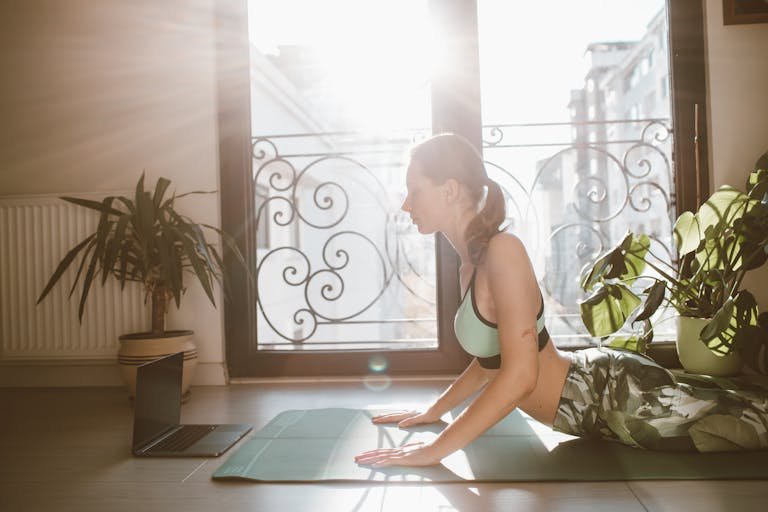
Sheer linen or cotton curtains diffuse direct sun and give the room the milky studio glow. Bamboo or woven shades add texture and warmth. Skip anything heavy or vinyl, which kills the light entirely.
If the only window in your space is small or unfortunately placed, lean a tall mirror across from it. Mirrors double natural light and make the window feel bigger.
For more on layering room light, see home gym lighting ideas.
Pro Tip: North-facing windows give the softest, most even light. East-facing for morning. South for all-day brightness. Match your workout time to the window you actually have.
4. Do You Need a Pilates Reformer for the Pilates Studio Aesthetic?
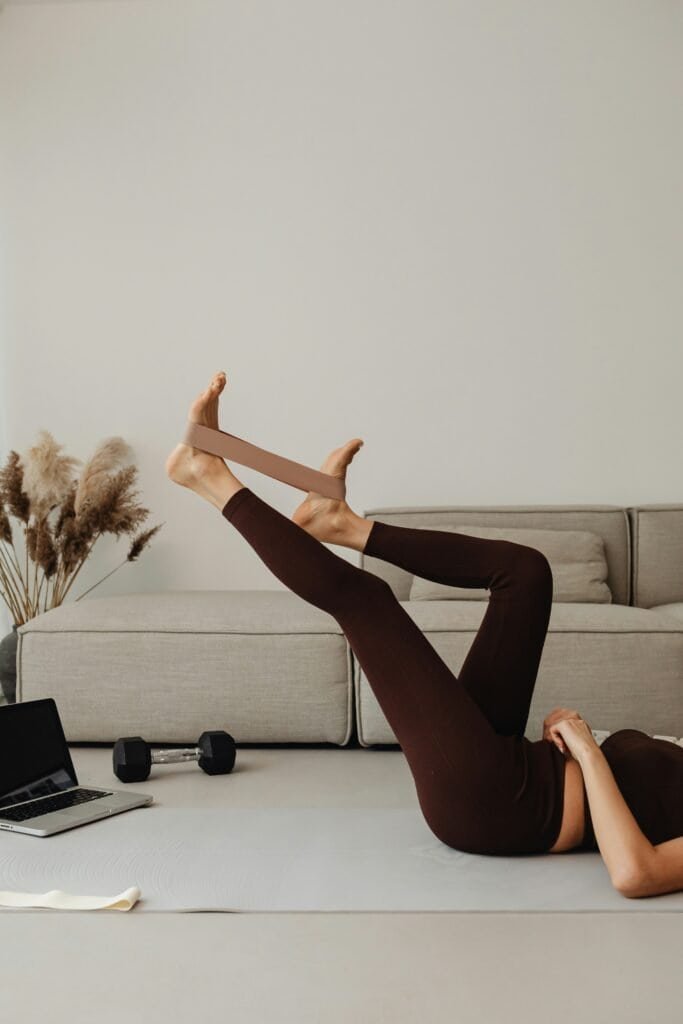
No, the pilates studio aesthetic doesn’t require a reformer. Studios that people pin most often are split roughly half mat-only spaces, half reformer rooms. What matters is the styling, not the equipment.
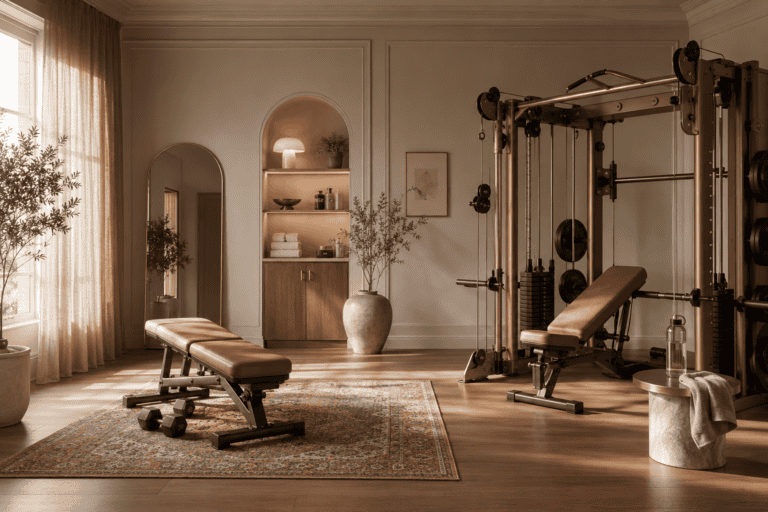
If a reformer fits your space and budget, beechwood-toned reformers (like the Balanced Body Allegro or Studio Reformer) read as the most studio-like at home. Black-frame reformers can work in modern or moody spaces but break the warm-naturals look.
If you skip the reformer, lean into the mat-pilates look fully: a cork mat, beechwood blocks and ring, light hand weights in a soft tone, a small pilates ball. For more on reformer alternatives at home, see pilates reformer alternatives that fit at home.
Pro Tip: A folded linen blanket draped over a small wood bench or stool reads as studio styling, even with no actual studio equipment in the frame.
5. Add One Ceramic Plant Pot With a Real Plant in It
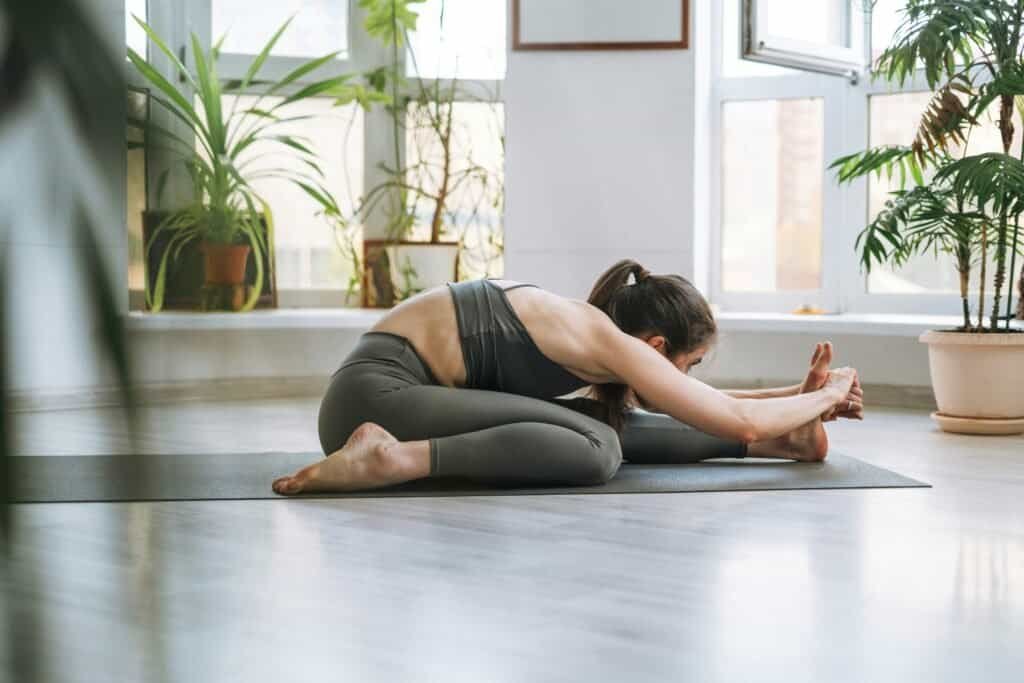
Studios do not put fake plants on the floor. They put one or two real plants in unglazed ceramic, terracotta, or stoneware pots, in soft natural tones. The pot matters more than the plant.
Forgiving plants for low-light pilates corners: snake plant, ZZ plant, pothos, rubber plant. All four tolerate dust, irregular watering, and the humidity shifts of an active space.
Place the plant where it catches whatever natural light you have. Backlit leaves read as alive. Plants in pure shadow read as forgotten.
Pro Tip: One plant in a beautiful pot beats three plants in plastic nursery containers every time. Spend on the pot.
6. Hide the Tech, Soften the Sound
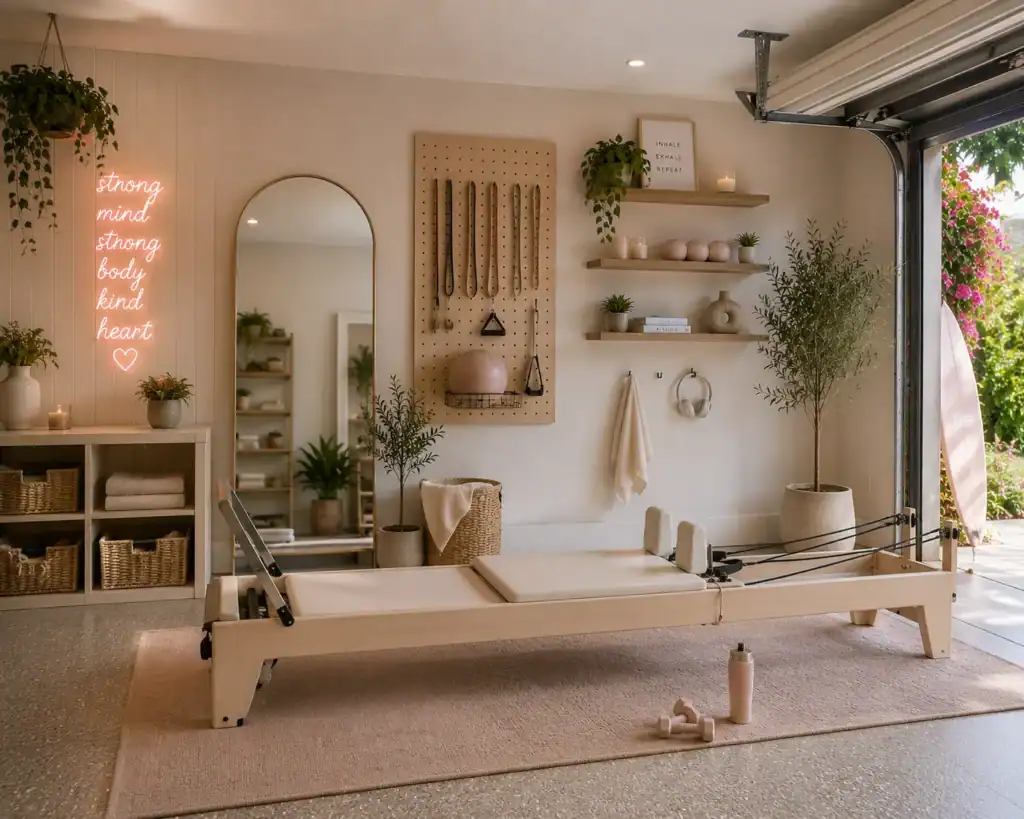
Studios feel calm partly because nothing in them looks like technology. No visible screen, no exposed speaker, no charging cables, no router lights blinking from the corner.
At home, the move is the same. Run cords behind shelves or along baseboards. Tuck a small Bluetooth speaker into a basket or behind a plant. If you use a screen for a class, mount it on the wall or roll it in only for the workout, then roll it out.
Music low enough to feel rather than hear. Soft instrumental, ambient, low piano, or anything in the studio-class genre. Skip anything with vocals during practice if you want the studio mood.
Pro Tip: A warm linen-cone Bluetooth speaker reads as a design object. A black plastic Bluetooth speaker reads as a piece of equipment. Both play the same music.
7. Style the Room Like Furniture, Not Equipment
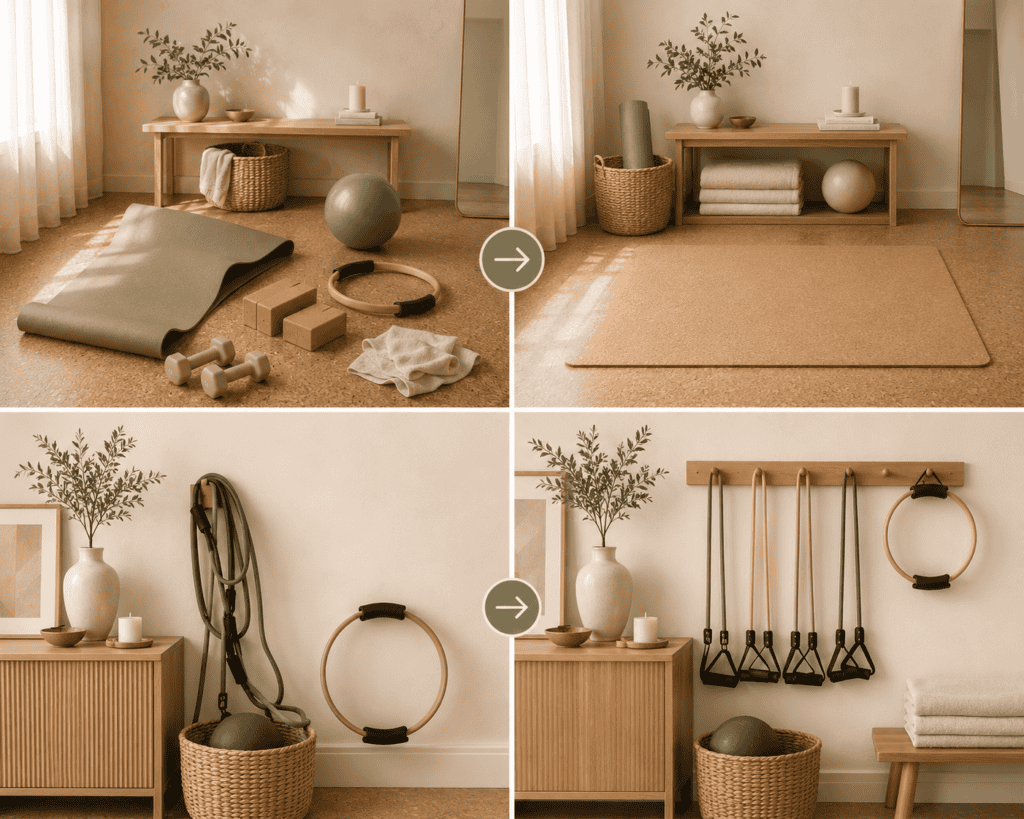
The single biggest tell of an amateur pilates corner is that the equipment is staged for use, not for looks. Mat unrolled on the floor. Blocks stacked in a pile. Resistance bands draped over the doorknob.
The studio move is to treat the props like furniture when they are not in use. Roll the mat and stand it in a basket or against the wall. Stack the blocks symmetrically on a low shelf. Hang the bands on a wall-mounted hook in a row, like clothing on a peg rack.
When the corner is unused, it should still read as designed.
Pro Tip: Three of something reads better than two or four. A row of three matched cork blocks on a shelf reads as styling. Two reads as half-finished, four reads as cluttered.
8. End the Room With One Soft Texture
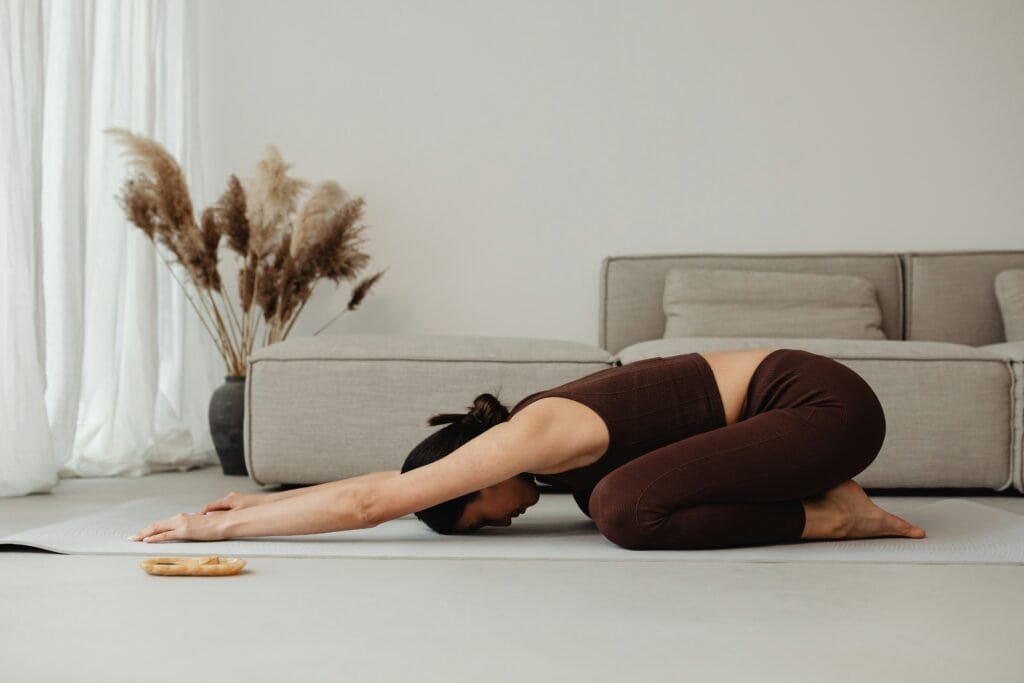
Hard surfaces only (cork floor, oak shelf, ceramic pot, mirror) read as clean but slightly cold. Adding one soft texture is what tips the room from clean into curated.
A linen throw folded over the corner of a bench. A wool runner near the entry. A sheepskin draped on a stool. A soft cotton blanket folded inside a basket. The textile is not for use during practice, it is there because the eye reads softness as comfort.
For more on layering soft elements into a workout space, see 12 aesthetic home gym ideas you’ll actually want to copy.
Pro Tip: Linen and wool handle humidity better than cotton in a workout room. If you sweat on the mat, keep cotton out of arm’s reach.
The pilates studio aesthetic is mostly restraint. Pick a soft saturation, layer warm naturals, soften the light, hide the tech, style the props like furniture. The look is two or three deliberate choices and a lot of leaving things out.
What Most Home Pilates Corners Miss
The pilates studio aesthetic is not about how much equipment you have. It is about three things almost every home setup gets wrong:
Saturation matching across surfaces. Cork floor, beechwood prop, sage wall, linen curtain, all sitting at the same depth.
Diffused natural light. Sheers over the window, a mirror across from it, no overhead fluorescent.
Restraint in the corner itself. Three props styled like furniture, one real plant, no visible tech.
That is most of the work. The look is two or three deliberate choices and a lot of leaving things out. The reformer is optional. The studio aesthetic is not.
For more on building your home pilates space: – 8 Home Pilates Setup Ideas (No Studio Required) – How to Design a Home Yoga Room That Feels Like a Retreat – Everything You Need for Wall Pilates at Home
Download The 5-Minute Home Gym Setup Checklist and avoid the 7 design mistakes that make a workout space feel cluttered instead of calming.

Free 5-Minute Home Gym Setup Checklist
You don’t need a full home gym. You just need a corner.
No spam. Unsubscribe anytime.
Pick the saturation. Soften the light. Style the props. Skip the rest.