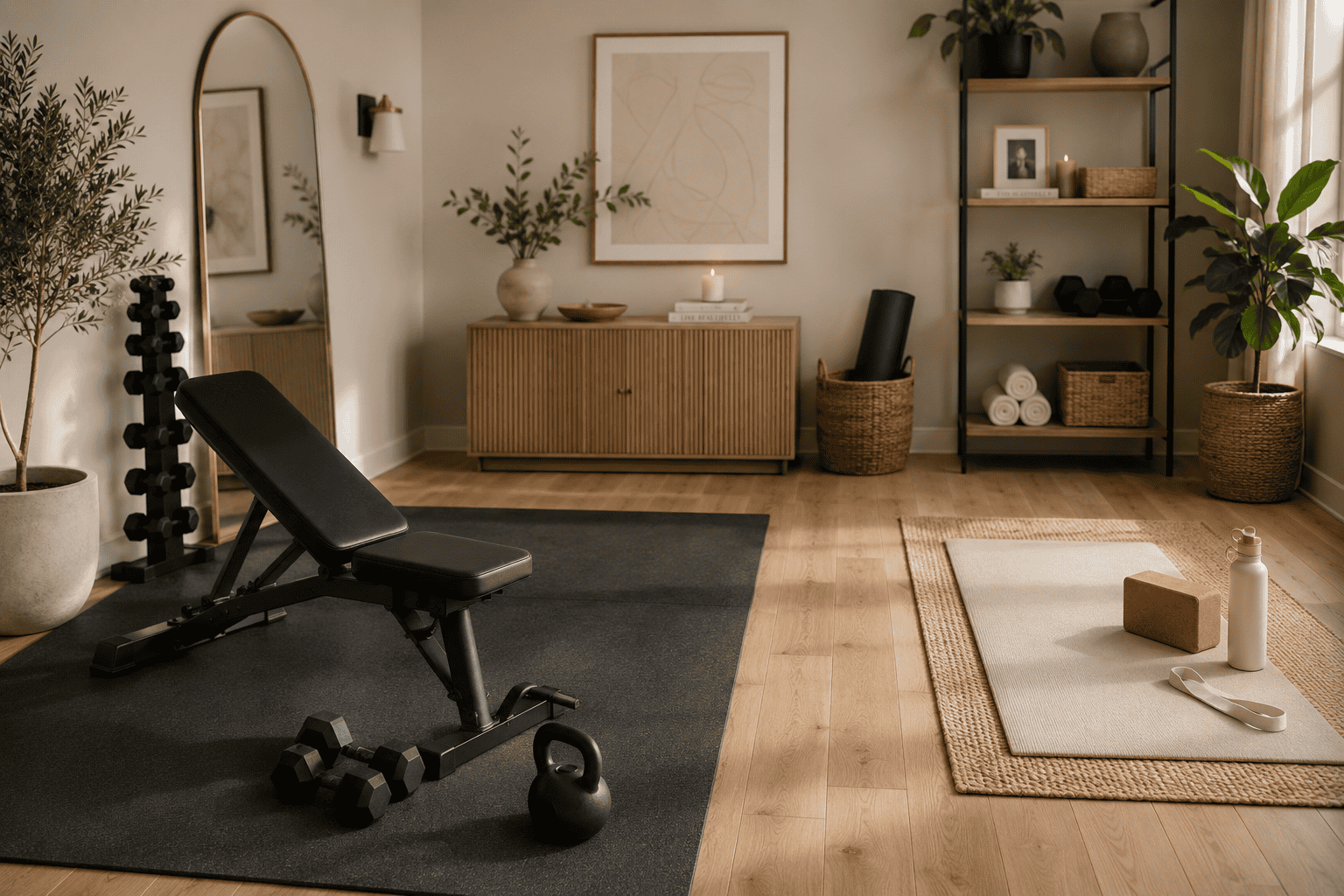
Home Gym Flooring Ideas: Cork, Rubber, Wood, and What Actually Holds Up
The flooring is the part of a home gym setup people skip the longest, and the part they regret first. A cheap interlocking foam square cracks in six months. A black rubber tile reads as commercial and never stops smelling new. A bare concrete floor wrecks your knees. A nice hardwood gets gouged by the first dropped dumbbell.
The right floor is the one that survives the workouts you actually do, fits the room you actually have, and looks like flooring instead of equipment. Most home gym blog content stops at “buy interlocking rubber.” The decision is more interesting than that, and the wrong floor will cap how much you enjoy the room without you ever putting a finger on why.
Home gym flooring is the protective surface (rubber, cork, vinyl plank, wood, foam, or carpet tile) that absorbs impact, protects the subfloor, and defines where the gym ends and the rest of the room begins. The right material depends on what kind of workouts you actually do, what is underneath the floor right now, and how the room reads when you are not using it.
Here are the home gym flooring ideas that actually hold up, organized by material, with the trade-offs spelled out.
1. Rubber Tiles — The Default for a Reason
Interlocking rubber tiles are the default home gym flooring because they handle almost everything: dropped weights, jumping, treadmill vibration, and floor work. They are also the thing that makes most home gyms look like commercial gyms.
If you go rubber, the upgrade is to skip the standard black-with-color-flecks tile and choose a dark charcoal or slate-toned version. Charcoal hides dust, scuffs, and dropped chalk better than pure black, and it photographs cleaner.
Best for: garage gyms, basement gyms, any space with heavy weights, plyometrics, or treadmill use. Skip if: the gym shares a room with the rest of your home (the smell and the look both fight other flooring).
Pro Tip: Higher-density rubber (called “high-density” or “commercial-grade”) off-gasses less and lasts longer. If you can smell the tiles strongly when they arrive, return them. The smell is the same VOCs you do not want sitting in a closed room.
2. Cork Tiles — The Underrated Pick
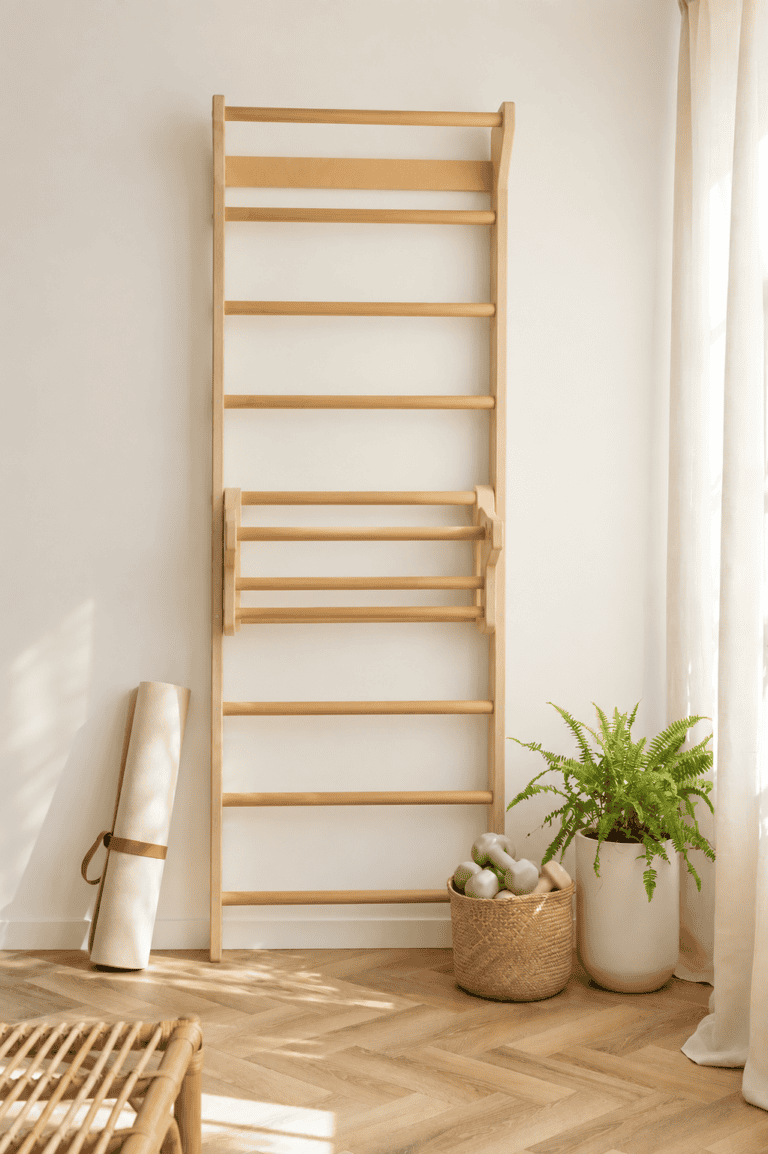
Cork is the natural-material upgrade most people do not know to consider. It absorbs impact, cushions joints, dampens sound, and looks like flooring instead of gym mat.
Cork is not load-bearing for very heavy dropped weights, so it is not the right pick if you are deadlifting and dropping a loaded barbell. For mat work, pilates, yoga, light dumbbells, kettlebell flows, bodyweight strength, and recovery, cork is the move.
Best for: yoga and pilates rooms, bedroom gym corners, apartment home gyms, multi-use rooms. Skip if: you drop heavy weights regularly.
Pro Tip: Cork is the toxin-free option as well as the aesthetic one. If you and your kids will be on the floor, cork over rubber when you can. Beechwood blocks and a cork floor read as a wellness studio, not a fitness center.
3. Vinyl Plank (LVP) — The Whole-Room Compromise
Vinyl plank flooring (luxury vinyl plank, LVP) is the option when the gym shares a room with the rest of your house. It looks like wood, costs less than wood, handles moisture better than wood, and survives cardio without complaint.
Add a yoga mat or two-by-three rubber mat under your dumbbells and bench, and the LVP handles the rest. The whole room reads as an office or guest room until the mat unrolls.
Best for: home office and gym combos, bedroom gym corners, apartment home gyms, multi-use rooms where the gym needs to disappear when you are not using it. Skip if: you drop heavy weights (LVP gouges).
Pro Tip: Pick LVP in a wood-grain finish that matches the rest of your home. A continuous floor across rooms makes the gym corner feel integrated rather than added-on. For more on multi-use setups, see 9 home office gym combo ideas for small spaces.
4. Real Hardwood — The Upgrade with Caveats
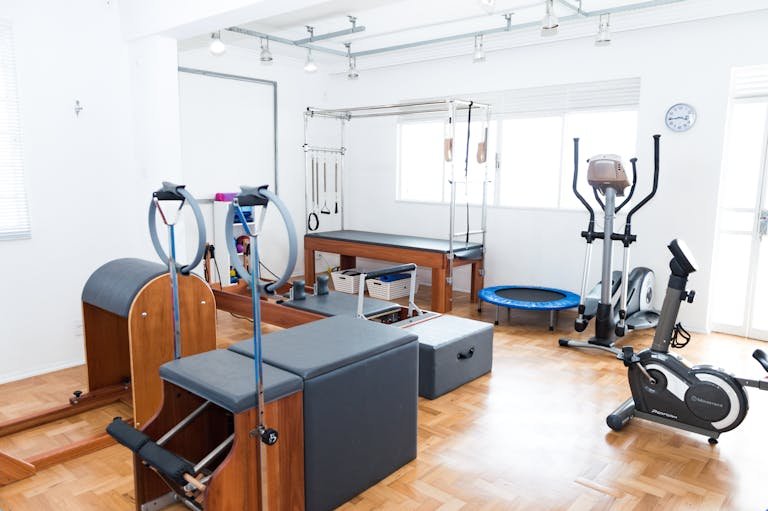
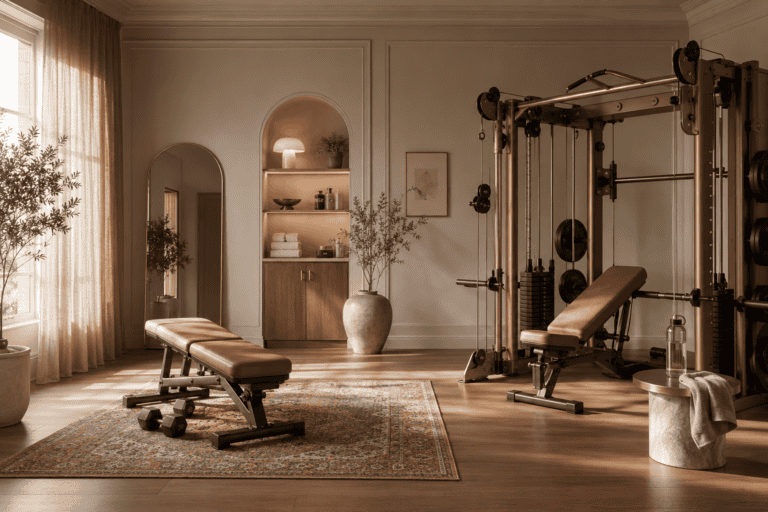
Real hardwood is the most beautiful floor you can put in a home gym, and it is also the easiest to damage. White oak and engineered hardwood handle pilates, yoga, mat work, and light dumbbells fine. They do not handle dropped weights, dragged equipment, or treadmills.
If you have hardwood already, do not rip it out. Layer over it where the workouts happen and leave the rest of the room as is.
Best for: yoga rooms, pilates corners, barre setups, gentle strength work. Skip if: you drop weights, drag equipment, or do high-impact cardio.
Pro Tip: Use felt furniture pads under any equipment that sits on hardwood. The pads also let you slide the bench out of the way without scratching when you want to clear floor space.
5. Foam Tiles — The Starter Floor (and the Limit)
Interlocking foam puzzle tiles are the cheapest entry into home gym flooring. They cushion floor work, they are easy to install, and they absorb sound a bit. They are also the floor most people regret within a year.
Foam compresses under heavy weights, dents under furniture, tears at the edges, and reads cheap fast. Foam is fine as a temporary or starter floor, especially in a low-budget setup. It is not the long-term answer.
Best for: beginner gym setups, kids’ play-and-workout combos, very low-budget starter rooms, temporary spaces. Skip if: you have a long-term setup or want the room to read as designed.
Pro Tip: If you are using foam temporarily, get the thickest version available (one inch is the standard upgrade). Half-inch foam dents almost immediately under any standing equipment.
6. Carpet Tiles — The Quiet Underdog
Carpet tiles are an underused option for upper-floor gyms in homes with downstairs neighbors or sleeping family members. They absorb impact and sound, they look residential, and they replace one square at a time when something stains.
The trade-off: they grab dust, hold sweat, and cannot handle dropped metal. They are a bodyweight, mat-work, light-dumbbell solution, not a strength-training one.
Best for: apartment home gyms, second-floor home gyms, bedrooms above sleeping kids. Skip if: you sweat heavily or drop weights.
Pro Tip: Pick low-pile commercial-grade carpet tiles, not residential. Commercial tiles handle washing, hide stains, and replace cleanly when one square fails.
7. Painted Concrete — The Garage and Basement Trick
If your gym is in a garage or basement with a concrete floor, the cheapest floor upgrade you can make is to clean and paint the concrete itself. Epoxy paint or concrete stain in a dark charcoal or warm brown reads as intentional flooring rather than unfinished slab.
Layer rubber mats only where you need impact protection (under the rack, the bench, the treadmill). Leave the painted concrete visible everywhere else. The room reads as designed instead of as a workshop.
For more on basement gym setups, see basement home gym ideas that feel like a real studio.
Best for: garage gyms, basement gyms, any space with existing concrete. Skip if: the concrete is cracked, uneven, or actively wet.
Pro Tip: Paint the concrete before you bring any equipment in. Painting around equipment is miserable and the result always looks patchy.
8. Layered Flooring — The Most Common Real Setup
Most actually-good home gyms use two or more floor materials, layered. The typical mature setup looks like:
- Painted concrete or LVP across the whole room
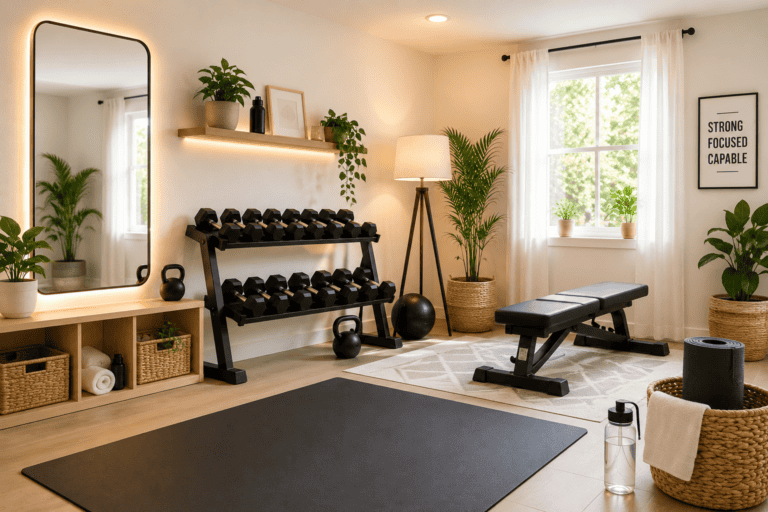
- A four-by-six or six-by-eight rubber mat under the rack, bench, or treadmill
- A cork or jute area rug defining the stretching and mat-work zone
- Felt pads under anything that needs to slide
Layering gives you impact protection where you need it, residential warmth where you do not, and visual interest the whole way through.
Best for: every multi-use home gym, garage conversions, basement gyms, multi-zone setups.
Pro Tip: Layer rugs around the workout zone, not under it. Mats need stable hard ground underneath. Rugs are framing, not foundation.
How to Pick the Right Home Gym Floor (in Order)
The decision tree, top to bottom:
- Will you drop heavy weights? If yes, the impact zone needs rubber or layered rubber over concrete. The rest of the room can be anything.
- Will the gym share a room with the rest of your house? If yes, prioritize residential-looking flooring (LVP, hardwood, cork, carpet tile) and layer rubber only under the equipment that needs it.
- What is underneath right now? If concrete, paint and layer. If hardwood, layer mats and skip rubber tiles. If carpet, install foam or rubber tiles directly over.
- What is your budget? Foam is cheapest, cork and rubber are mid, LVP is mid-to-high, real hardwood is highest.
The right floor is the one that survives your actual workouts and disappears into the room when you are not using it. Most home gyms over-floor (too much rubber, no warmth) or under-floor (foam puzzle tiles in the wrong place). The fix is layering.
The Quick Picker
- Heavy lifting in a garage or basement: rubber tiles or painted concrete with layered rubber under the rack
- Yoga or pilates corner: cork tiles
- Multi-use room with the gym hidden when not in use: LVP plus a small rubber mat
- Apartment gym above neighbors: carpet tile or thick cork
- Existing hardwood: layer mats, do not rip out
- Tiny budget: thick foam tiles, plan to upgrade in year two
For more on building your home gym from the floor up: – What You Actually Need for a Home Gym (and Nothing Else) – 10 Garage Gym Ideas for Women (From Messy to Magazine-Worthy) – Basement Home Gym Ideas That Feel Like a Real Studio
Download The 5-Minute Home Gym Setup Checklist — a quick-start guide to choosing your space, your equipment, and a setup that looks as good as it works.

Free 5-Minute Home Gym Setup Checklist
You don’t need a full home gym. You just need a corner.
No spam. Unsubscribe anytime.
Pick the floor that survives the workout. Layer the warmth back in.