5 Pilates Reformer Alternatives That Actually Fit at Home
The pilates reformer is a beautiful machine. It’s also seven feet long, weighs 100 pounds, and costs anywhere from $400 to $5,000 depending on the brand.
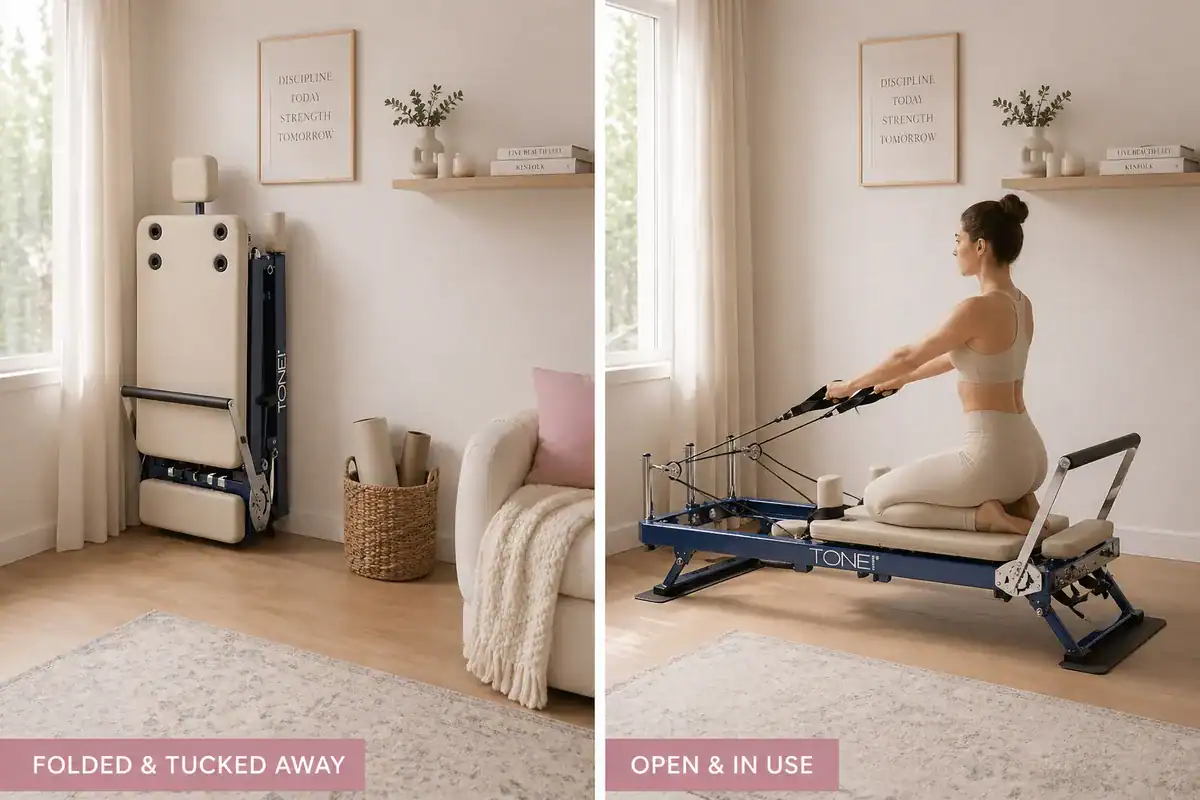
Unless you have a dedicated studio room in your house, a full-size reformer isn’t practical. It doesn’t fold down to nothing. It doesn’t slide under a bed. And it definitely doesn’t share space gracefully with your living room furniture.
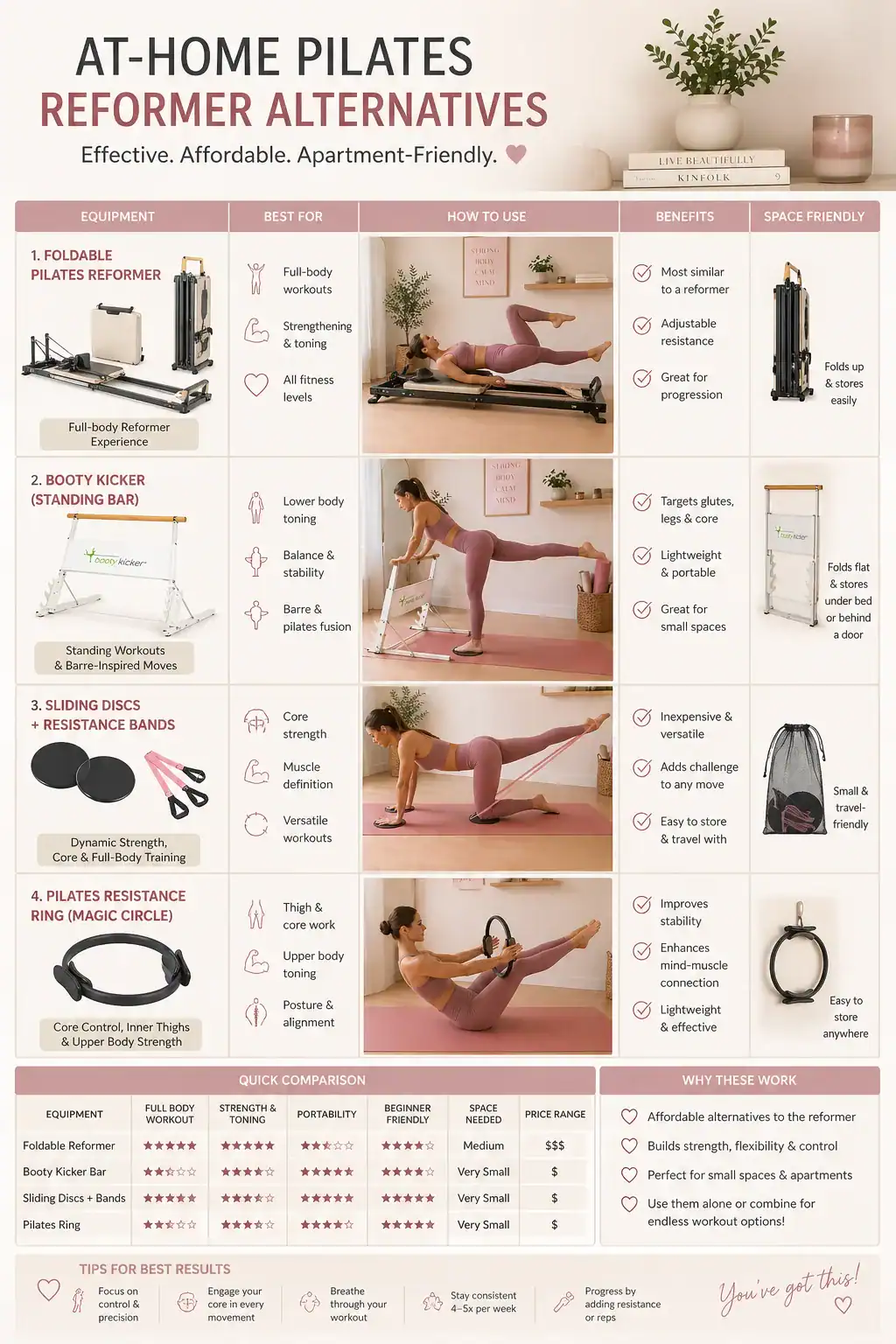
But here’s what most people don’t realize: a pilates reformer alternative can give you the same spring-loaded resistance, the same sliding carriage feeling, and the same exercises in a fraction of the space. Some of these options fold flat. Some hang on a door. Some fit in a gym bag.
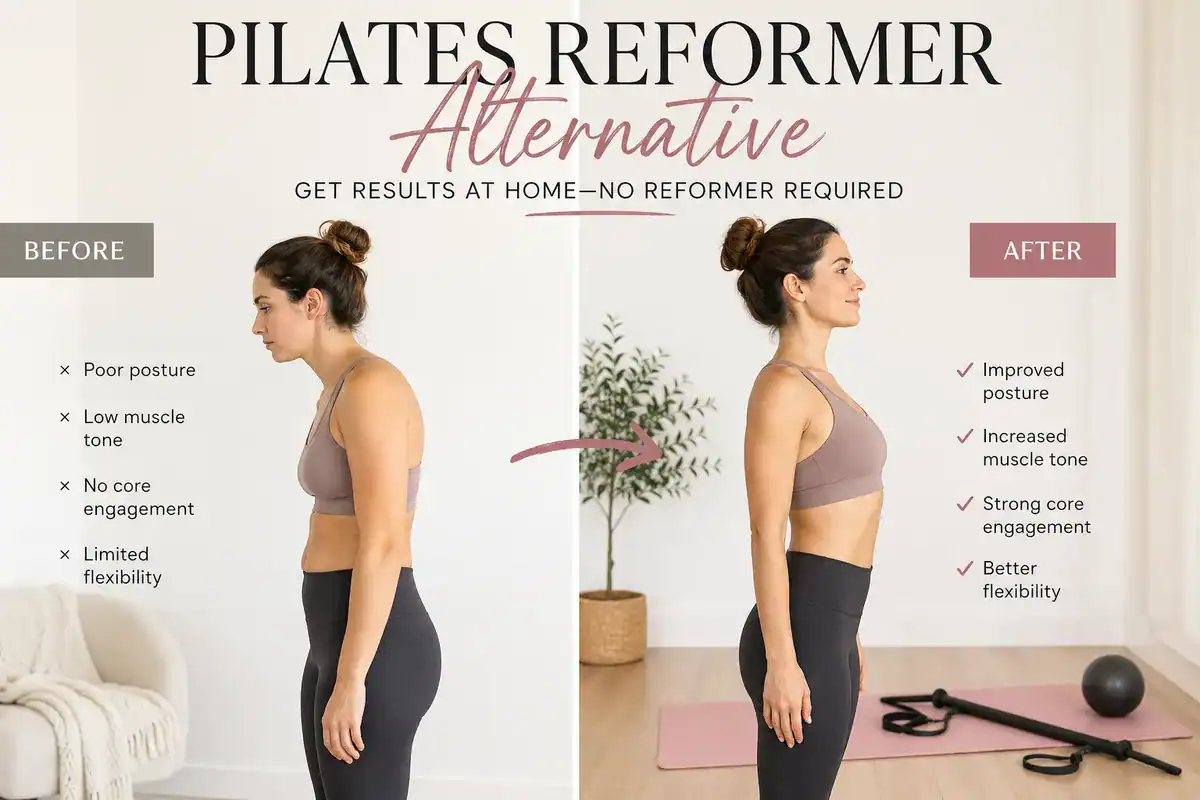
If you love reformer pilates but don’t have room (or budget) for the real thing, these five alternatives actually work.
1. AeroPilates Reformer (Foldable)
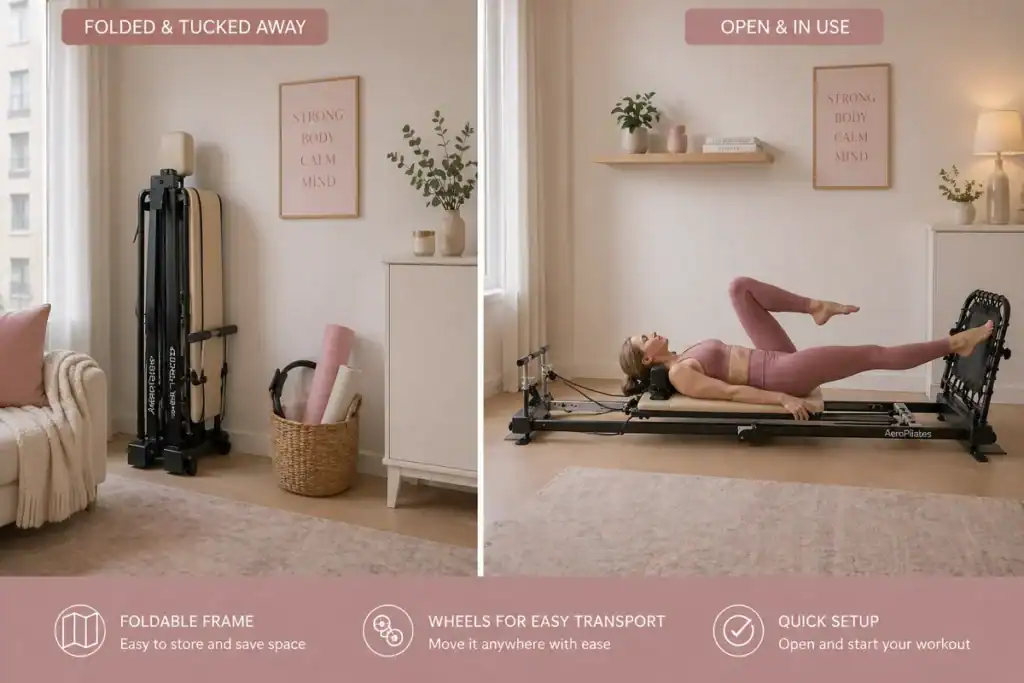
If you want the closest experience to a studio reformer at home, the AeroPilates line is the most popular option. The key difference from a studio machine: it folds vertically for storage.
The AeroPilates 700 and 5102 models both fold to about 10 inches wide and stand upright against a wall or in a closet. When unfolded, you get a full-length carriage with adjustable spring resistance, a foot bar, and ropes.
It’s still big when in use (about 7 feet long), so you need floor space to set it up. But the ability to fold and store it between sessions makes it livable in an apartment or shared space.
Footprint when stored: About 10″ x 20″ standing upright. Price: $300 to $600 depending on the model. Best for: Women who want the real reformer experience and have floor space to set it up (even temporarily).
2. Folding Pilates Barre (Freestanding)
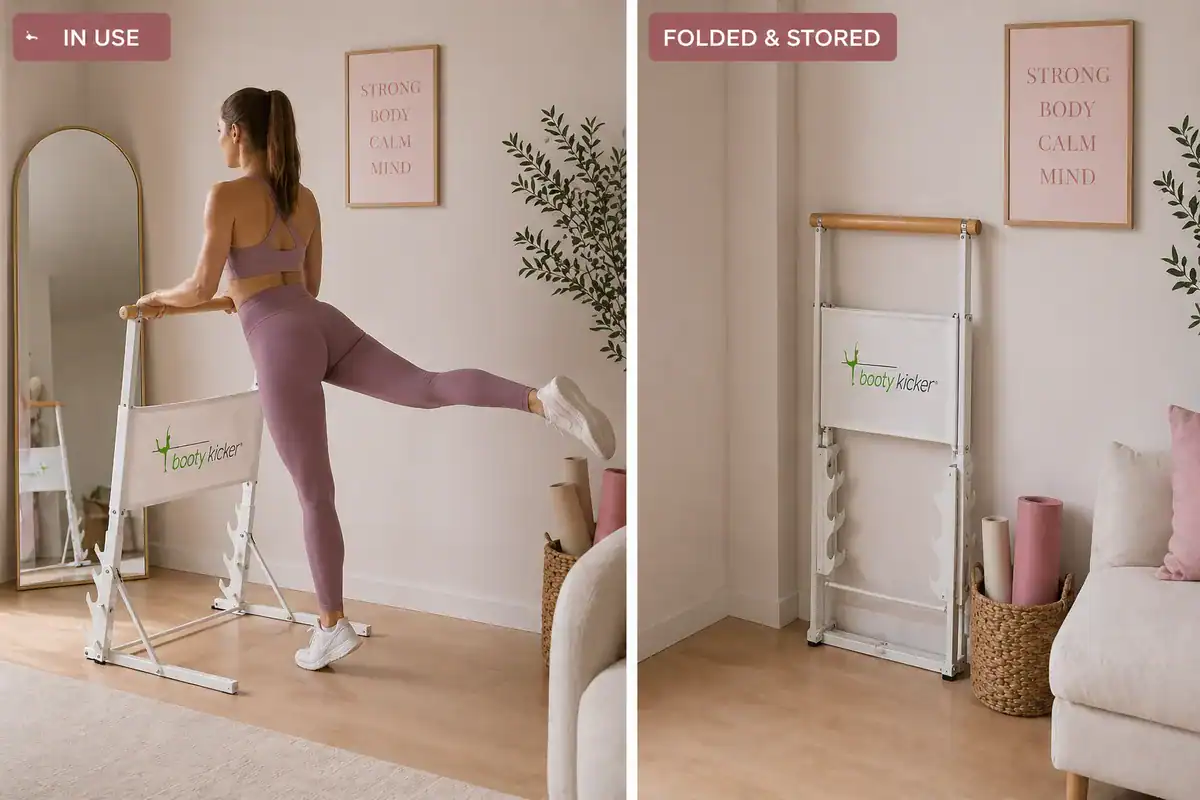
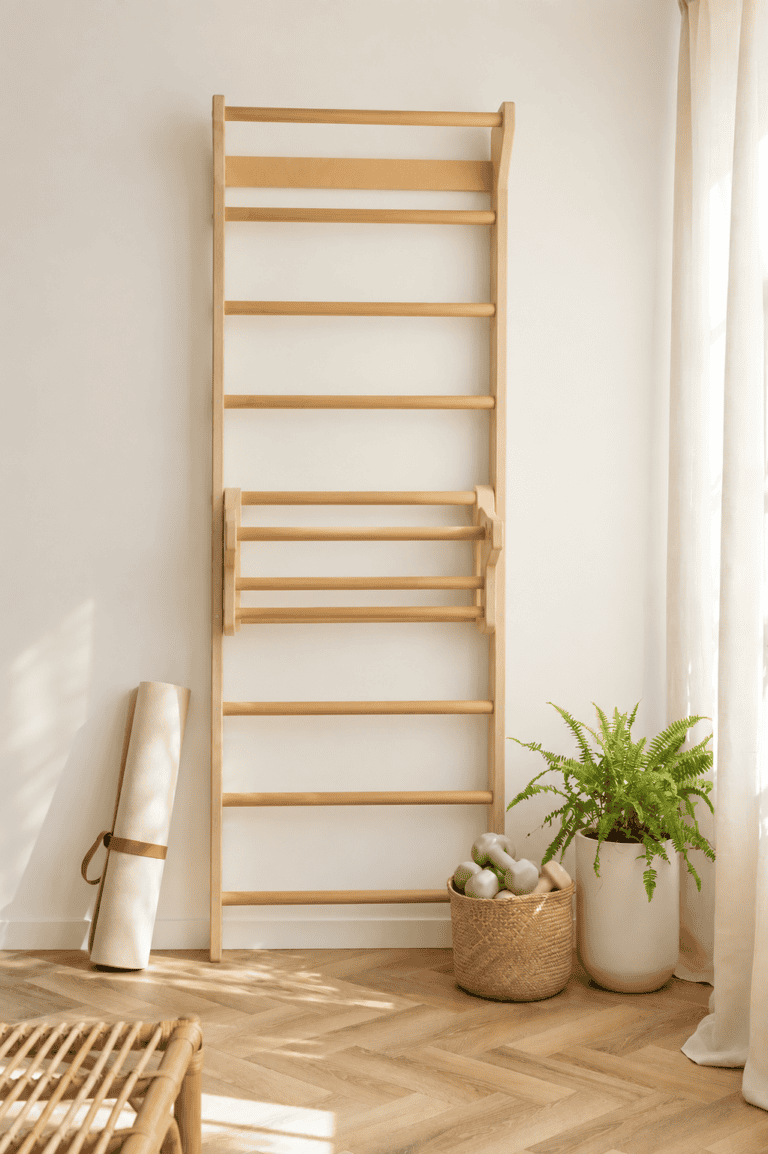
A freestanding folding barre is the closest thing to a wall-mounted studio barre without committing to drilling into anything. It stands on its own A-frame, holds your weight for standing pilates, balance work, and barre fusion, and folds flat to lean against a wall when you’re done.
Set it up next to a mirror, run through your standing leg series, and fold it back behind the couch in fifteen seconds. The whole thing tucks into about the same footprint as a folded ironing board.
It won’t replicate the resistance band work or floor pressing of a true pilates bar kit. What it does solve is the one piece that nothing else on this list covers: a stable handle for standing pilates, balance work, and barre-style hip series. If your reformer routine leans heavily on standing exercises, this is the missing piece.
Footprint when stored: Folds nearly flat (about 2 inches deep) and leans against a wall. Price: Around $180 to $220. Best for: Women who want studio-quality stability for standing pilates, barre, and balance work without permanently mounting anything to a wall.
3. Pilates Resistance Ring (Magic Circle)
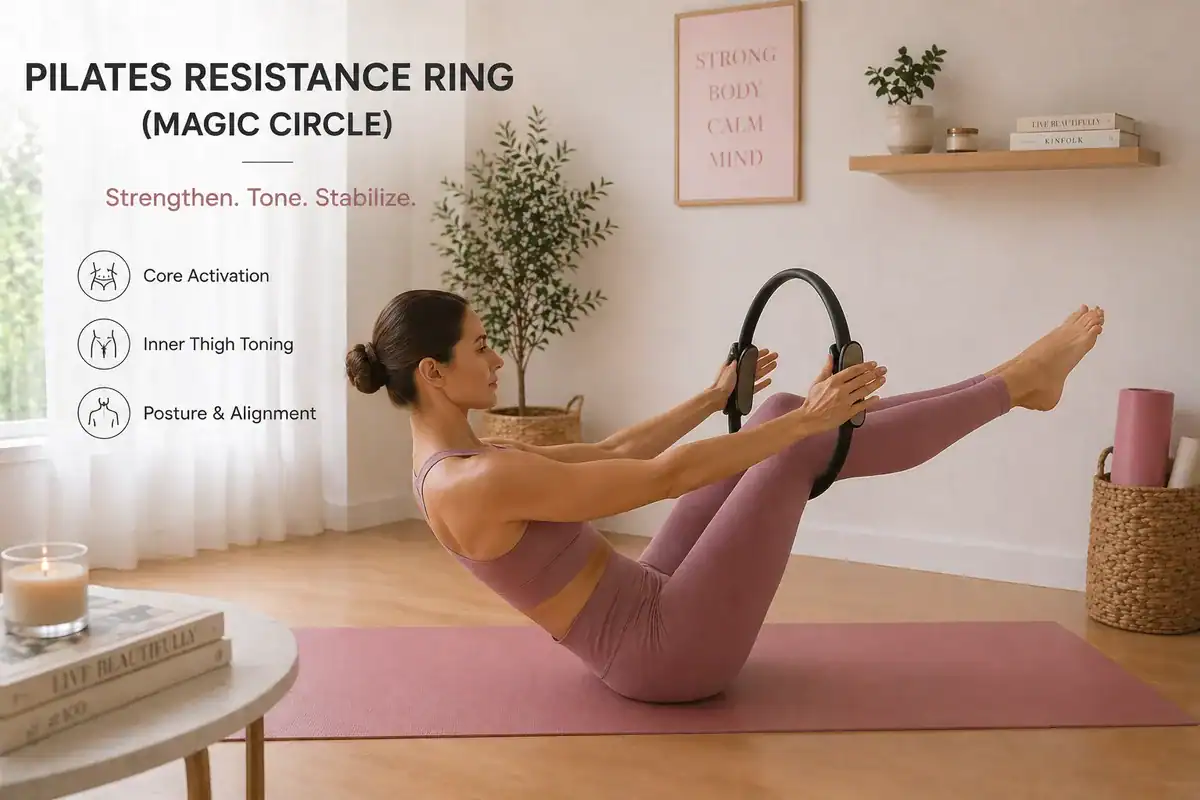
The magic circle won’t replicate a full reformer workout, but it covers one critical element: inner and outer thigh resistance that you’d normally get from the reformer’s leg springs.
Combined with mat exercises, the ring adds a layer of resistance to side-lying leg work, seated arm presses, and standing squeezes that bridges the gap between mat-only pilates and machine pilates.
It’s also under $20 and hangs on a hook.
Footprint when stored: Hangs flat on a wall hook. Price: $10 to $25. Best for: Women already doing mat pilates who want to add one targeted prop without buying a machine.
4. Pilates Chair (Wunda Chair)
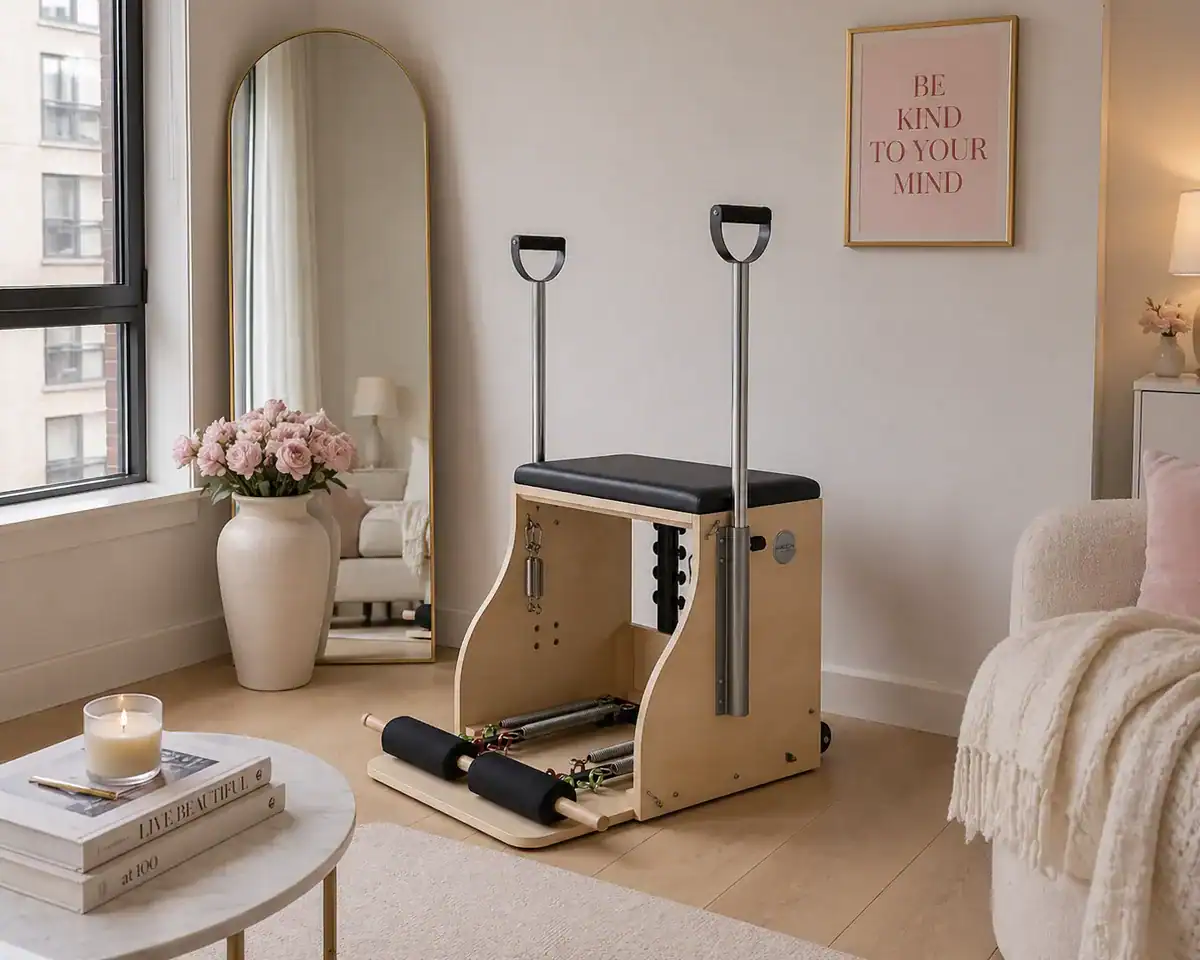
The pilates chair is the compact machine alternative that studios actually use when space is limited. It’s about 2×2 feet, has a spring-loaded pedal, and supports dozens of exercises including leg presses, push-ups, and seated arm work.
It takes up about the same floor space as an ottoman (and some models actually look like one when closed). The Balanced Body Wunda Chair and the Peak Pilates MVe Chair are both solid options.
The downside is price. A quality pilates chair costs $300 to $800. But if reformer pilates is your primary training style and you can’t fit a full reformer, the chair is the most studio-authentic alternative.
Footprint: About 24″ x 24″ x 20″. Price: $300 to $800. Best for: Serious pilates practitioners who want a real machine in a small footprint.
5. DIY Sliding Discs + Resistance Bands
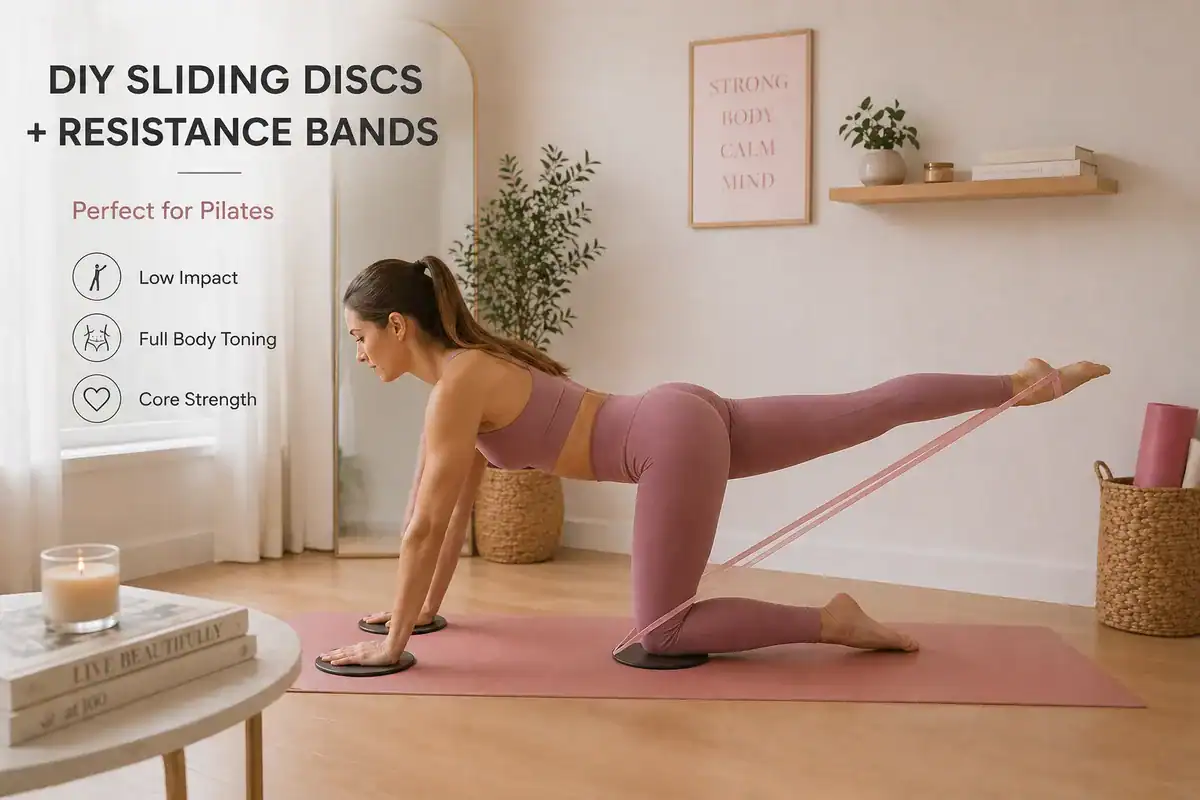
This isn’t a product recommendation. It’s a setup.
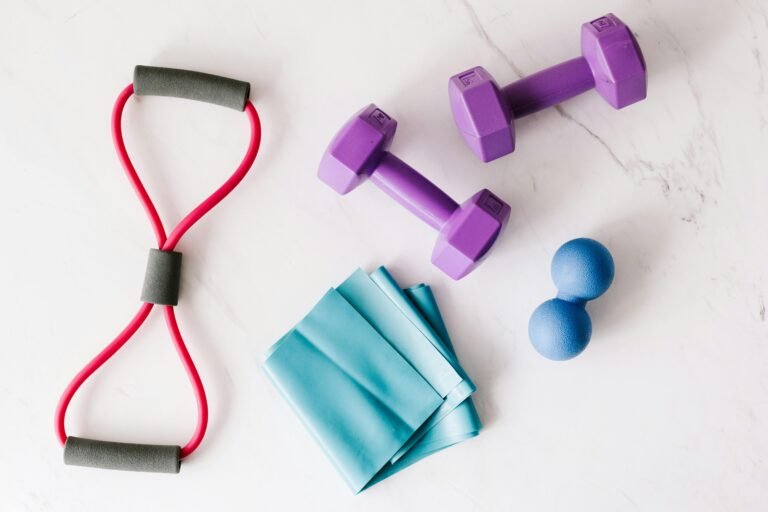
Two sliding discs (also called gliders) on a smooth floor replicate the sliding carriage feeling of a reformer during lunges, pikes, mountain climbers, and hamstring curls. Pair them with a resistance band set, and you can approximate most reformer exercises using just body weight and friction.
Sliding discs cost under $10. Resistance bands cost under $20. Combined with a thick pilates mat, you have a functional reformer-style setup for under $50 total.
Is it the same as a $3,000 Balanced Body reformer? No. Does it work your muscles in a similar way? Surprisingly, yes.
Footprint when stored: Discs fit in a drawer. Bands hang on a hook. Price: Under $30 for both. Best for: Budget-conscious beginners who want to try reformer-style movements before investing in equipment.
Which One Should You Choose?
If budget is the priority: Pilates bar kit ($25-$50). It covers the most exercises for the least money and stores anywhere.
If you want the real reformer feel: AeroPilates foldable reformer ($300-$600). Closest to a studio experience that you can fold and store.
If you’re a serious practitioner: Pilates chair ($300-$800). Studio-quality machine in an ottoman-sized footprint.
If you’re just getting started: Sliding discs + resistance bands (under $30). Test the movements first, invest later.
For more on building a home pilates space:
Download The 5-Minute Home Gym Setup Checklist — a one-page guide to choosing your equipment and setting up a space you’ll actually use.
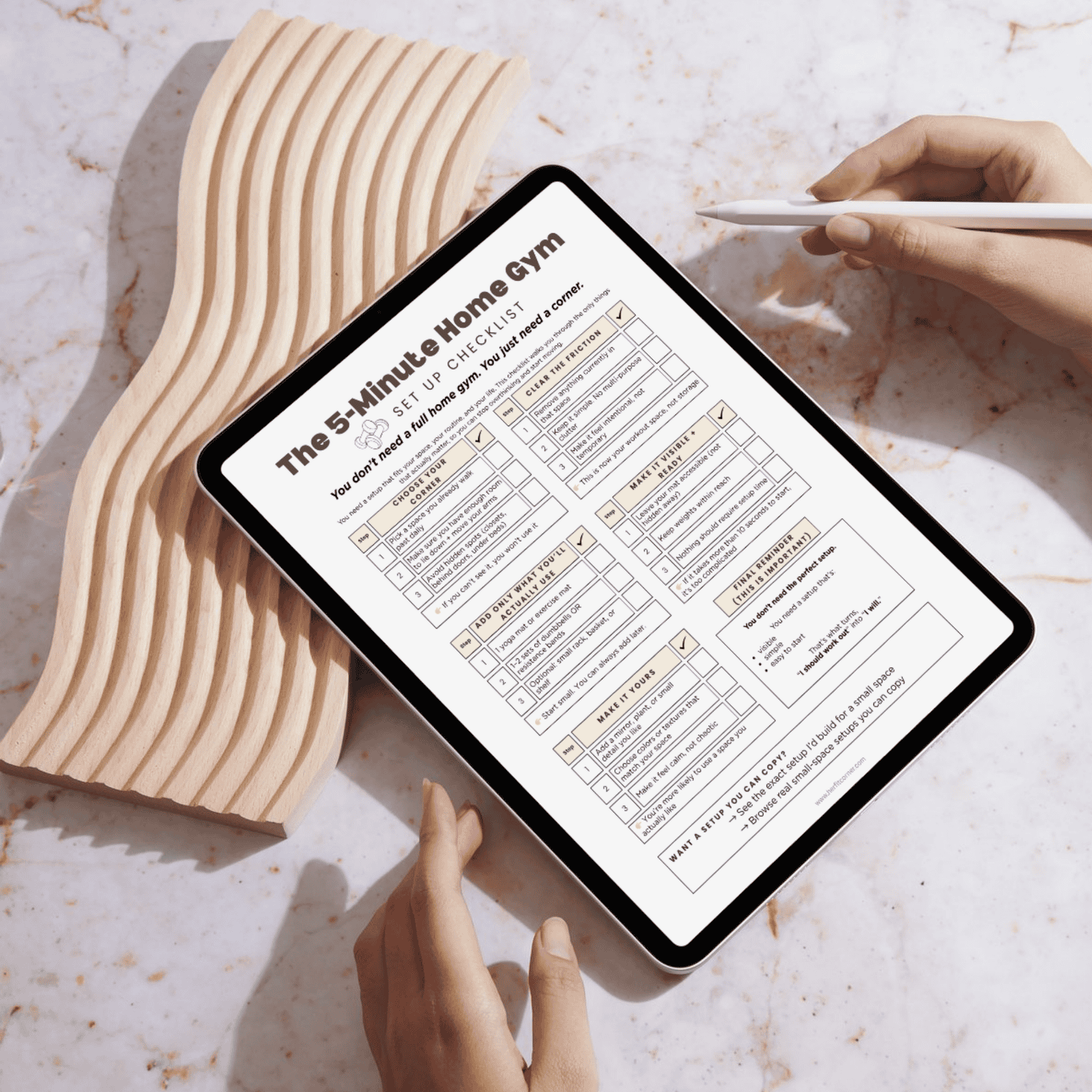
Free 5-Minute Home Gym Setup Checklist
You don’t need a full home gym. You just need a corner.
No spam. Unsubscribe anytime.
You don’t need the machine. You need the movement.