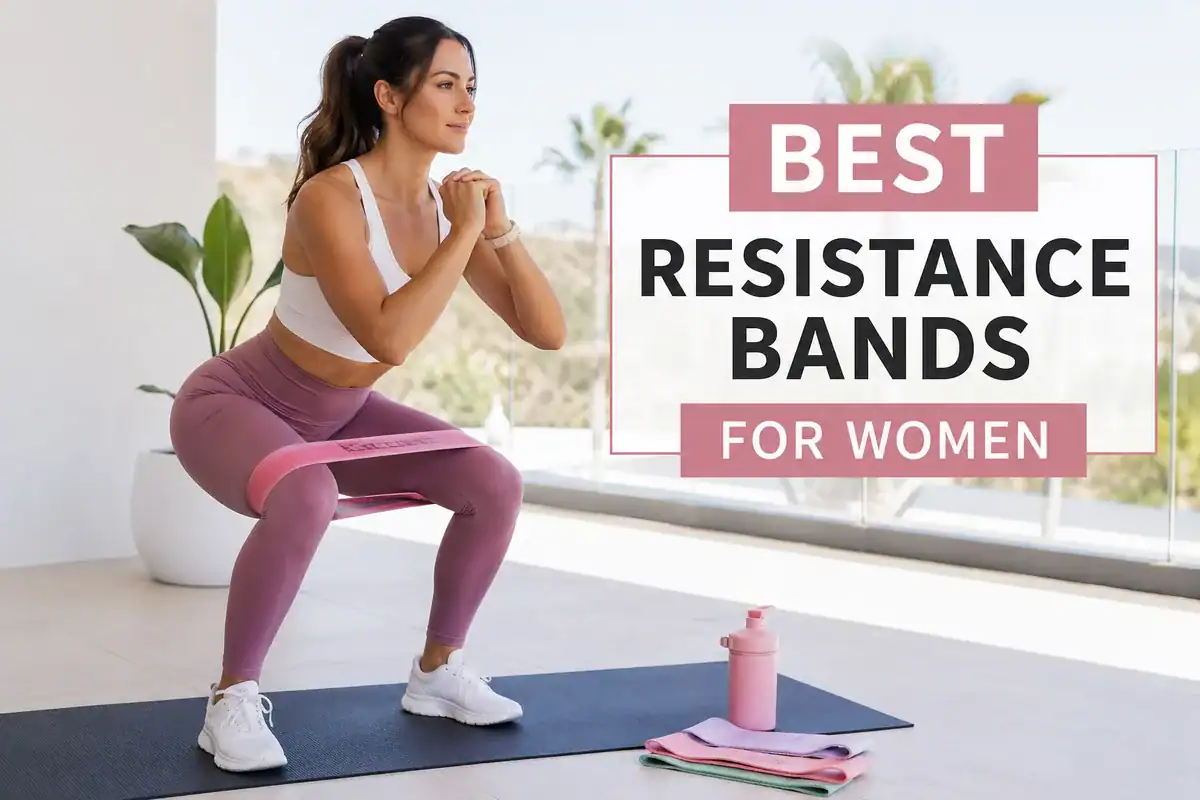
Best Resistance Bands for Women (a Complete Buying Guide)
I bought my first set of resistance bands for $12 because a YouTube video told me they were “just as good as dumbbells.” They sat in a drawer for three weeks.
Then one Tuesday, I didn’t feel like pulling out the weights. I grabbed the bands instead, looped one around my thighs, and did 10 minutes of glute work while I waited for my breakfast to warm up.
That was six months ago. The bands haven’t gone back in the drawer since.
The best resistance bands for women aren’t the ones with the highest resistance or the fanciest packaging. They’re the ones you’ll actually reach for on the days you almost skip. And which set that is depends entirely on how you train.
Here’s what I’ve learned after testing five different sets, wasting money on two of them, and finally finding the combination that covers everything.
In my 20s in Los Angeles, I lived in small apartments with a yoga mat under the couch and two dumbbells in a corner. Resistance bands were the equipment I wish I’d bought first. They take up less room than a stack of magazines, cost less than one drop-in class, and do more than most apartment setups give them credit for.
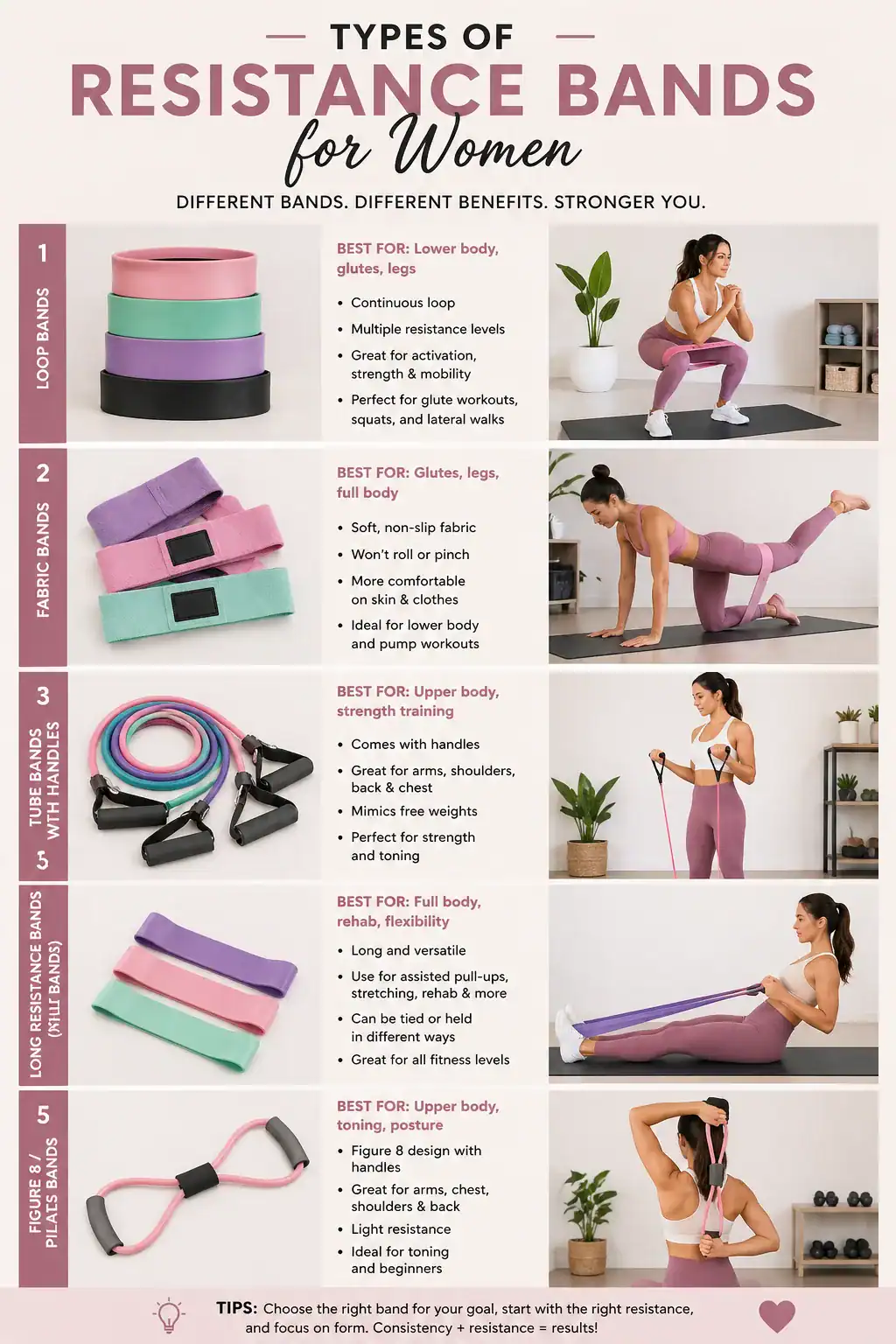
Types of Resistance Bands (and What Each One Does)
Loop Bands (Mini Bands)
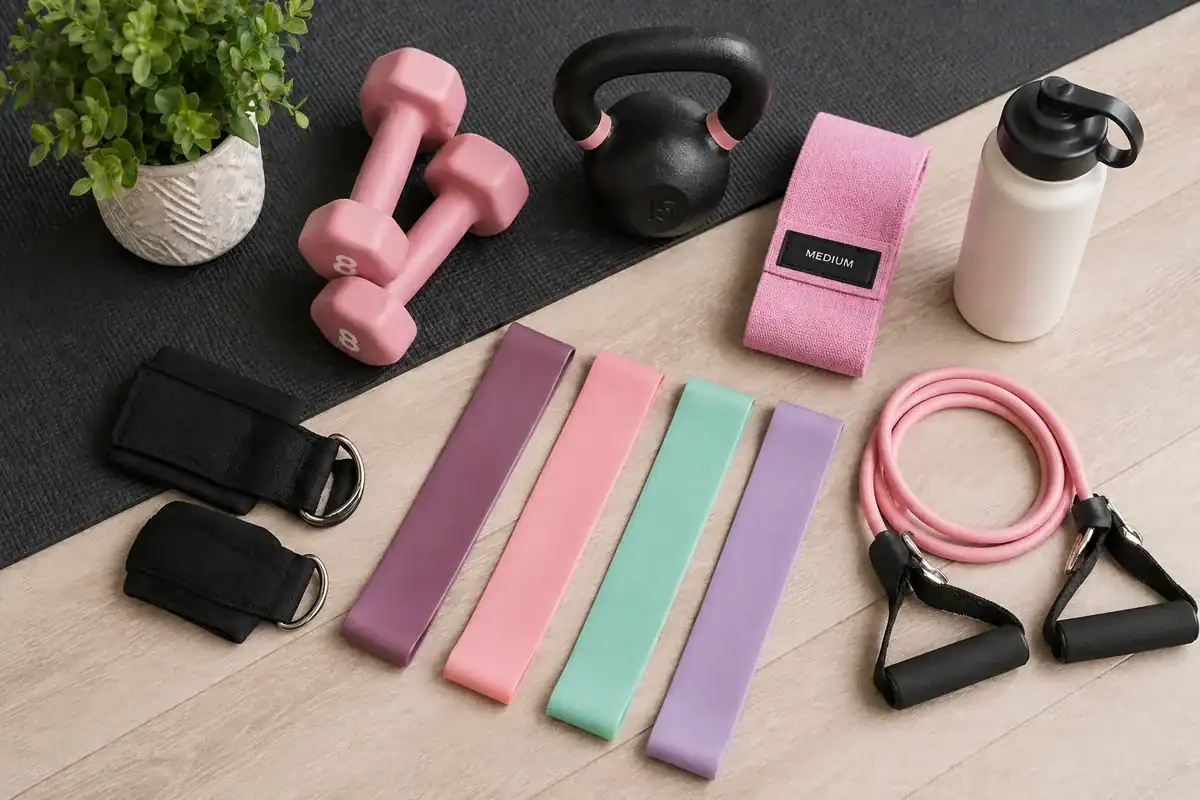
Small, flat, closed-loop bands that go around your thighs, ankles, or arms. These are the glute activation staple. Use them for clamshells, lateral walks, banded squats, and hip bridges.
Best for: Lower body and glute work. Material options: Latex (stretchy, thin) or fabric (thicker, stays in place better).
Long Flat Bands (Therapy Bands)
Flat, wide, open-ended bands that you can tie, loop, or hold at different lengths. Used for stretching, pilates, physical therapy, and upper body exercises.
Best for: Stretching, pilates, rehab, and assisted exercises (like pull-up assistance).
Tube Bands With Handles
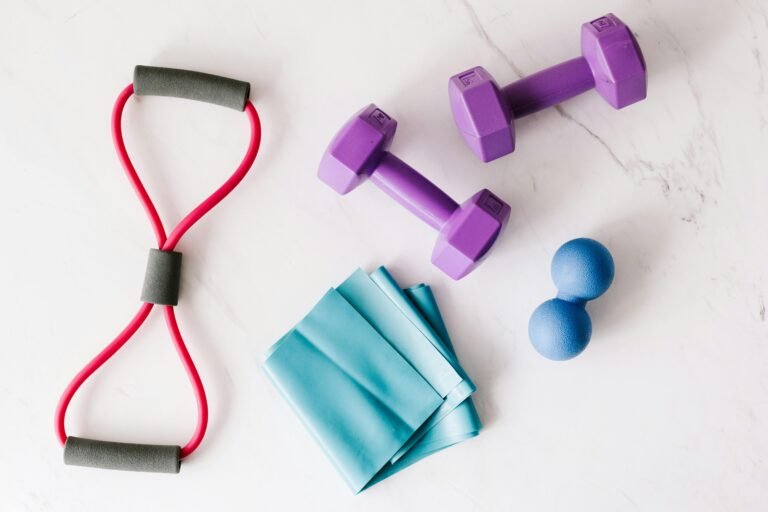
Rubber tubes with foam or plastic handles on each end. These mimic cable machine movements and work for upper body exercises like bicep curls, shoulder presses, and chest flys.
Best for: Full-body strength training, especially upper body.
Top 5 Resistance Band Sets
1. Fit Simplify Loop Bands (5-Pack)
The classic starter set. Five color-coded latex loop bands from extra light to extra heavy. They work for lower body activation, stretching, and light resistance exercises.
These are thin and lightweight, which makes them great for travel but less durable than fabric options. They can roll up on your thighs during glute work, which is annoying.
Best for: Beginners who want a low-cost entry point. Price: Under $12.
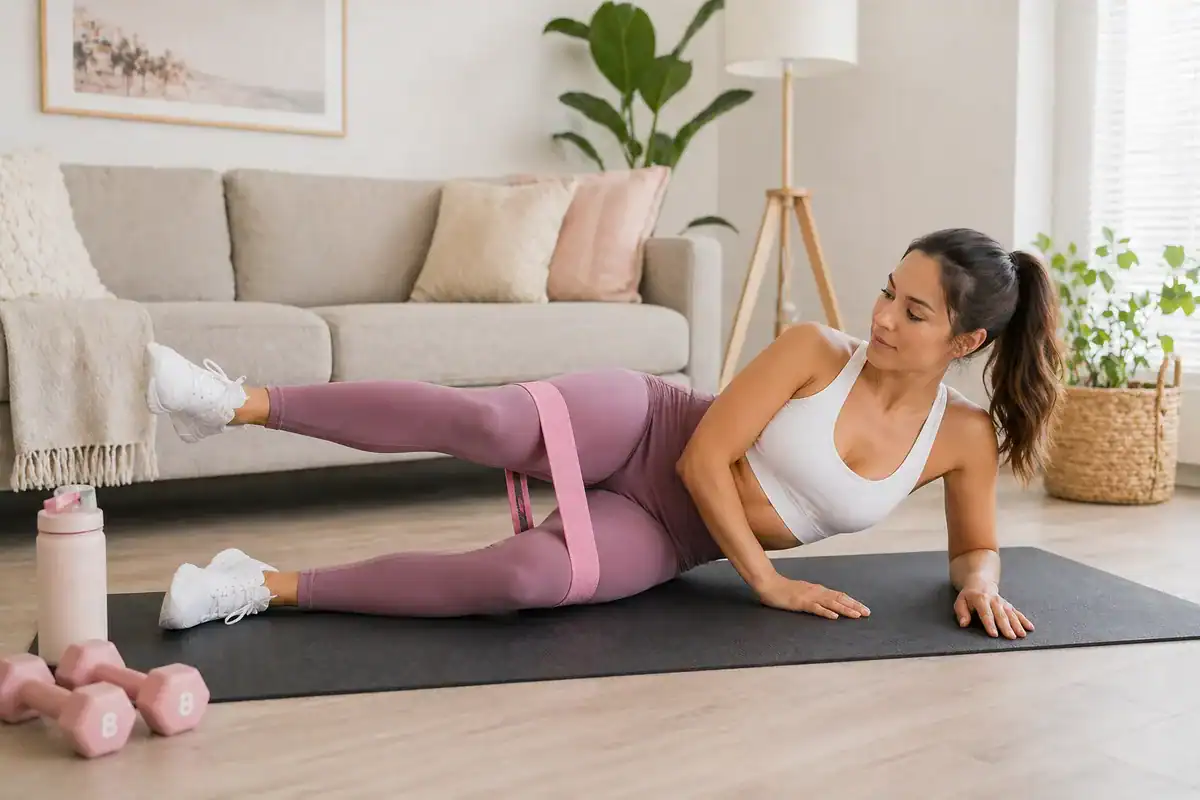
2. GYMB Fabric Resistance Bands
Fabric bands solve the rolling problem. The wider, cloth-covered design stays in place on your thighs and doesn’t snap, roll, or pinch during glute exercises.
GYMB’s set includes three resistance levels and comes in neutral colors that look better than neon latex. The fabric also lasts significantly longer than latex.
Best for: Women focused on glute and lower body training who are tired of latex bands rolling up. Price: Around $15-$20.
3. Whatafit Resistance Band Tube Set
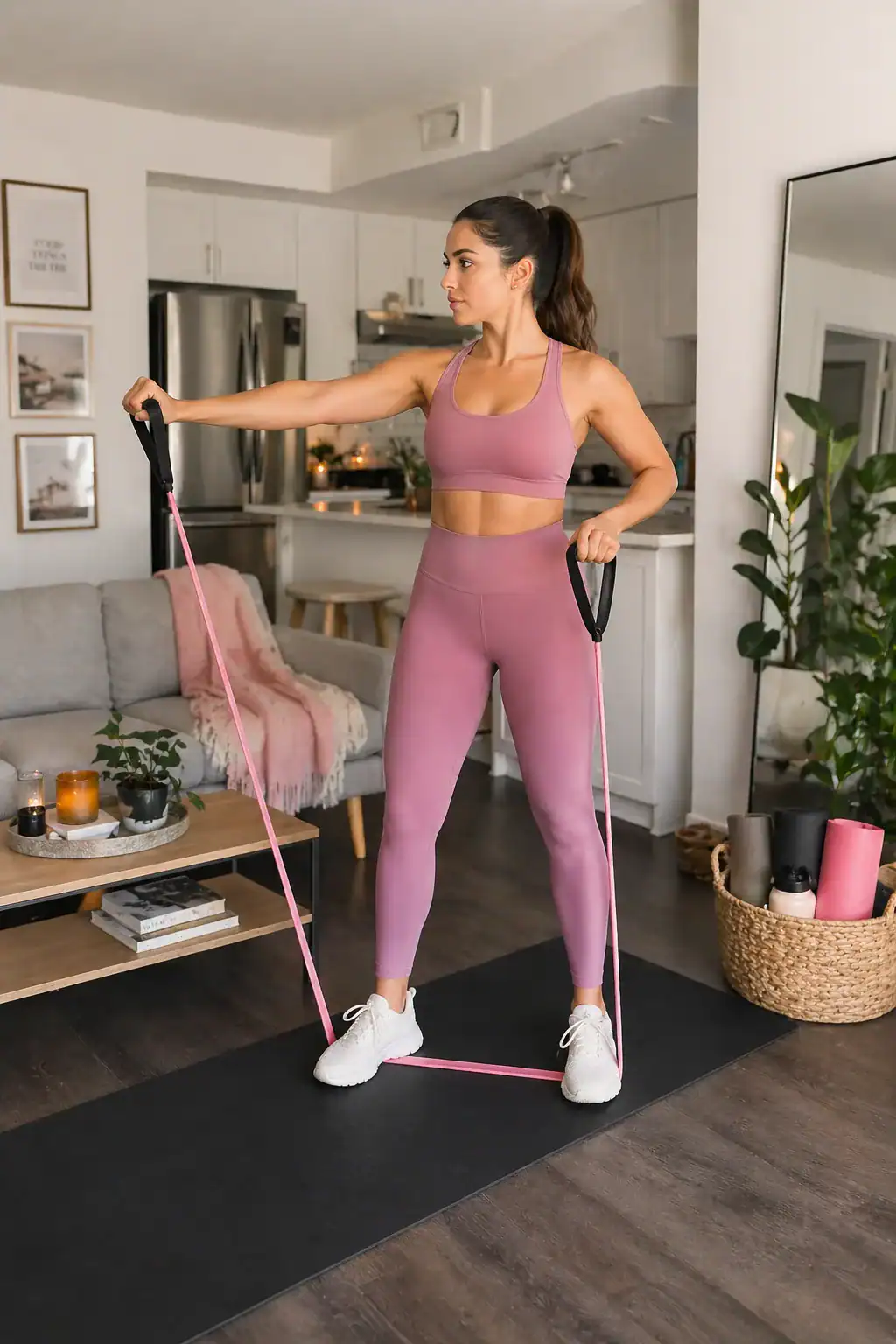
This is the full kit. Five tube bands with handles, a door anchor, ankle straps, and a carrying bag. It turns any door in your house into a cable machine.
The total resistance stacks up to 150 pounds (when using multiple bands together), which is more than enough for any home exercise. The handles are comfortable and the door anchor is secure.
Best for: Women who want cable-machine-style exercises at home without the machine. Price: Around $25-$35.
4. SPRI Flat Band (Long)
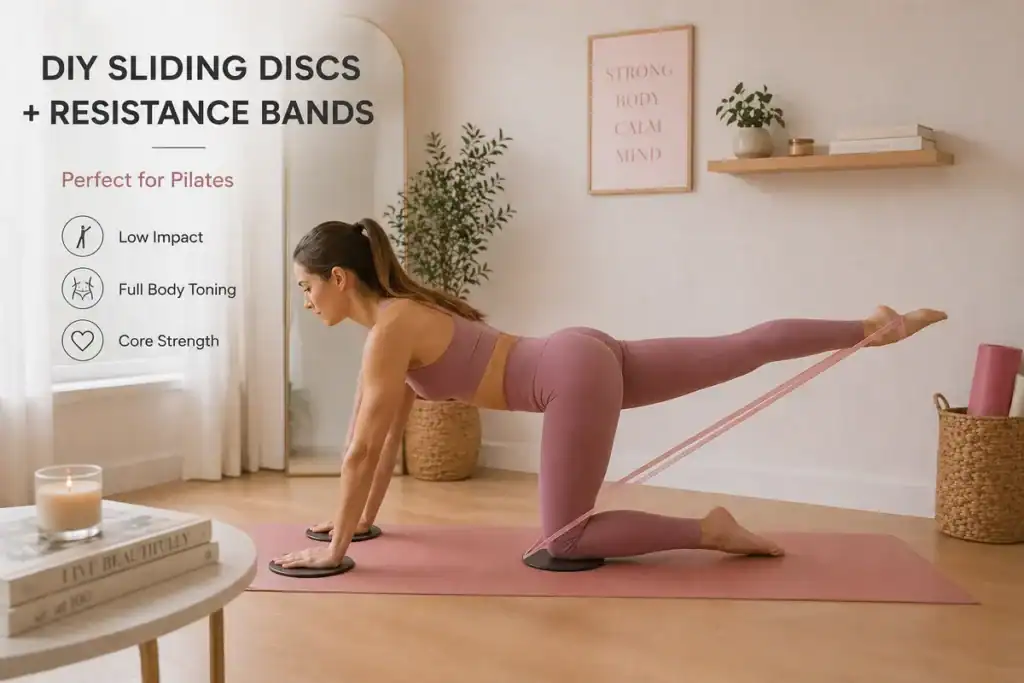
A single long flat band for pilates, stretching, and assisted exercises. SPRI has been making these for decades and the quality is consistent.
Available in multiple resistance levels. The flat design doesn’t have handles (which is the point for pilates and therapy work). Cut it to length or tie it in a loop for different exercises.
Best for: Pilates practitioners and anyone doing rehab or flexibility work. Price: Under $10 per band.
5. Peach Bands (Fabric Hip Bands)
If your training is primarily glute-focused, Peach Bands are designed specifically for that. Three resistance levels, thick fabric that never rolls, and a wider design that distributes pressure evenly.
They’re also some of the best-looking bands on the market, which matters when they’re sitting in a basket in your workout corner.
Best for: Glute-focused training with a premium look and feel. Price: Around $25 for the set.
How to Store Them
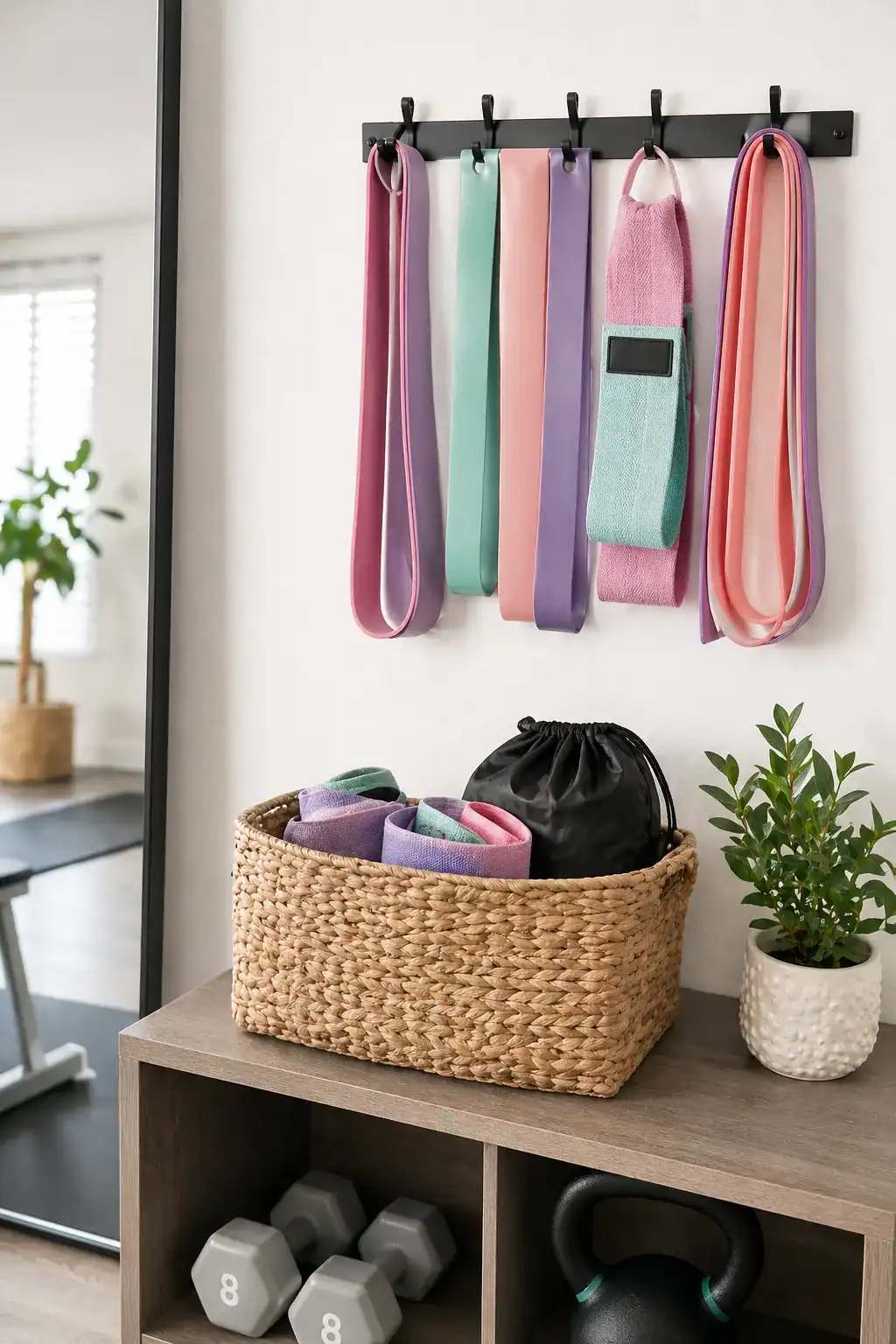
Bands are small but they get tangled fast. Here are three storage solutions that actually work:
- A small woven basket on a shelf. Fold each band and stack them by resistance level.
- Wall hooks. Hang bands on individual hooks next to your workout zone. Easy to grab, easy to return.
- A resistance band organizer (yes, these exist). A small wall-mount or door-mount holder keeps everything visible and tangle-free.
For more storage ideas, check out how to organize your home gym so you actually use it.
Which Set Should You Buy?
One design rule I use when I’m building a workout corner: splurge on the soul pieces, fill in around them with cheaper basics. If the Peach Bands are the set you’d actually leave out on a shelf because they look like something, get those. Then add the $12 Fit Simplify pack for the heavier resistance you don’t need to look at. The cheap pieces stay in the basket. The pretty ones stay visible. That’s how you keep a corner from feeling like a clearance bin.
If you’re a beginner: Start with the Fit Simplify loop bands ($12) and one SPRI flat band ($10). Total investment: $22. That covers lower body, stretching, and basic resistance work.
If you train glutes seriously: GYMB fabric bands or Peach Bands. The fabric makes a noticeable difference in comfort and durability.
If you want a full-body strength setup: The Whatafit tube set. It replaces the most exercises and gives you the most versatility for the price.
If you want all of the above: Get the GYMB fabric loops ($20), a SPRI flat band ($10), and the Whatafit tube set ($30). Total: $60. That covers every type of band training you’ll ever need at home.
The Real Reason Bands Work
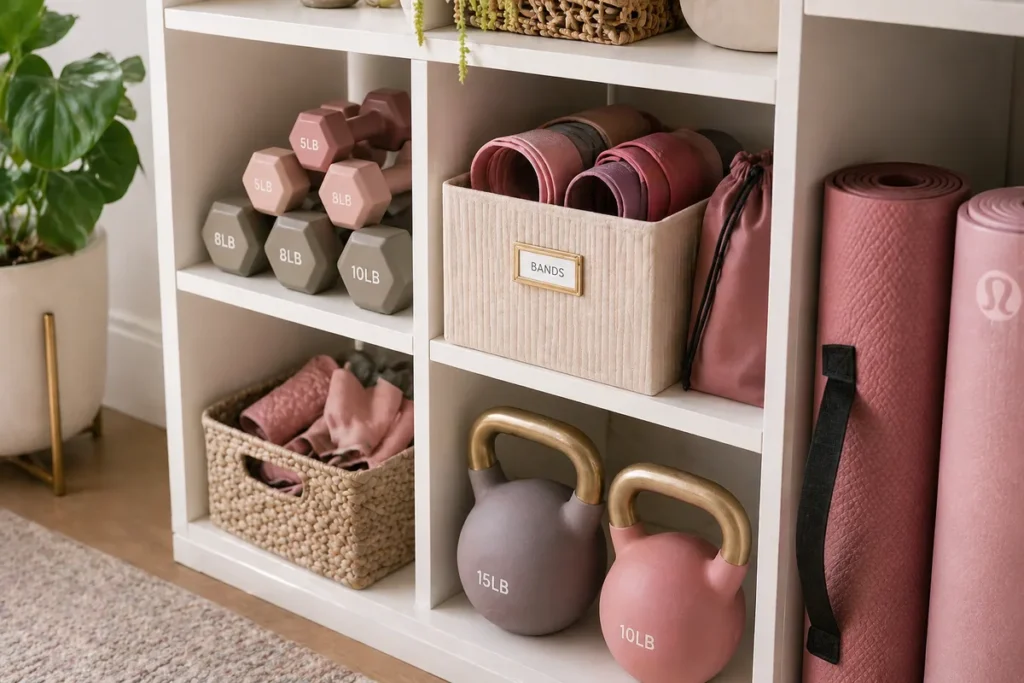
Here’s what I didn’t understand about resistance bands until I’d been using them for months: they work because they’re always there.
Dumbbells are heavy. A bench takes up space. A machine requires commitment. But bands sit in a basket, weigh nothing, and can go from “I have five minutes” to “I’m in a full workout” in under 10 seconds.
That’s the real advantage. Not the resistance. Not the variety. The access.
The mat stays out. The bands stay visible. That’s the whole system.
Some women need their equipment hidden. Some women need it visible. Both are valid. Bands are the rare piece that works either way.
On tired days, grabbing a band and doing 5 minutes of glute work feels achievable in a way that setting up a full workout doesn’t. Those 5-minute sessions add up faster than you’d expect. By the end of the month, the “I only did bands today” days account for half your total training volume.
The best equipment isn’t the most expensive. It’s the equipment with the least friction between you and using it. Bands win that contest every time.
Small Equipment, Big Results
Resistance bands prove that effective home training doesn’t require big equipment or big spending. A $20 set of bands adds meaningful resistance to workouts that would otherwise require a gym membership.
For more on building a complete home gym with minimal equipment:
What You Actually Need for a Home Gym (and Nothing Else)
How to Organize Your Home Gym So You Actually Use It
Download The 5-Minute Home Gym Setup Checklist — your one-page guide to equipment, space, and setup. No overwhelm.
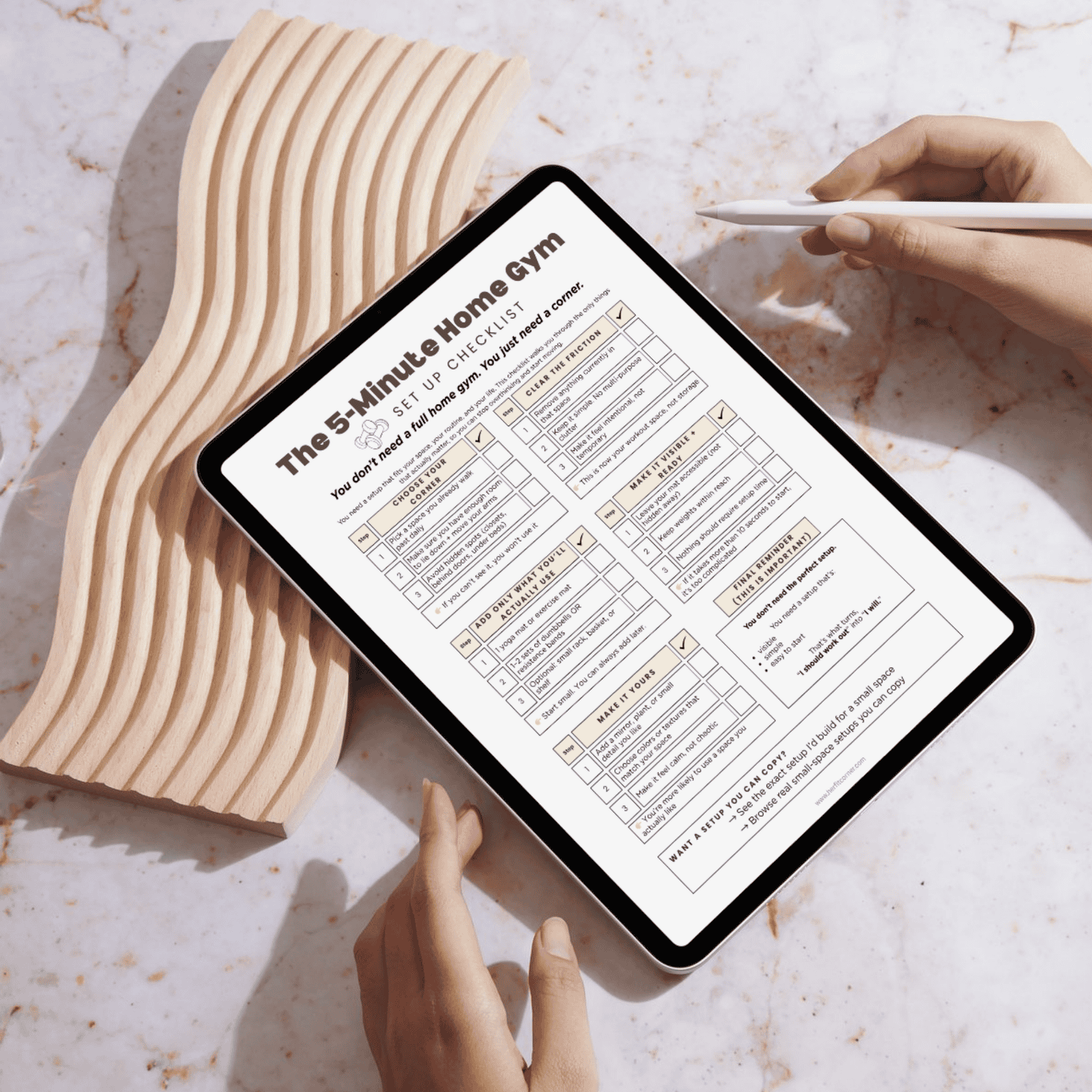
Free 5-Minute Home Gym Setup Checklist
You don’t need a full home gym. You just need a corner.
No spam. Unsubscribe anytime.
Start with one set. Build from there.