What You Actually Need for a Home Gym (and Nothing Else)
If you search “home gym equipment” right now, you’ll find lists with 30 items on them. Squat racks. Cable machines. Plyo boxes. Battle ropes. A flat bench, an incline bench, and an adjustable bench (apparently you need three benches).
It’s overwhelming. And most of it is completely unnecessary.
Home gym equipment essentials are the 5 to 7 items that cover the widest range of exercises in the smallest amount of space. Everything else is either a nice-to-have, a specialty item, or marketing trying to convince you that you need more stuff.
You don’t.
Here’s what you actually need, what each item does, and what you can skip entirely.
The Non-Negotiable Five
These are the items that show up in nearly every effective home workout, regardless of your fitness level or training style. If you buy nothing else, buy these.
1. A Set of Adjustable Dumbbells
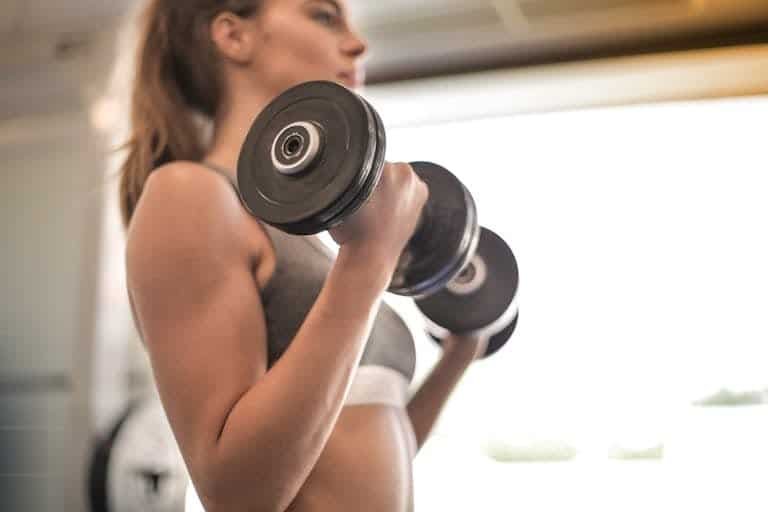
Adjustable dumbbells replace an entire rack of individual weights. One pair covers everything from 5-pound shoulder raises to 25-pound rows to 50-pound deadlifts (depending on the set).
They’re the single most versatile piece of equipment you can own. Upper body, lower body, compound movements, isolation work. All from two handles that sit on a shelf.
For a detailed comparison of the best options, see best adjustable dumbbells for small spaces.
What to spend: $150 to $400 depending on weight range and brand. What to skip: Individual dumbbell pairs. They take up 10x the space for the same function.
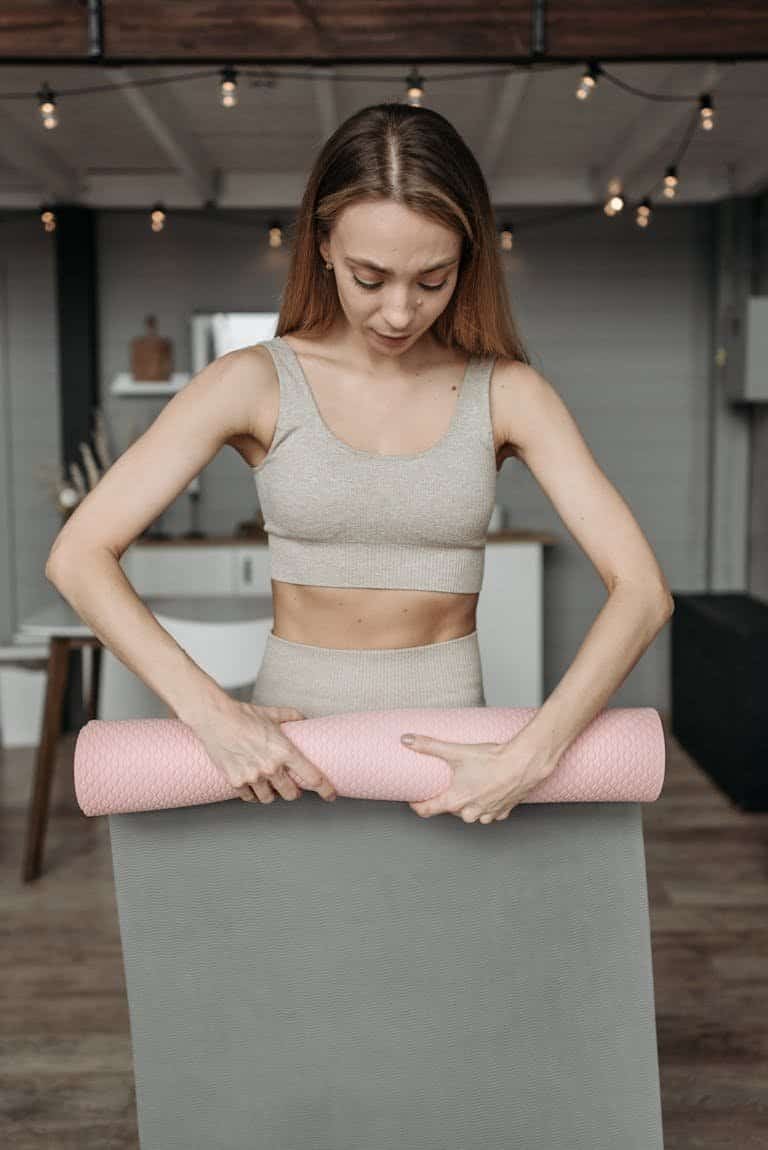
2. A Quality Yoga Mat
Not just for yoga. Your mat is the foundation for floor exercises, stretching, core work, pilates movements, and cooldowns. You’ll use it every single session.
Get one that’s at least 6mm thick (thicker if you do pilates). Look for a non-slip surface that grips the floor underneath it. The mat shouldn’t slide when you’re in a plank.
What to spend: $20 to $60. What to skip: Ultra-thin travel mats. They’re fine for yoga in a hotel room. They’re terrible for daily home use.
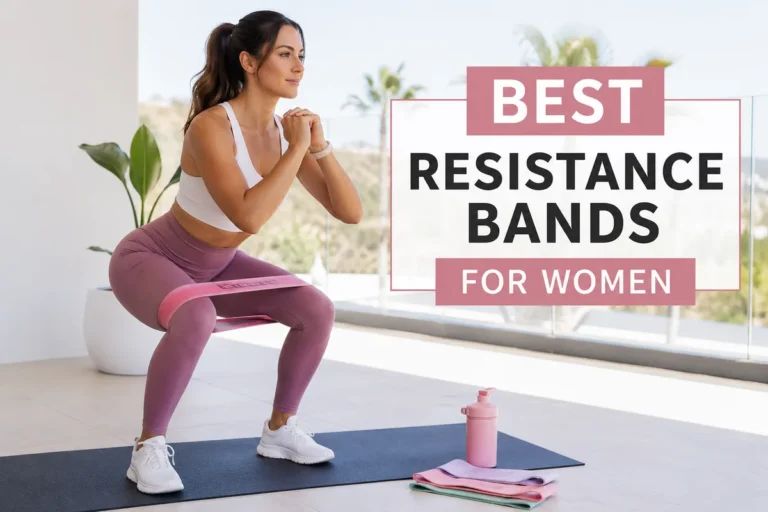
3. A Resistance Band Set
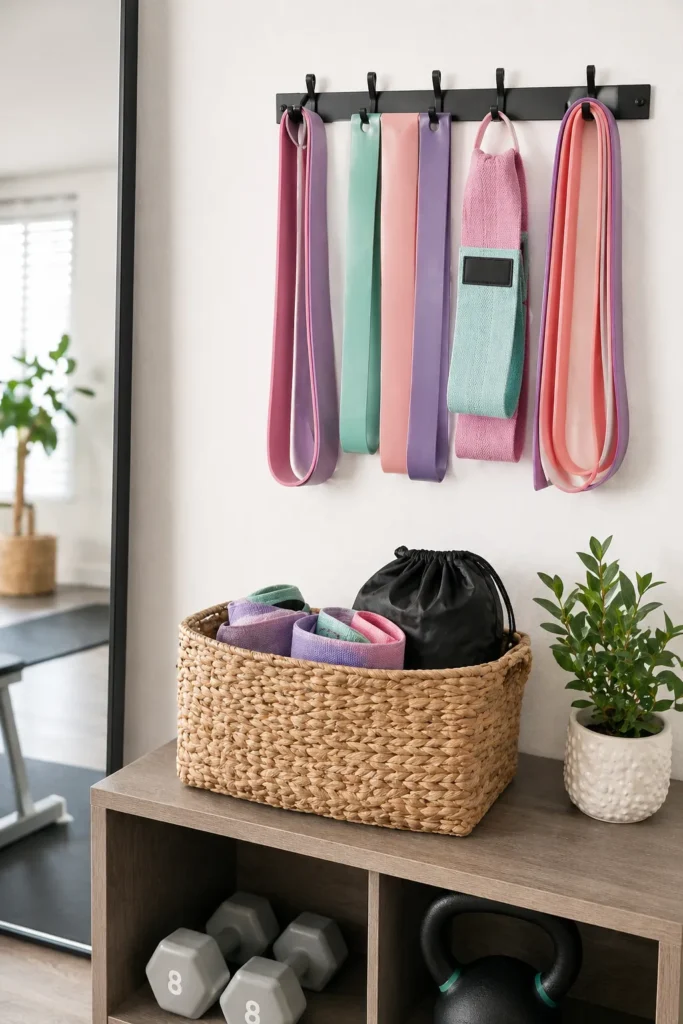
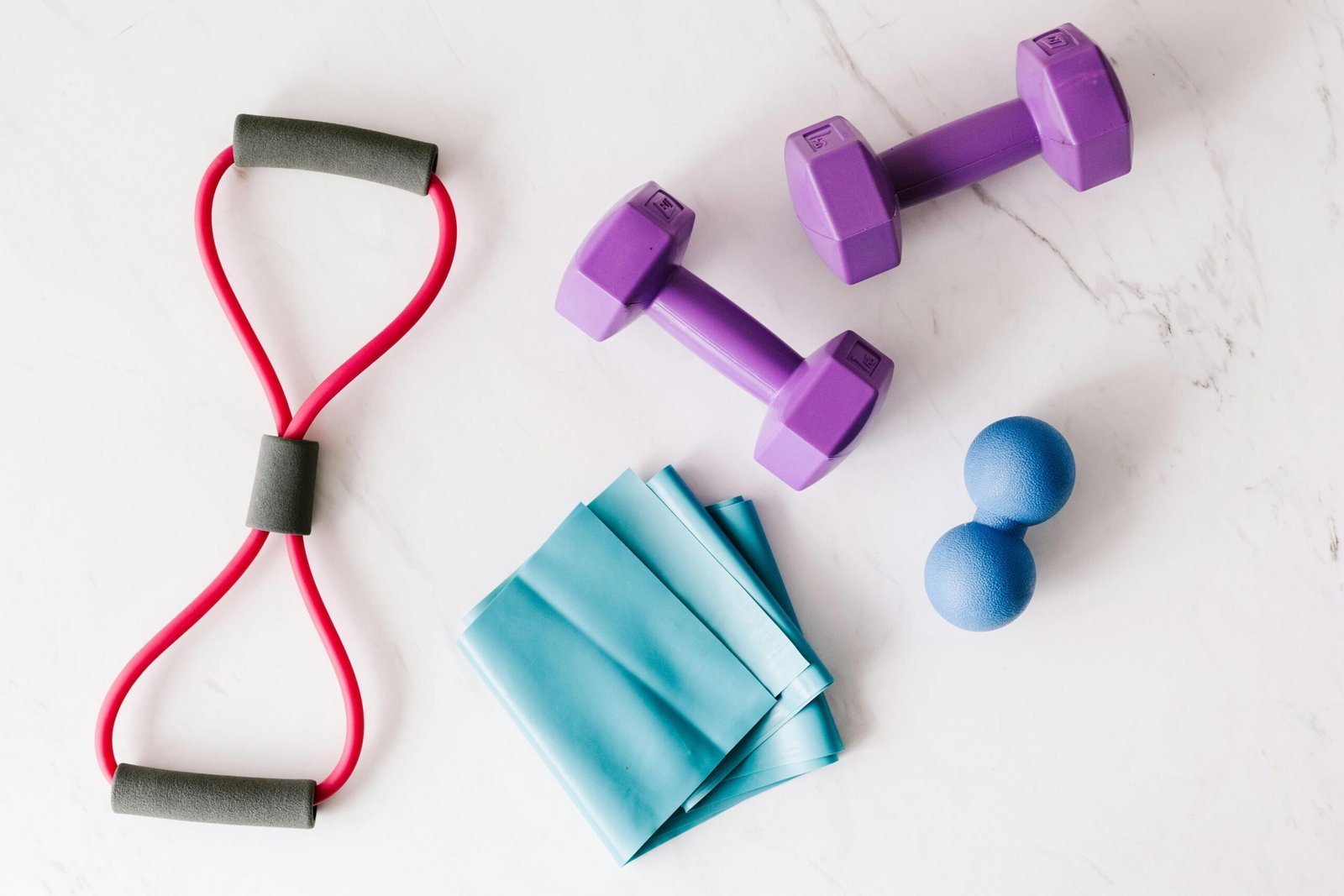
Bands add variable resistance to dozens of exercises without taking up any real space. A set of loop bands (light, medium, heavy) plus one long flat band gives you everything you need for legs, glutes, arms, shoulders, and assisted stretching.
They weigh almost nothing, store in a basket or drawer, and cost less than a dinner out.
What to spend: $10 to $30 for a complete set. What to skip: Single-resistance bands. You need at least three levels to progress over time.
4. A Foam Roller
Recovery is training. A foam roller handles post-workout myofascial release, pre-workout warmup, and even core exercises (try a foam roller plank, then thank me later).
A 36-inch full-size high-density roller covers everything. It stands upright in a corner when not in use.
What to spend: $15 to $35. What to skip: Vibrating foam rollers. They’re expensive and the vibration adds minimal benefit for most people.
5. A Kettlebell (One Is Enough)
A single kettlebell opens up swings, goblet squats, Turkish get-ups, cleans, presses, and deadlifts. It’s the best tool for combining strength and cardio in a small space.
For most women, a 15 to 25 pound kettlebell is the right starting weight. If you can only pick one, go with 20 pounds. It’s heavy enough to challenge and light enough to learn form.
What to spend: $25 to $60. What to skip: Kettlebell sets. You only need one to start. Add a second weight later if your training demands it.
The Nice-to-Haves
These items aren’t essential, but they upgrade your setup if you have the space and budget.
A Workout Bench
A flat or adjustable bench opens up chest presses, seated exercises, step-ups, and tricep work. If you primarily train with dumbbells, a bench significantly expands your exercise options.
Look for a foldable bench that stores flat against a wall or under a bed.
Worth it if: You do a lot of upper body dumbbell work. Skip if: You mostly do bodyweight, pilates, or yoga.
A Pull-Up Bar
A door-frame pull-up bar adds one of the best upper body exercises to your repertoire with zero floor space impact. It also works for hanging ab exercises and band-assisted work.
Worth it if: You want to build upper body pulling strength. Skip if: Your door frames aren’t sturdy enough (check the weight limit).
A Jump Rope
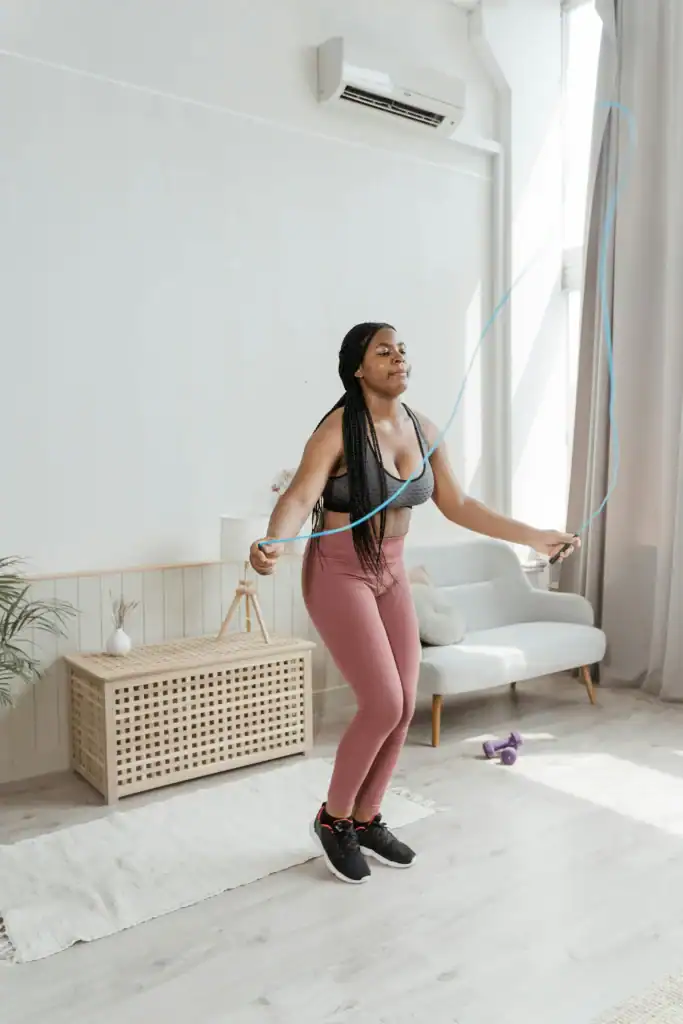
Cardio in a tiny space. A speed rope takes up no room, costs under $15, and gives you a full warmup or a standalone cardio session in 10 minutes.
Worth it if: You want quick cardio without a machine. Skip if: You have downstairs neighbors who value silence.
What You Can Absolutely Skip
These items show up on every “home gym essentials” list and they’re almost never essential:
- A treadmill (unless cardio is your primary training style)
- A squat rack (unless you’re lifting heavy barbells, which most home setups don’t require)
- A cable machine (great for a dedicated gym room, overkill for a corner)
- Ab rollers, ab machines, or ab-specific gadgets (your mat and bodyweight cover this)
- Anything that’s “as seen on TV”
The best home gym has fewer items used more often. Not more items used occasionally.
The Total Cost
If you buy all five essentials at mid-range prices:
| Item | Cost |
|---|---|
| Adjustable dumbbells | $200 |
| Yoga mat | $35 |
| Resistance band set | $20 |
| Foam roller | $25 |
| Kettlebell (20 lb) | $40 |
| Total | $320 |
That’s less than six months of a gym membership. And the equipment lasts for years.
Buy Less. Use More.
The entire fitness equipment industry profits from making you think you need more. More weight. More machines. More gadgets.
You don’t.
Five items. A corner. The willingness to show up.
That’s a home gym.
For more on setting up your space:
And for the simplified version:
Download The 5-Minute Home Gym Setup Checklist — one page with everything you need to choose your space, pick your equipment, and start. Nothing extra.
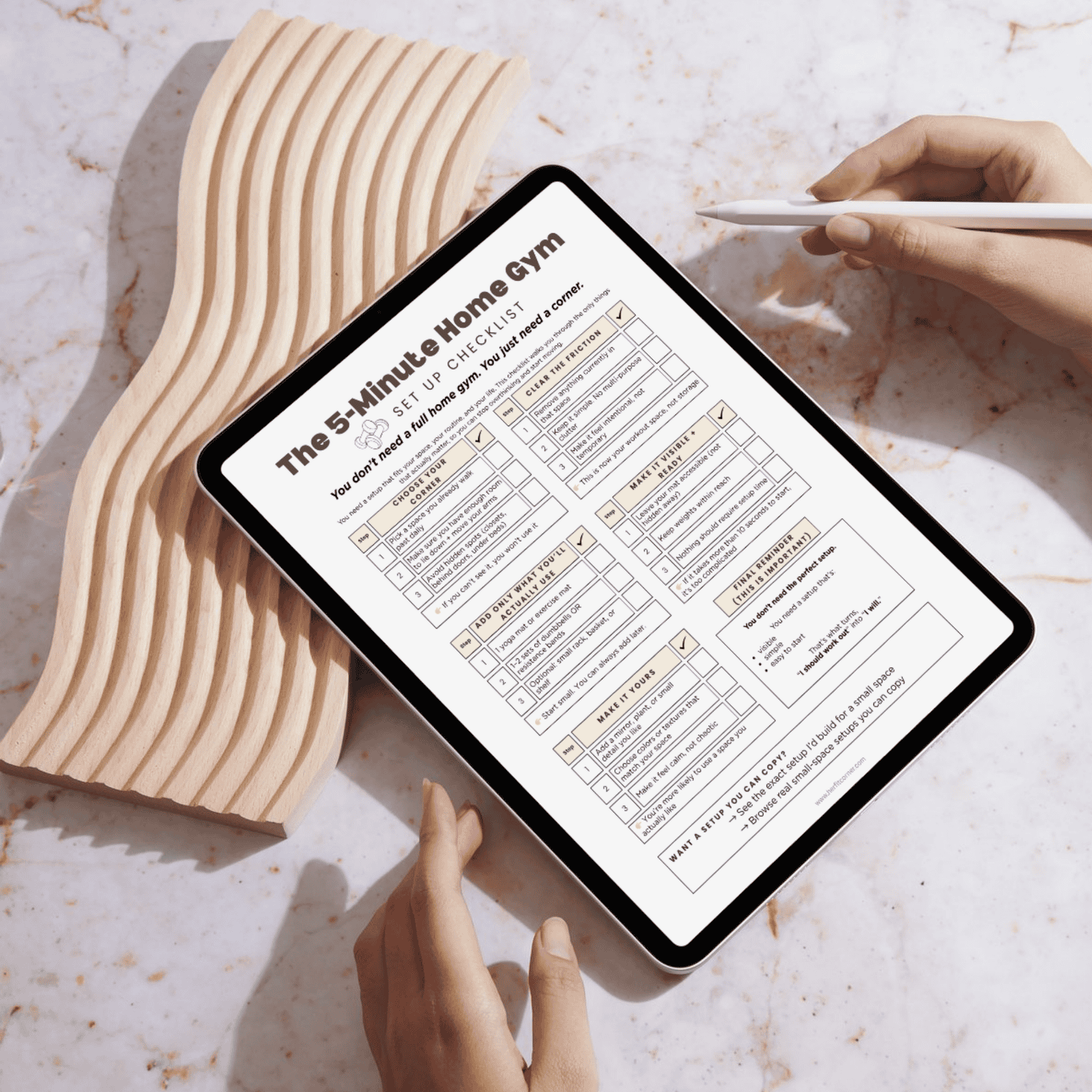
Free 5-Minute Home Gym Setup Checklist
You don’t need a full home gym. You just need a corner.
No spam. Unsubscribe anytime.
You don’t need everything. You need the right things.