How to Design a Home Yoga Room That Feels Like a Retreat
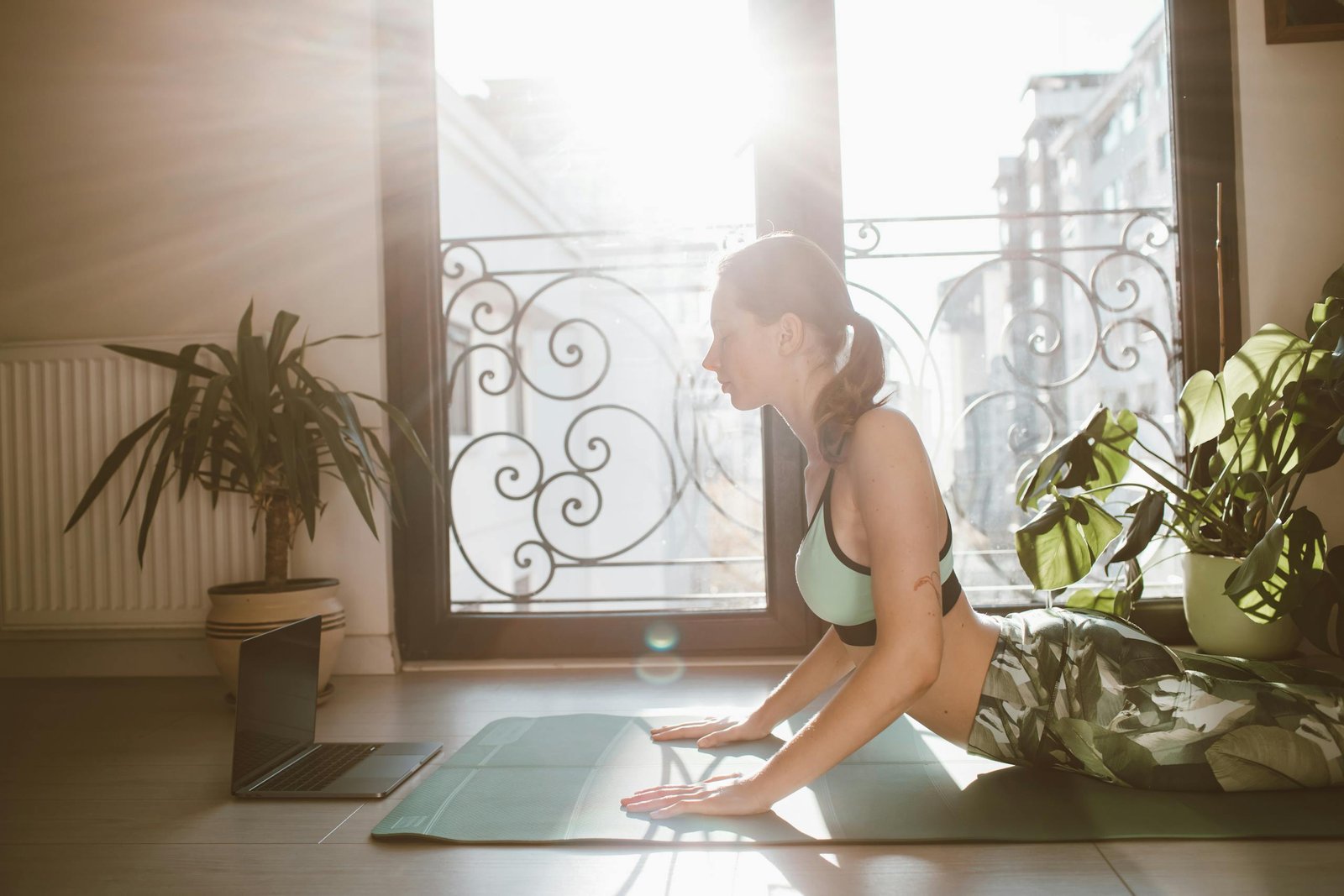
There’s a difference between rolling out a yoga mat in your living room and walking into a space that was designed for practice.
One feels like you’re squeezing in a workout between the couch and the coffee table. The other feels like you’ve stepped into somewhere quieter. Slower. Intentional.
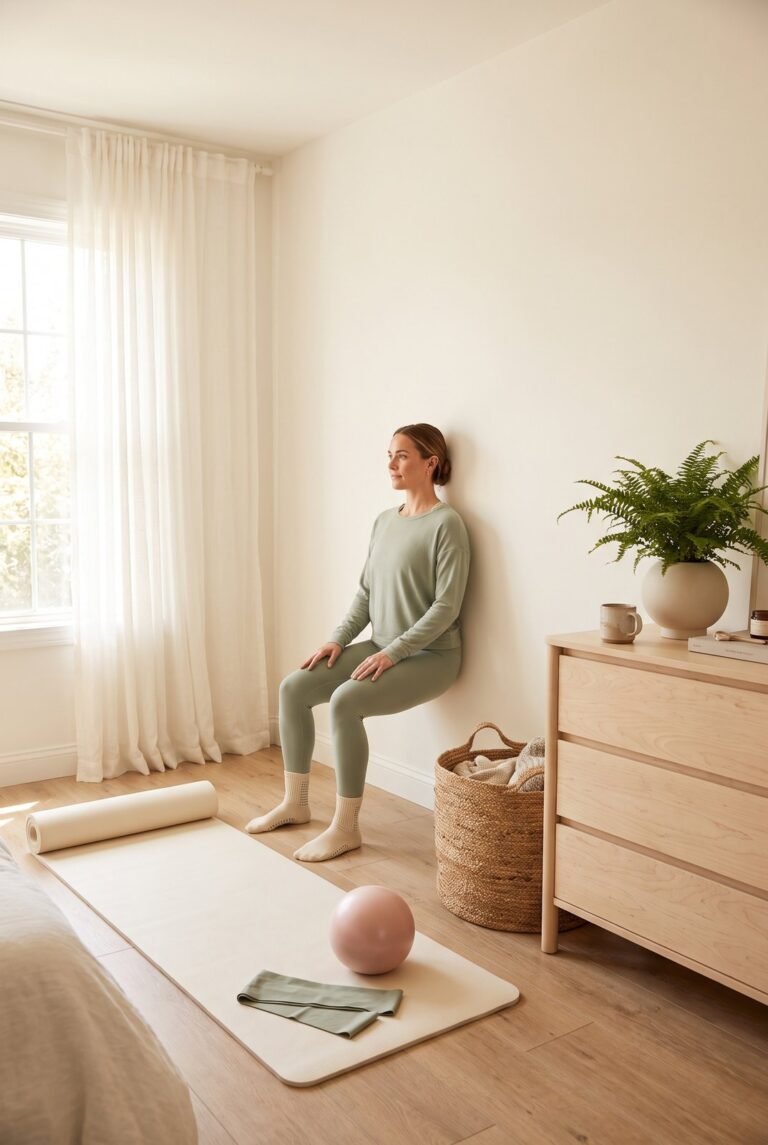
A home yoga room is a dedicated space (even a small one) designed specifically for yoga, stretching, and mindful movement. It doesn’t need to be a full room. A corner of your bedroom, a section of the basement, or even a closet you’ve cleared out can work beautifully.
What makes it a yoga room isn’t the size. It’s the feeling.
And that feeling? You can design it on purpose.
Choose a Space That’s Naturally Quiet
Yoga is the one form of home exercise where sound matters as much as space. You don’t want to practice next to the dishwasher, in front of the TV, or in a room where people are constantly walking through.
Look for the quietest spot in your home. A spare bedroom. The far corner of the basement. A section of the attic. Even a large walk-in closet works if you can fit a mat and still move your arms.
Natural light is a bonus but not a requirement. Candles and soft lighting can create the same atmosphere.
Pro Tip: If you can’t find a quiet spot, noise-canceling headphones with a guided meditation app create an instant sound barrier anywhere.
Start With the Mat (It Sets the Tone)
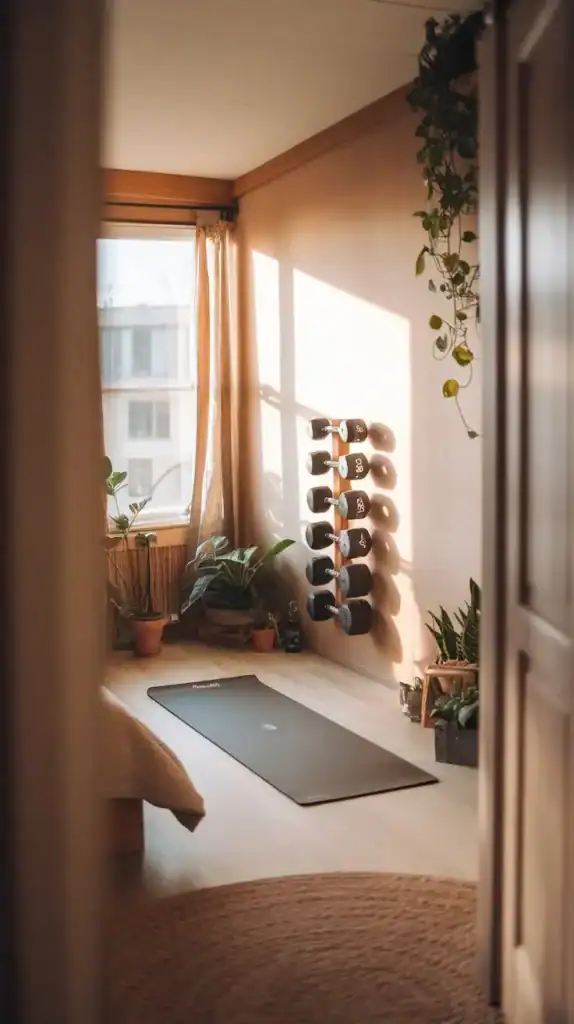
In a home yoga room, the mat isn’t just equipment. It’s the centerpiece. It’s the largest visual element in the space, and it’s what you’ll be looking at and touching for the entire practice.
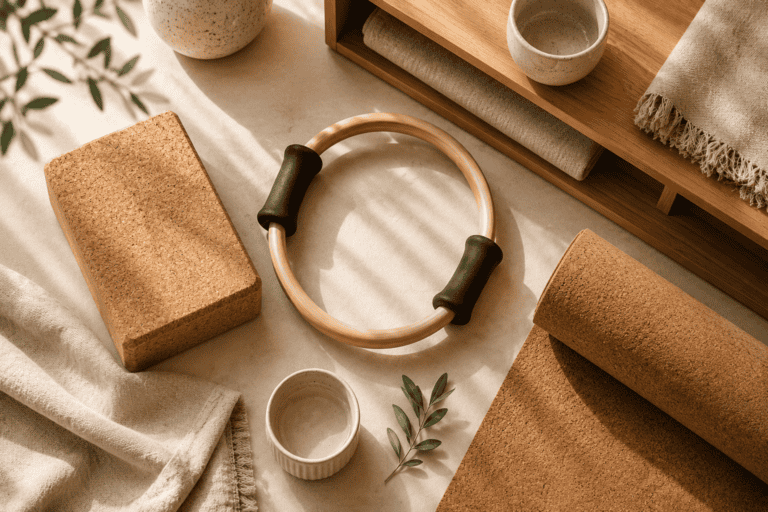
Invest in a mat you genuinely love. A cork yoga mat has a natural, warm look and feel. A thick Manduka PRO in a muted color lasts for years. Whatever you choose, make sure the color and texture fit the vibe you’re creating.
Skip the neon. Skip the cheap PVC that peels after a month. This mat lives in your space permanently. It should look like it belongs there.
Layer the Lighting
Overhead fluorescent lights have no place in a yoga room. Neither does a single harsh bulb.
Instead, layer your lighting:
- A salt lamp on a shelf for a warm, ambient glow
- String lights or LED strips along one wall for soft background light
- A candle (real or LED) at the front of your mat for a focal point
- Sheer curtains over windows to diffuse natural light instead of blocking it
The goal is light that feels soft and warm, never bright or clinical. You should be able to dim everything down for savasana and turn it up slightly for a flow sequence.
Lighting isn’t decoration in a yoga room. It’s part of the practice.
Add Scent (It Changes Everything)
Scent is the fastest way to signal to your brain that you’ve entered a different mode. An essential oil diffuser with lavender, eucalyptus, or cedarwood running before you start practice transforms the space before you even unroll the mat.
Place the diffuser on a shelf near your practice area but not directly on the floor where you might knock it over.
If diffusers aren’t your thing, a single stick of incense or a naturally scented candle works just as well.
Pro Tip: Use the same scent every time. Over weeks, your brain will associate that smell with calm. Walking into the room becomes an instant nervous system reset.
Keep the Decor Minimal
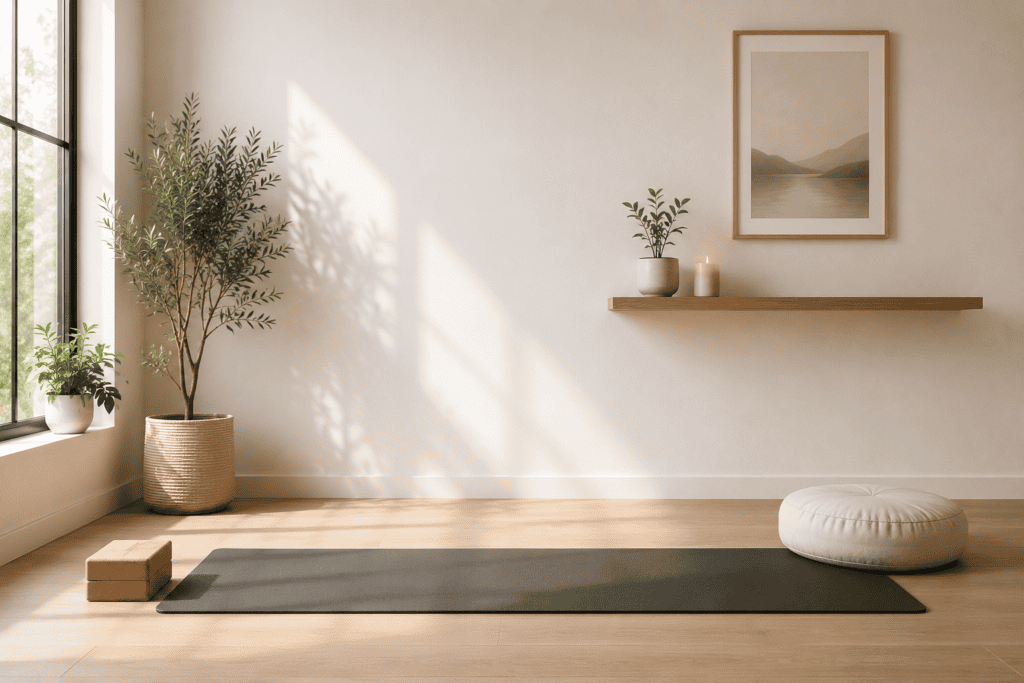
A yoga room should feel open, not cluttered. Resist the urge to fill every surface with crystals, statues, and stacked books.
Choose one or two meaningful items. A small plant on a shelf. A single piece of wall art that you find calming. A meditation cushion in the corner for seated practice.
Everything else? Less is more. Empty space isn’t wasted in a yoga room. It’s the whole point.
For more on creating calm, aesthetic workout spaces, see 12 aesthetic home gym ideas you’ll actually want to copy.
Floor Cushions Over Furniture
If your yoga room has enough space for seating, skip the chair. Floor cushions, a meditation cushion (zafu), or a bolster pillow create a space that invites you to sit down, slow down, and stay awhile.
Place them in the corner where you’ll do seated meditation or journaling after practice. When you’re done with your flow, you don’t leave the room. You move to the cushion and sit.
That transition from movement to stillness is where the real benefit lives.
Add a Mirror (Optional but Helpful)
Not every yoga practitioner wants a mirror. Some find it distracting during practice. Others find it essential for alignment.
If you do want one, a single mirror leaned against the wall (rather than mounted across the full wall) keeps the feel intimate rather than studio-like. You can glance at it when you need to check a pose and ignore it when you don’t.
Pro Tip: If mirrors feel too “gym” for your yoga room, skip it entirely. A bare wall with one piece of art is just as valid.
Storage Should Be Invisible
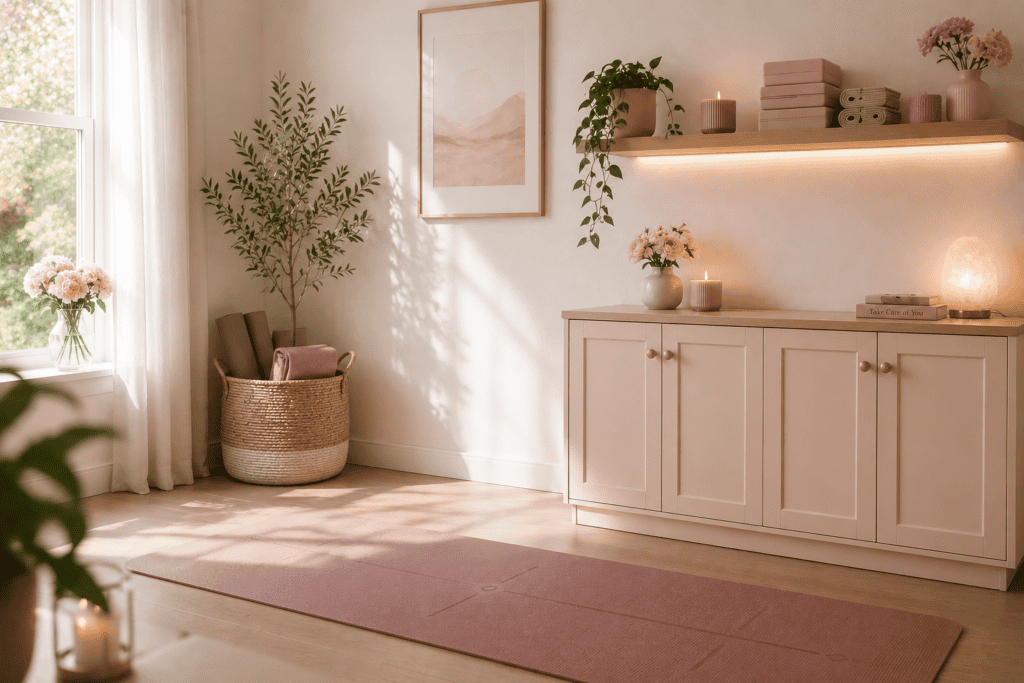
Yoga props (blocks, straps, bolsters, blankets) need a home, but they shouldn’t be the first thing you see when you walk in.
A woven basket in the corner holds everything neatly. A floating shelf with blocks and straps arranged by color looks intentional without cluttering the space. A small cabinet with doors hides everything completely.
The room should look clean when you walk in. Props come out for practice and go back when you’re done.
Temperature Matters More Than You Think
Yoga in a cold room feels stiff. Yoga in a hot room feels draining (unless that’s your thing). The ideal temperature for most home yoga practice is around 68 to 72 degrees.
If your space runs cold, a small space heater running for 10 minutes before practice warms the room. If it runs hot, a fan on low or cracking a window creates enough airflow without disrupting your balance poses.
The Sound Layer
Complete silence works for some people. For others, it feels heavy.
A small bluetooth speaker playing ambient sounds (rain, bowls, soft instrumental music) at low volume fills the space without competing with your breath. Place it behind you or to the side so it feels environmental rather than directed at you.
For guided practices, a speaker beats headphones. The sound fills the room and keeps you connected to the space instead of isolated in your head.
Your Retreat Is One Room Away
Designing a home yoga room isn’t about spending a lot of money or having a lot of space. It’s about being intentional with what you have.
A quiet corner. A mat you love. Soft lighting. One scent. Minimal decor. Space to breathe.
That’s a retreat.
For more on setting up home workout spaces:
- 8 Home Pilates Setup Ideas (No Studio Required)
- 12 Aesthetic Home Gym Ideas You’ll Actually Want to Copy
And if you’re building any kind of home workout space:
Download The 5-Minute Home Gym Setup Checklist — a one-page guide to choosing your space, picking your essentials, and creating a corner (or room) you’ll actually use.

Free 5-Minute Home Gym Setup Checklist
You don’t need a full home gym. You just need a corner.
No spam. Unsubscribe anytime.
Your practice deserves a space that matches it.