Home Gym Design for Every House Style: 5 Looks That Actually Belong In Your Home
My first house was a little bungalow in Portland, built around the 1920s. Charming, cute, tiny. I loved that house. Back then I worked all the time, and my gym was somewhere across town, never in the home I adored. I never once got to build a workout space inside that bungalow, and oh, how I would have loved to.
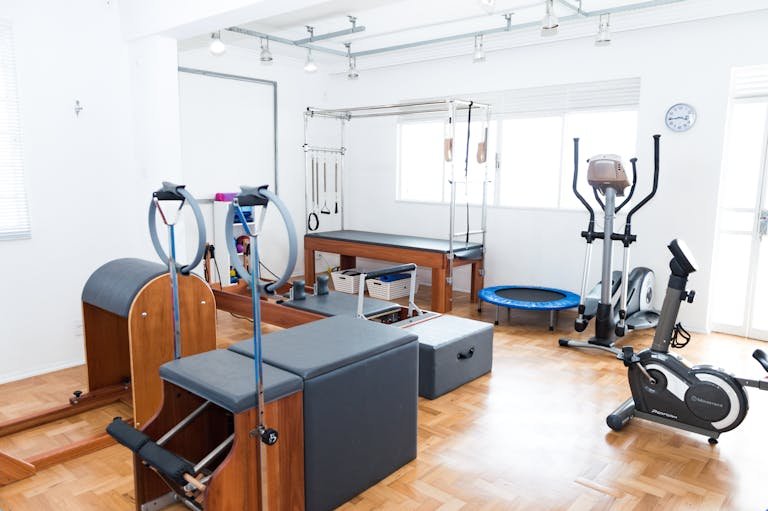
I think about that bungalow when I see how most home gym design looks online. It is all the same generic-modern box. Black rubber, chrome rack, cool gray everything, dropped into whatever house you own like it fell out of a catalog. It never matches. It always looks bolted on, and a 1920s bungalow deserved better than that.
I earned my degree in interior design from FIDM in Los Angeles in the early 2000s, with a focus on color saturation and space planning. So I can tell you why the generic-modern gym never looks right. The equipment doesn’t match the character of the house! Not the color of the house, the vibe of it. The good news is that this is totally fixable.
Home gym design is the practice of matching your workout equipment and decor to the architectural style and character lane your house already lives in, so the gym reads as designed-in rather than dropped-in. Get that one thing right and the rest gets easy. A Victorian wants depth. A farmhouse wants charm. Fighting the house is why most setups feel off, and working with it is the whole trick.
The One Rule That Fixes Most Home Gym Design
Most beginners try to match colors literally. Pink mat, pink weights, pink basket, pink rug. It looks flat every time. The professional move is different.
Match Saturation, Not Color means you pick one saturation (pastel, muted, moody, or warm natural) and let several colors live cohesively together. A moody space can hold black, charcoal, deep terracotta, and forest green at once, because they share the same depth. Variety inside one saturation reads as designed. One repeated color reads as cheap.
Your house already has a style. It was built in. The job of good home gym design is not to invent a look; it is to read the vibe that the architecture already set and stock the room to live inside it. So before you buy a single dumbbell, ask what the character of your house is. Then buy toward it, not away from it.
One more rule decides your shopping order. Anchor First means you buy your hardest-to-source pieces first (the mat, the weights, the kettlebell, anything committed to a specific finish), then build the room around them. Equipment has the fewest options. Baskets and rugs turn up at thrift stores. Reverse the usual decorating order and you never get stuck.
Now let’s walk the five most common house styles. Each gets a saturation lane, an anchor piece, a few moves, and the mistake that makes a gym look bolted-on.
1. Home Gym Design for a Victorian: Lean Into the Drama
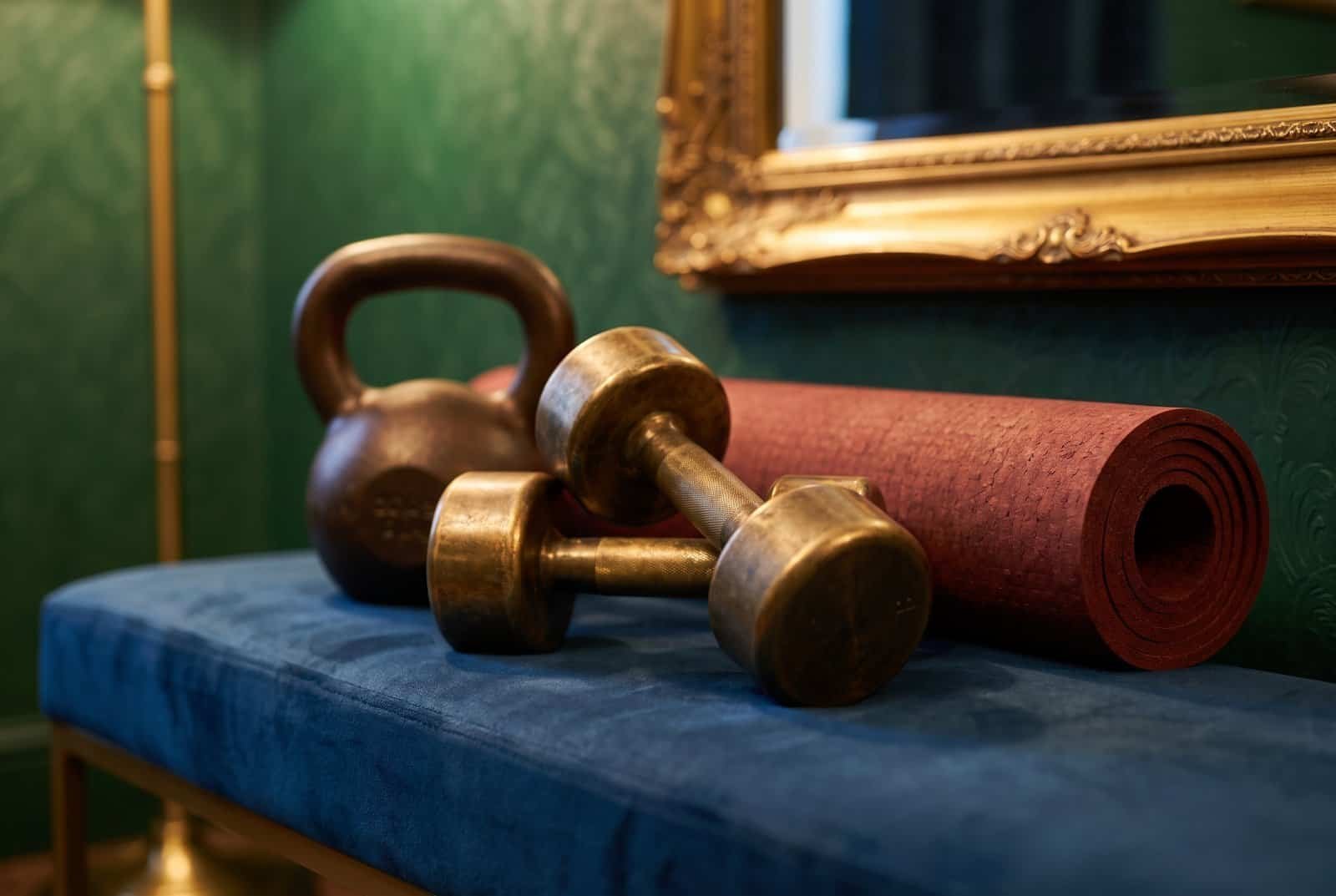
The lane: deep and moody. Jewel tones, dark wood, brass, ornate detail. A Victorian is saturated on purpose, and that is a gift for a workout space, not a problem to solve.
Anchor piece to buy first: a rich, dark anchor mat in charcoal, deep green, or oxblood, plus one set of weights with a bronze or brass finish. These are your hardest pieces to source, so lock them before anything else.
The moves: use moody, low lighting instead of overhead brightness. Let a jewel-tone rug ground the corner. Pick brass or bronze finishes on your rack, hooks, and kettlebell handle. A Victorian already has depth in the trim and wood, so you are matching that depth, not competing with it.
What to avoid: bright black rubber and cold chrome in a period room. Chrome reads modern and thin against Victorian depth, and the whole room ends up looking like a storage unit crept in overnight. Keep the finishes warm and the tones deep.
From my years DJing deep house in dark clubs, I learned that a moody room doesn’t slow the body down. It does the opposite. Dim and rich makes you stay longer, and Victorian home gym design gets to be that room by default.
2. Mid-Century Modern: Warm Wood, Clean Lines
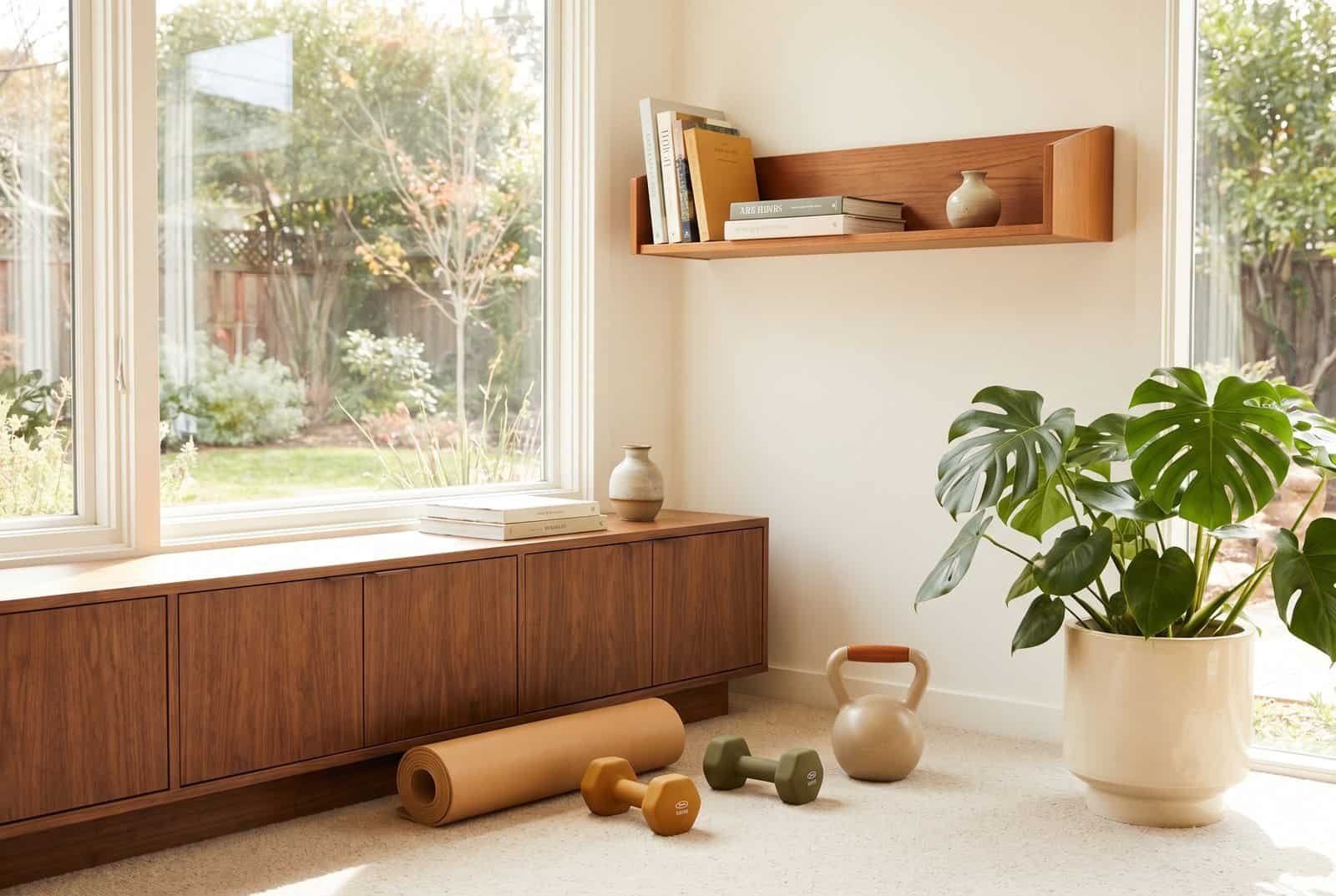
The lane: warm and muted. Walnut, teak, mustard, olive. Low profiles, clean lines, big light. Mid-century is warm and muted, never pastel and never moody, so home gym design here is all about restraint.
Anchor piece to buy first: a low wood storage bench or a warm-toned equipment set in olive, mustard, or tan. Mid-century lives and dies on the wood tone, so source that first and match everything to it.
The moves: keep storage low and horizontal so the sightline stays clean. Choose equipment in warm tones rather than cool grays. Leave breathing room, because clutter kills a mid-century room. One good plant and one framed print is plenty.
What to avoid: tall, busy, plastic storage towers. They break the low horizontal line the whole style is built on. If a piece is loud or vertical or shiny, it fights the room.
3. Craftsman and Bungalow: Natural, Grounded Home Gym Design

The lane: earthy and warm. Quartersawn oak, handcrafted detail, muted greens and browns. A Craftsman is grounded and honest about its materials, so your gym should be too.
This is the one I lived in. That 1920s Portland bungalow was exactly this, all warm wood and honest, handmade detail. If I set up a gym in it now, I wouldn’t fight a single thing about it. I would let the oak and the muted greens lead and match the equipment straight to them.
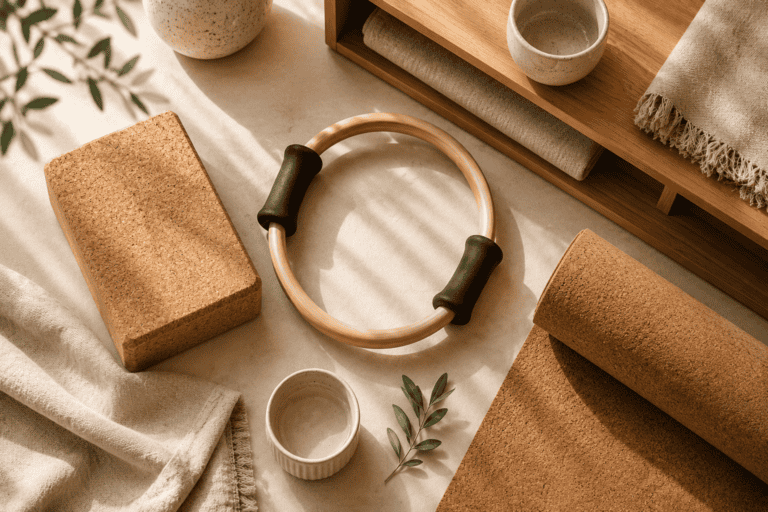
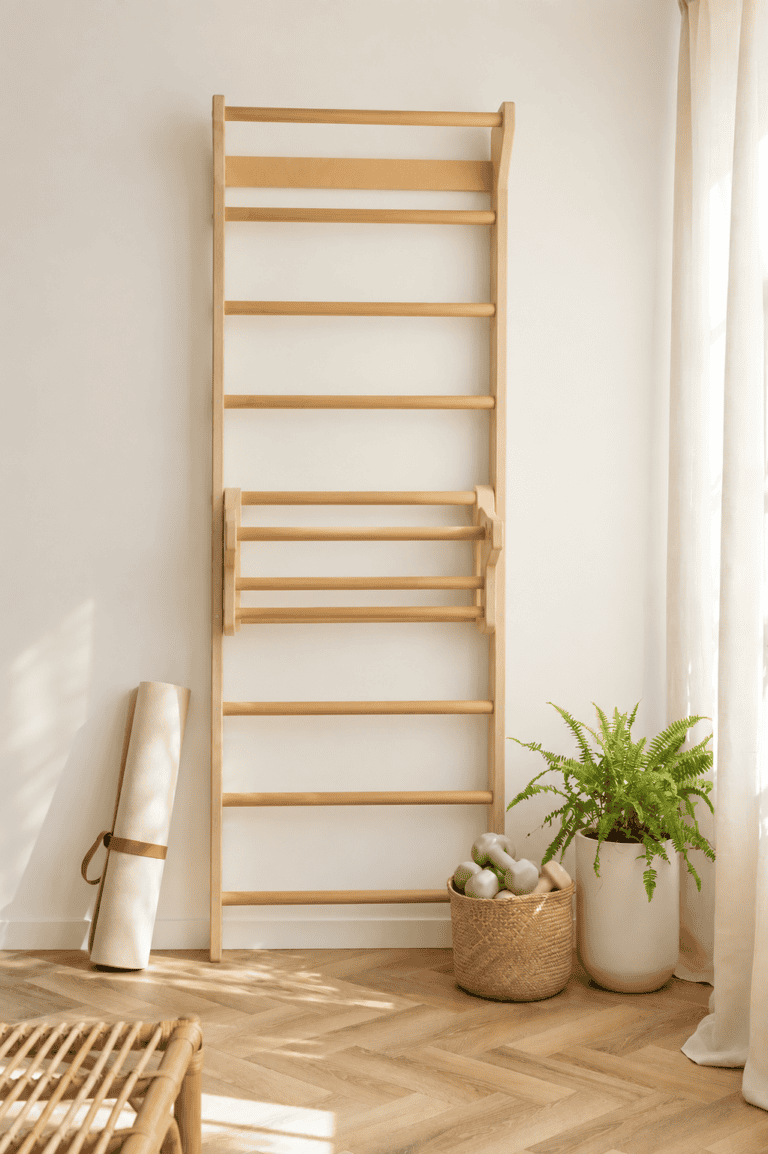
Anchor piece to buy first: a natural cork mat and a beechwood or oak equipment piece. These earthy anchors set the tone, and they happen to be the toxin-free choice too. Cork over rubber, beechwood over plastic, when you can.
The moves: pull in natural fibers, jute baskets, a wool rug, real wood over anything glossy. Keep colors in the muted-green and warm-brown family. Let handcrafted, slightly imperfect pieces do the styling, because a Craftsman rejects anything that looks mass-produced.
What to avoid: high-gloss, high-tech, cold-metal equipment. It reads corporate against all that honest wood and undoes the grounded feeling in one glance.
Want the corner mapped out before you spend a dollar on equipment? The free 5-minute checklist walks you through the exact order to set up a home gym that actually gets used.
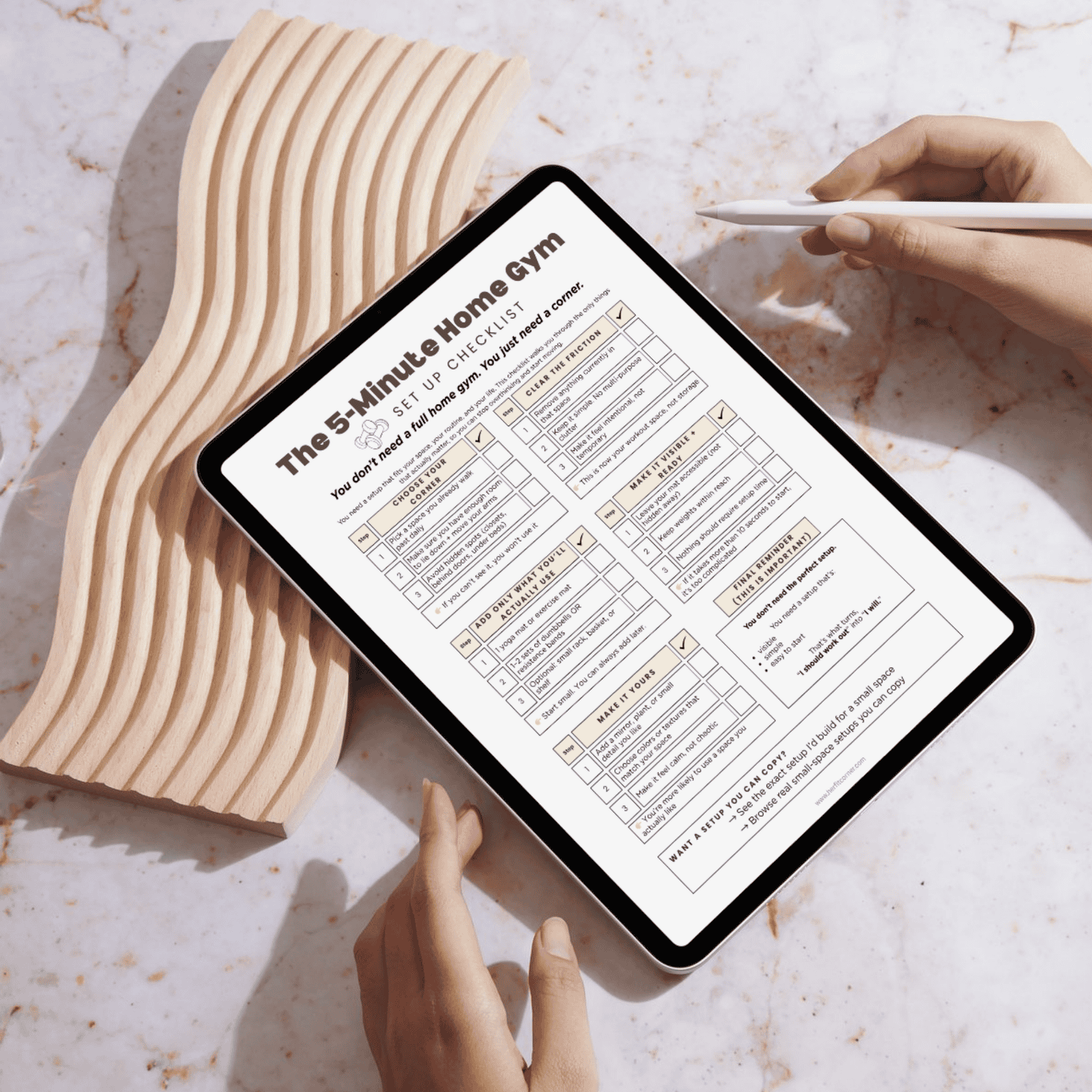
Free 5-Minute Home Gym Setup Checklist
You don’t need a full home gym. You just need a corner.
No spam. Unsubscribe anytime.
4. 1970s Ranch: Reframe the Retro
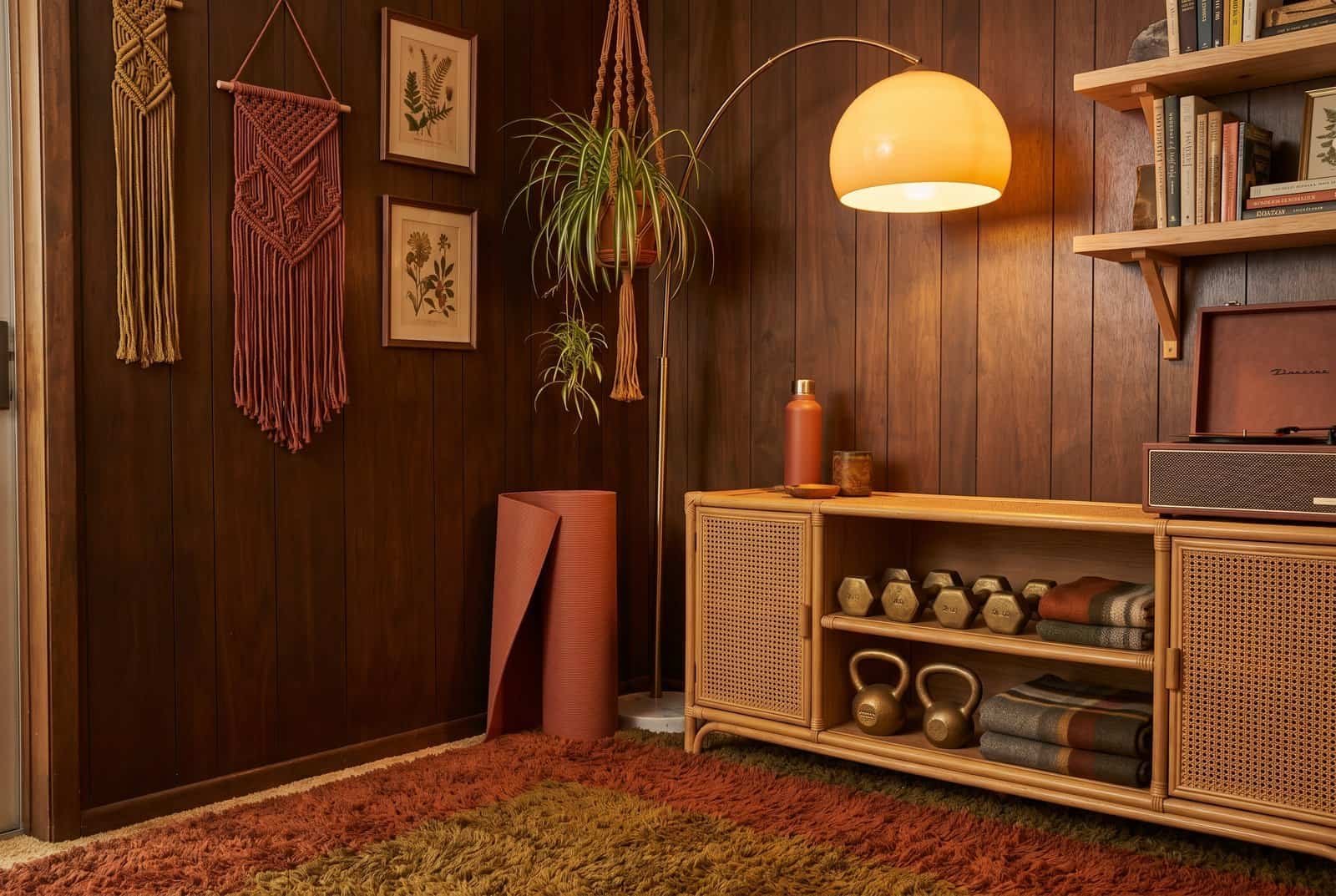
The lane: warm retro. Terracotta, rust, gold, olive, wood paneling, that sunken cozy feeling. Most people fight the 70s palette. The better move in home gym design is to claim it.
Anchor piece to buy first: a terracotta, rust, or burnt-gold mat, plus weights in a warm metal like brass or aged gold. Read the 70s palette as intentional warm-retro instead of dated, and suddenly it is the easiest style on this list to shop for.
The moves: pull the terracotta and olive already in the room into your equipment and textiles. Warm metals over chrome. A shag or textured rug leans into the era instead of apologizing for it. If the room has wood paneling, treat it as a warm anchor wall, not a flaw.
What to avoid: cool grays and stark white. They fight the warm-retro space and make the room look half-renovated. A 70s ranch wants warmth layered on warmth, so cold tones read like a mistake.
5. Modern Farmhouse: Keep It Light and Clean
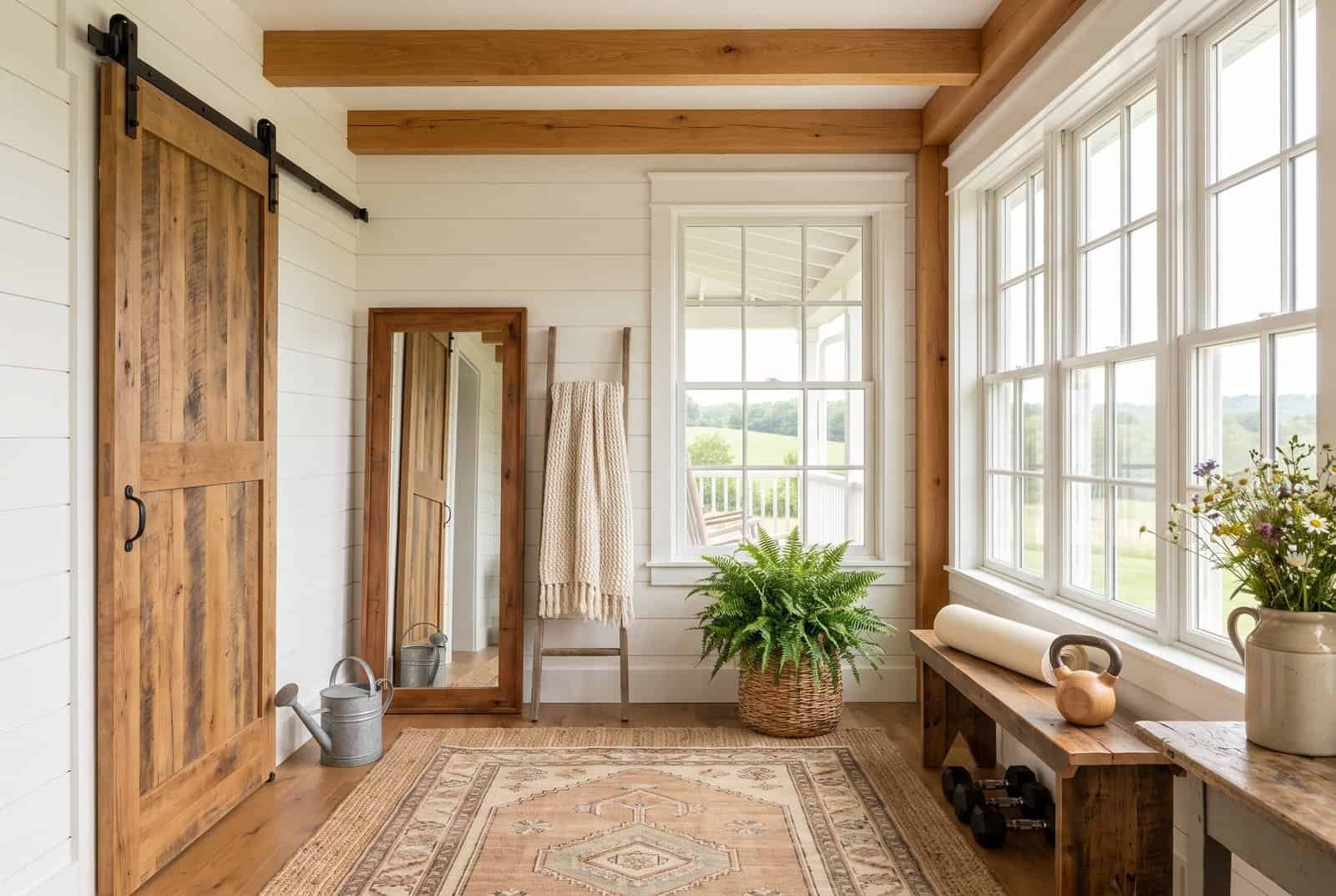
The lane: bright and airy. Cream, white, muted neutrals, black accents, lots of light. A modern farmhouse loves soft and clean, which is the opposite of the Victorian and asks for the opposite moves.
Anchor piece to buy first: a cream or oatmeal mat and one or two black-accent pieces (a rack, a matte-black kettlebell). Light base, black punctuation. That contrast is the signature of the whole style.
The moves: keep the base pale and let black accents do the work. Woven baskets for storage, sheer light at the window, natural wood in a light birch or blonde oak. This is the one where bright and clean is the goal of the home gym design, so do not reach for moody here.
What to avoid: dark, heavy, saturated equipment that muddies the airy feeling. Load a farmhouse with deep jewel tones and you have accidentally built a Victorian in the wrong house.
Why This Approach to Home Gym Design Actually Matters
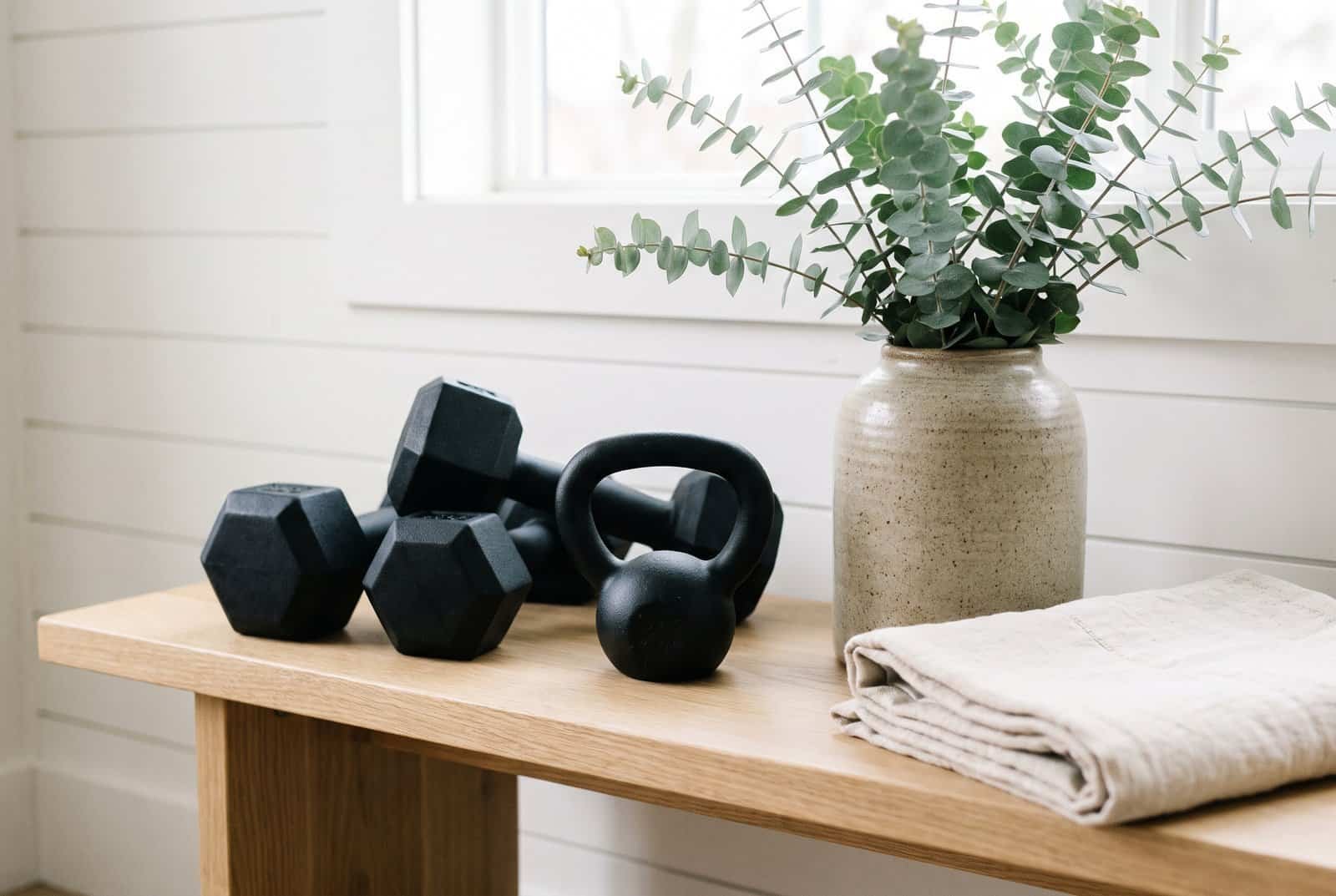
This isn’t only about a pretty space. It is about whether you show up. The reason most home gyms go unused is friction, and a mismatched room is friction you feel every time you walk in. Home staging research has long found that people form an impression of a room within seconds of entering, and your body does the same thing to a space you own. A room that fights itself makes you want to leave it.
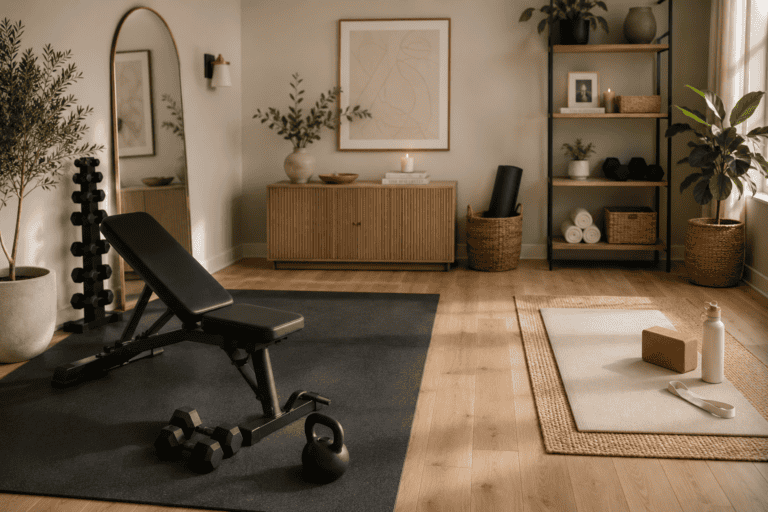
A room that feels designed-in makes you want to stay. That is the entire consistency mechanism. We live in the mountains now, in a house with real cabin vibes, and the gym I am building here follows the same rule the bungalow would have. If you want to see these saturation moves in a full space, our guide to an aesthetic home gym shows the room-level version. For newer builds and lighter palettes, modern home gym ideas leans into the clean-and-airy vibe that suits a farmhouse or a mid-century space.
And if your workout space is a closet, a corner, or a narrow strip beside the bed, the vibe rule still applies. That bungalow was small, and my LA apartments before it were smaller, so I know the tight-square-footage constraint firsthand. Our small home gym ideas apply every principle here to a space that size. The style scales down, but the lane doesn’t change.
Start With Your Style, Then Anchor
There is no right way to set up a home gym. That is the point. There is only the way that works with the house you already have.
So name your style first. Moody Victorian, warm mid-century, earthy Craftsman, retro ranch, or airy farmhouse. Then anchor with your hardest-to-source pieces in that style and fill in around them. That is good home gym design in two steps, and it is what my old bungalow never got to have. Do it in that order and your gym stops looking bolted-on. It starts looking like it was always supposed to be there.
Before you buy anything, run the free 5-minute home gym setup checklist. It gives you the order to work in so your first purchases match your lane instead of fighting it.
Free 5-Minute Home Gym Setup Checklist
You don’t need a full home gym. You just need a corner.
No spam. Unsubscribe anytime.