How To Set Up Your Home Gym On A Budget (Less Than $200)
Every “budget home gym” article I’ve read starts with a $500 squat rack and ends with a $1,200 shopping list. That’s not a budget. That’s a credit card statement.
Here’s what a real budget looks like: $200 or less. Total. For everything.
And here’s the part that matters: a home gym on a budget doesn’t mean a worse gym. It means a simpler one. You buy fewer items, each one does more, and you skip the stuff that looks impressive but sits unused after week two.
I’m going to walk you through the exact setup I’d buy if I were starting from zero with $200. Every item earns its spot. Nothing is filler.
The Full Setup: $197
| Item | Approximate Cost |
|---|---|
| Adjustable dumbbell set (Amazon Basics, 40 lb total) | $60 |
| Yoga/fitness mat (6mm+, non-slip) | $25 |
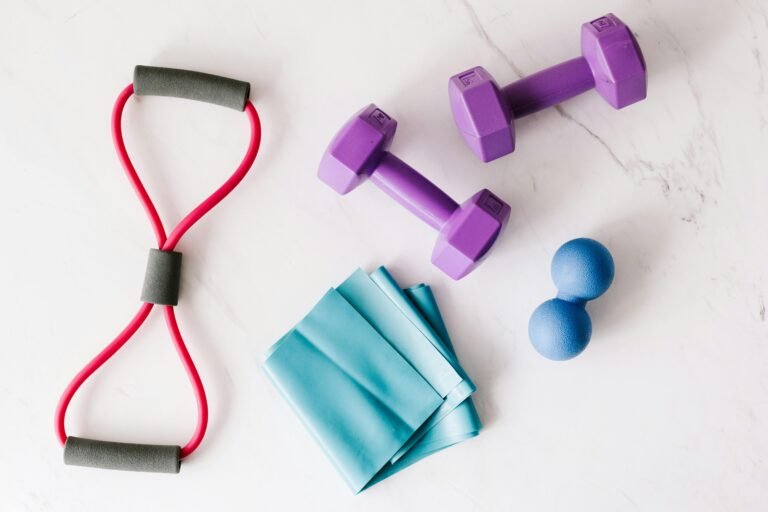
| Resistance band set (loop bands + long flat band) | $20 |
| Foam roller (36-inch, high-density) | $25 |
| Door-frame pull-up bar | $30 |
| Jump rope (speed rope) | $12 |
| Woven storage basket | $15 |
| Wall hooks (set of 4) | $10 |
| Total | $197 |
That’s eight items that cover strength training, cardio, flexibility, recovery, and storage. Let me break down why each one is here.
The Strength Foundation: Adjustable Dumbbells ($60)
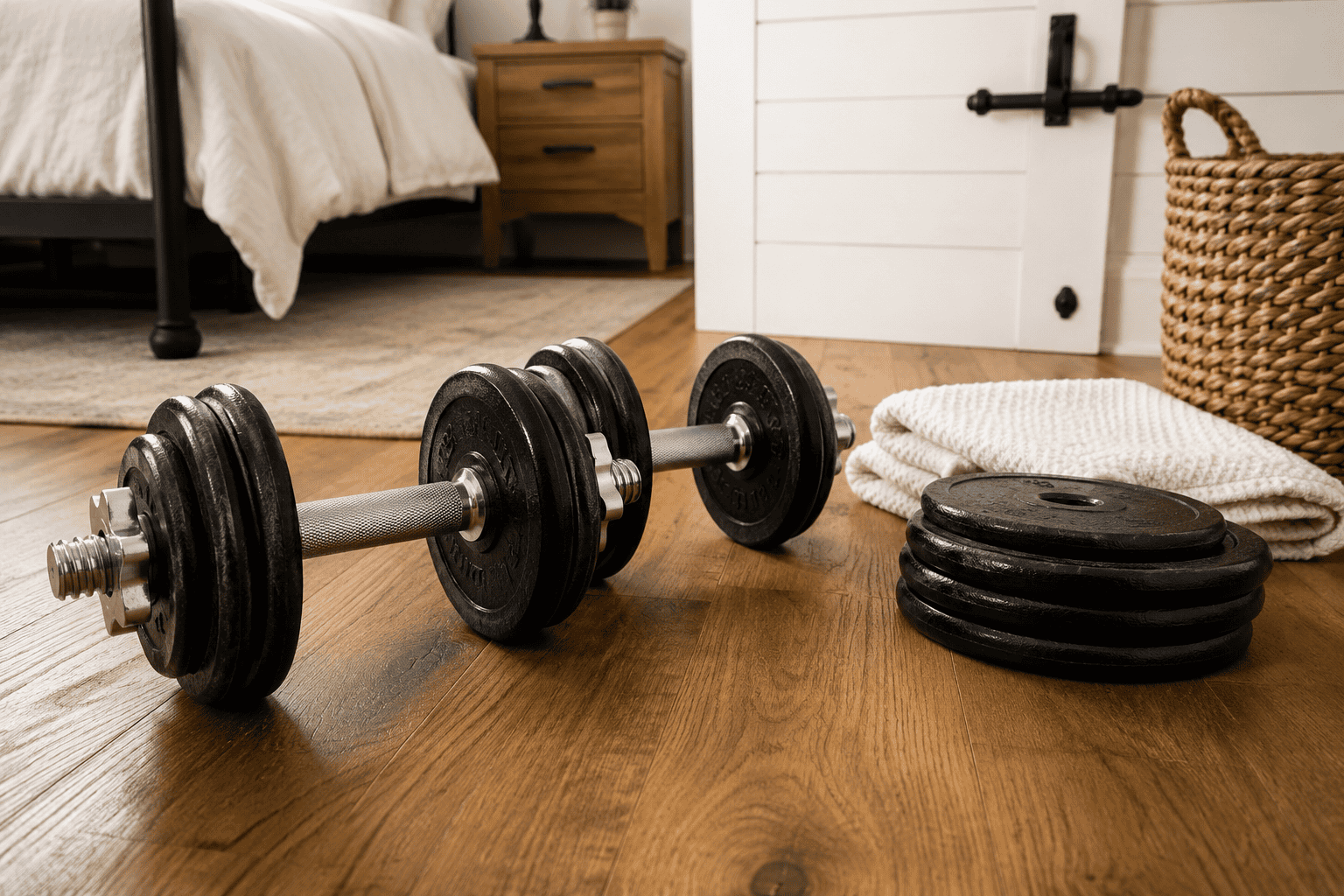
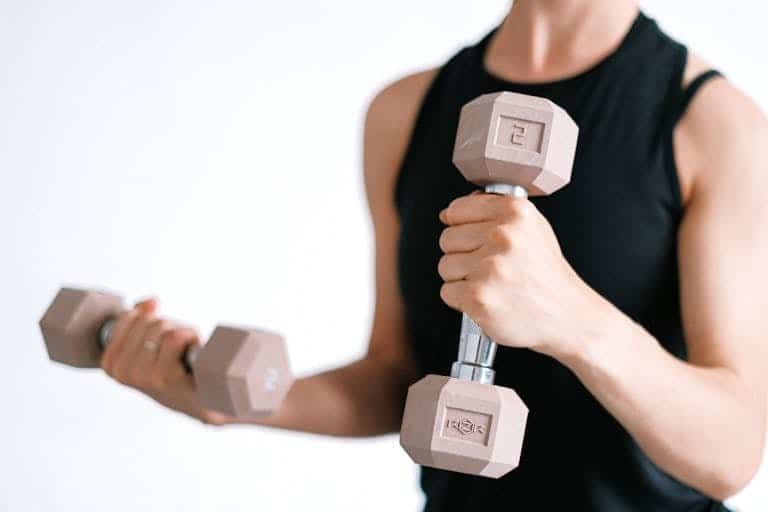
At this budget, you’re not getting Bowflex SelectTech. You’re getting the classic plate-loading style (like Amazon Basics or Yes4All). Screw-on collars, chrome plates, standard handles.
They’re not fancy. Changing weight takes 30 seconds instead of 3. But they work exactly the same for bicep curls, shoulder presses, rows, lunges, deadlifts, and every other dumbbell exercise.
A 40-pound total set (20 per hand) covers most women’s strength training needs for the first year or more.
The Foundation: A Mat ($25)
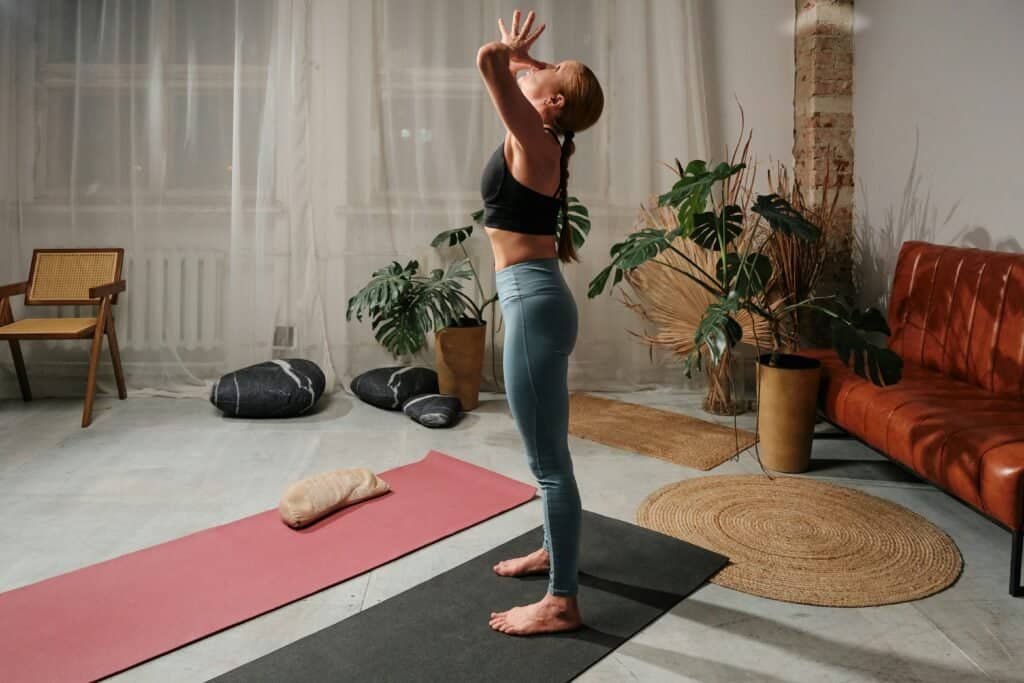
Your mat goes on the floor first. Everything else works around it.
Don’t go ultra-cheap here. A $10 mat peels, slides, and loses cushion within a month. A $25 mat from Gaiam, Amazon Basics, or similar holds up for a year or more and gives you the grip and thickness you need for daily use.
The Resistance Add-On: Bands ($20)
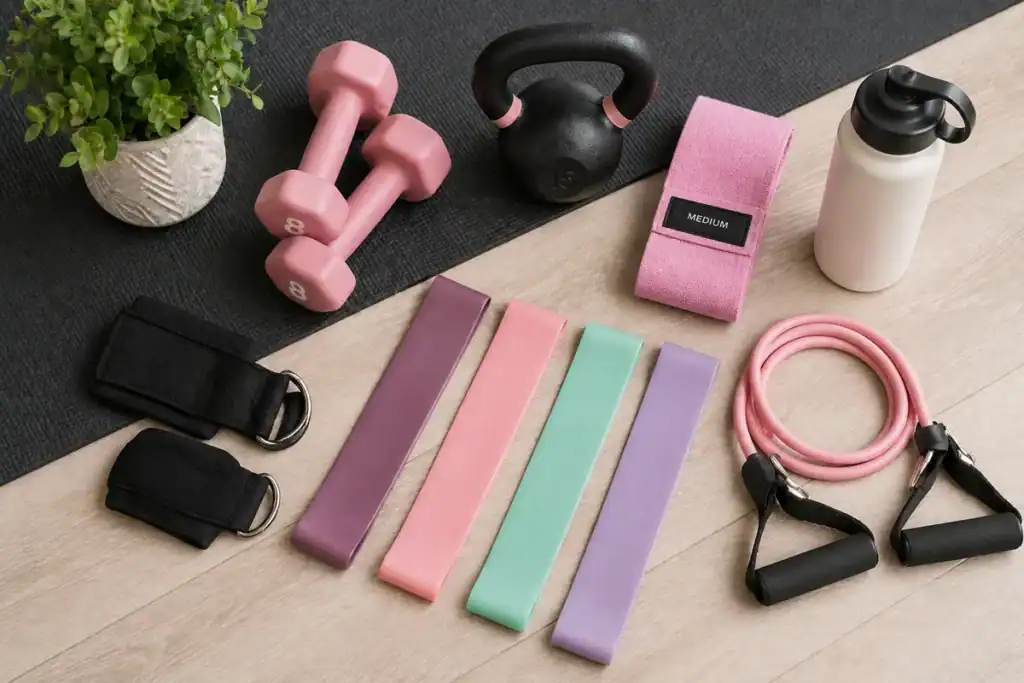
A set of loop bands (3-5 resistance levels) plus one long flat band gives you variable resistance for legs, glutes, arms, and stretching. They weigh nothing, store anywhere, and add intensity to exercises that would otherwise require heavier weights.
At this price point, bands effectively double your exercise options without taking up any extra space.
The Recovery Tool: Foam Roller ($25)
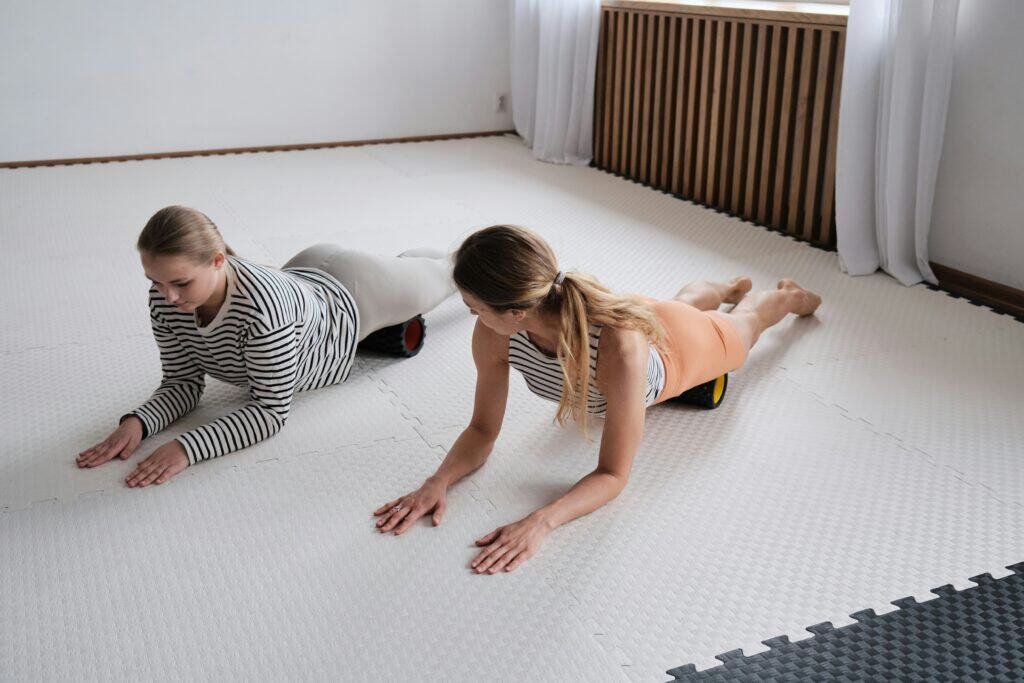
Recovery isn’t optional if you want to keep training consistently. A foam roller handles post-workout soreness, pre-workout warmup, and even doubles as an unstable surface for core exercises.
A high-density 36-inch roller is the standard. Skip the textured ones and the vibrating ones at this budget. Smooth and firm does everything you need.
The Cardio Option: Pull-Up Bar + Jump Rope ($42)
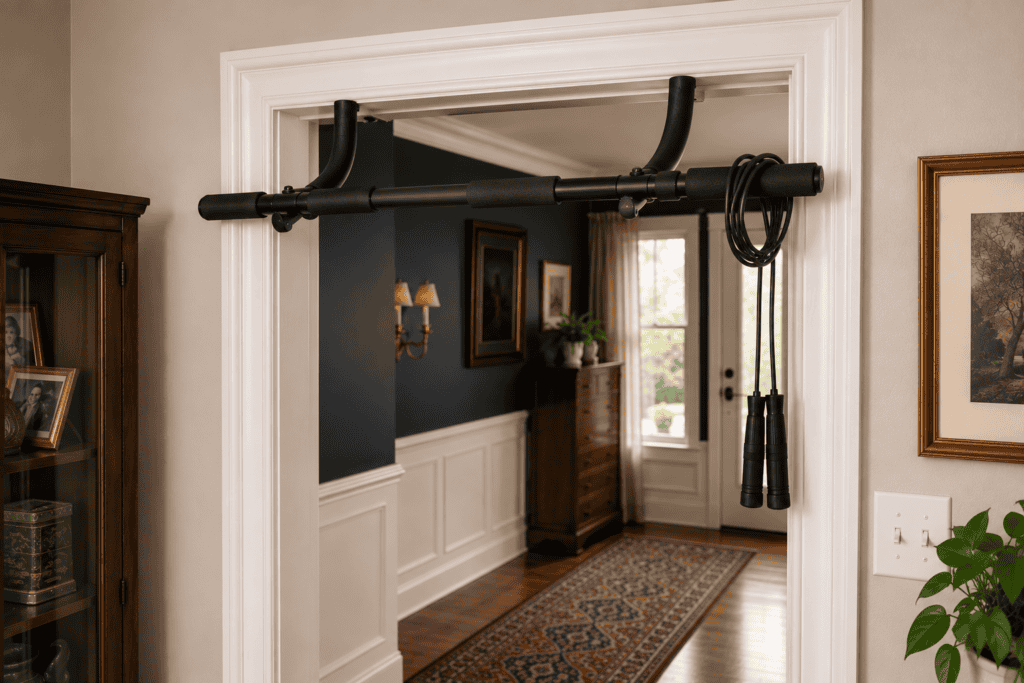
A door-frame pull-up bar covers one of the best upper body exercises and works for hanging leg raises, assisted chin-ups (with a band), and dead hangs for grip strength. It installs in seconds with no drilling.
A speed jump rope is your cardio machine. Ten minutes of jumping burns more calories than thirty minutes of walking, and the rope stores in a basket or hangs on a hook.
Together, these two items give you full cardio and upper body pulling for $42.
The Organization: Basket + Hooks ($25)
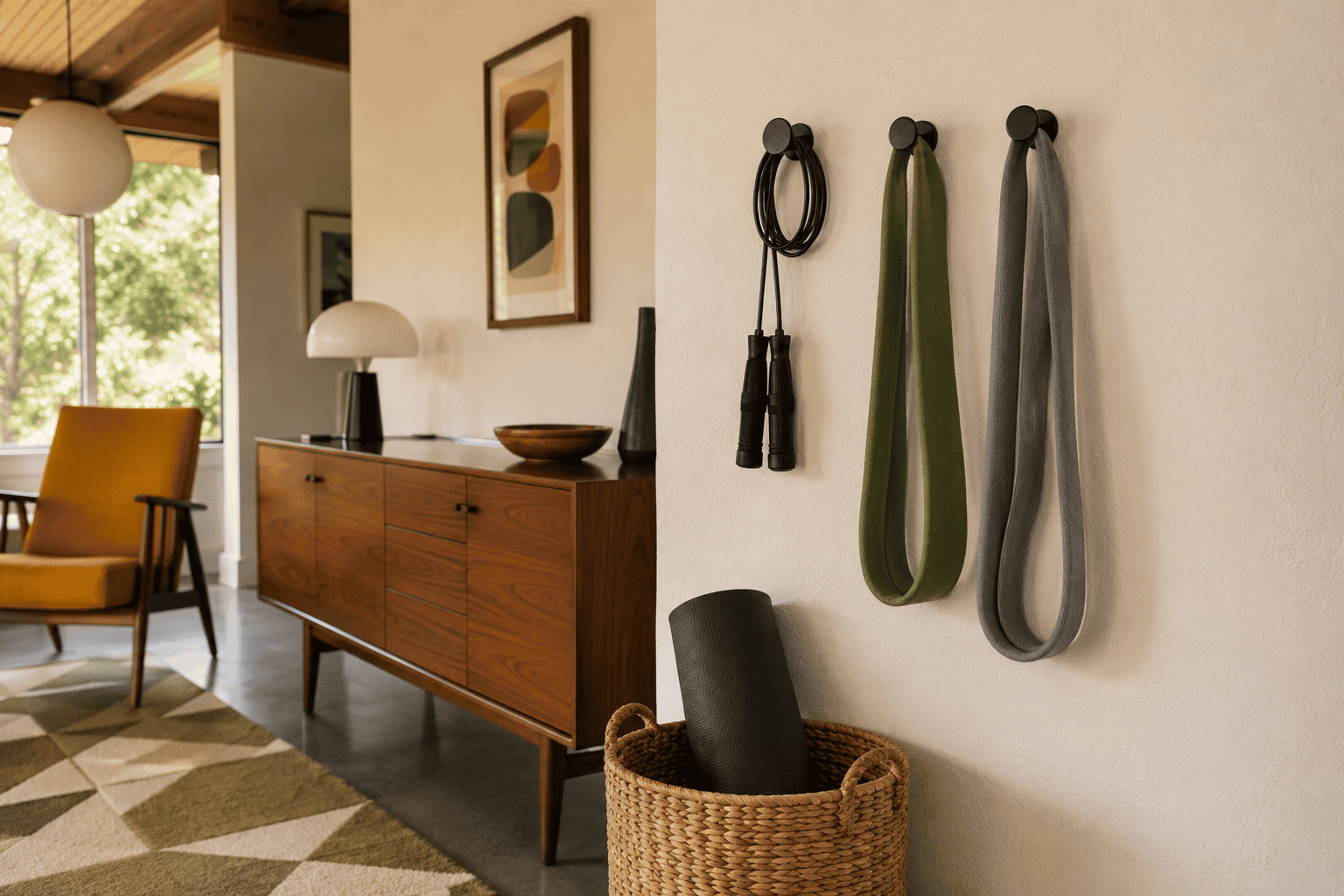
This is the part most budget guides skip, and it’s why most budget gyms look like a mess.
A woven basket on the floor or a shelf holds your bands, jump rope, and small accessories. Four wall hooks hold your towel, pull-up bar (when not in the doorframe), and headphones.
For $25, your gym corner looks organized and intentional instead of chaotic. That matters more than most people realize.
For more on keeping your space clean, see how to organize your home gym so you actually use it.
What This Setup Can Do
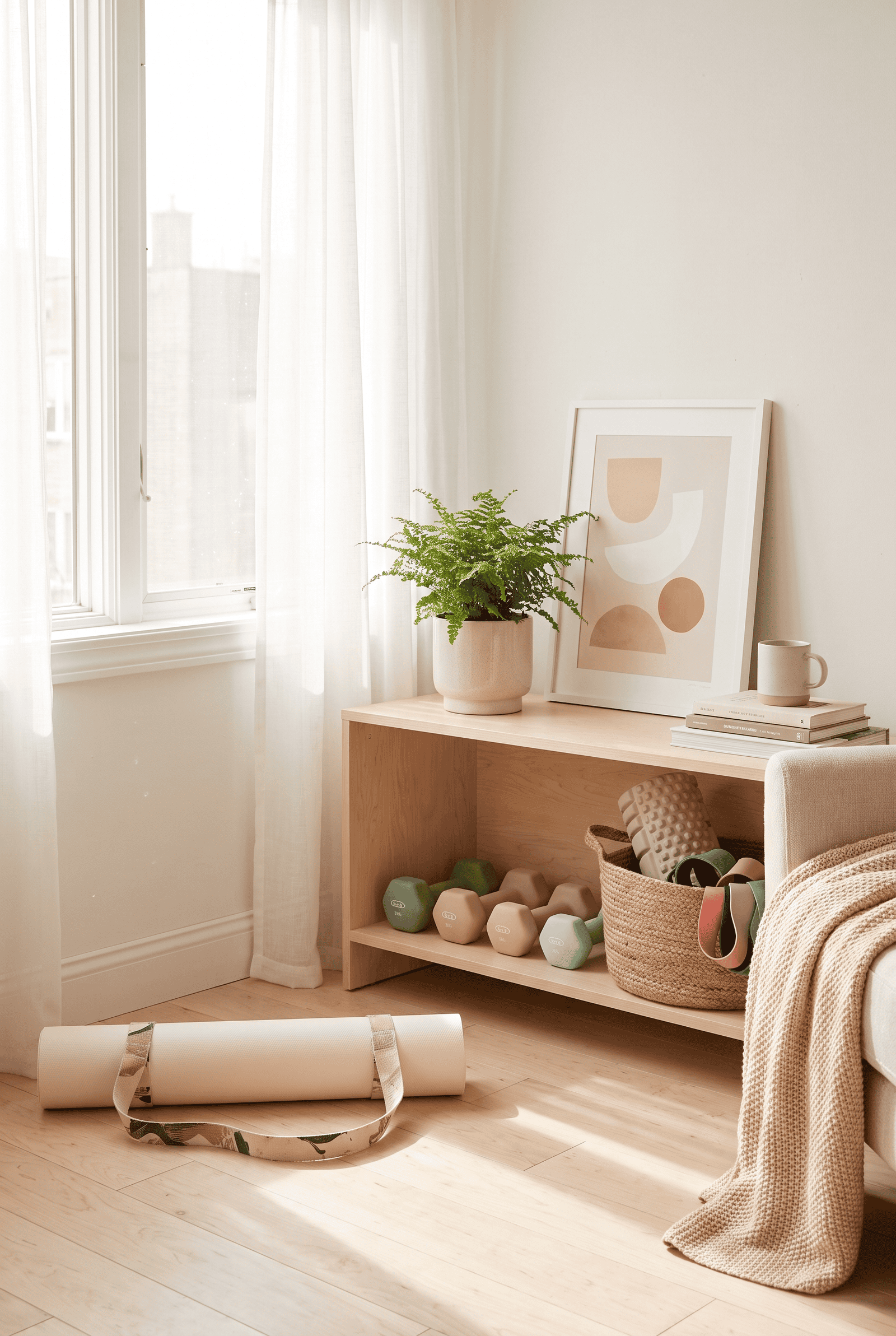
With these eight items, you can do:
Upper body: Dumbbell presses, rows, curls, shoulder raises, tricep extensions, pull-ups, push-ups with band resistance
Lower body: Squats, lunges, deadlifts, hip thrusts, banded lateral walks, clamshells, step-ups
Core: Planks, foam roller crunches, dead bugs, leg raises (on pull-up bar), mountain climbers
Cardio: Jump rope intervals, dumbbell complexes, band HIIT circuits
Flexibility: Foam rolling, band-assisted stretching, yoga flows on the mat
That’s a complete training program. Not a “budget” version of a program. A complete one.
What to Add Later
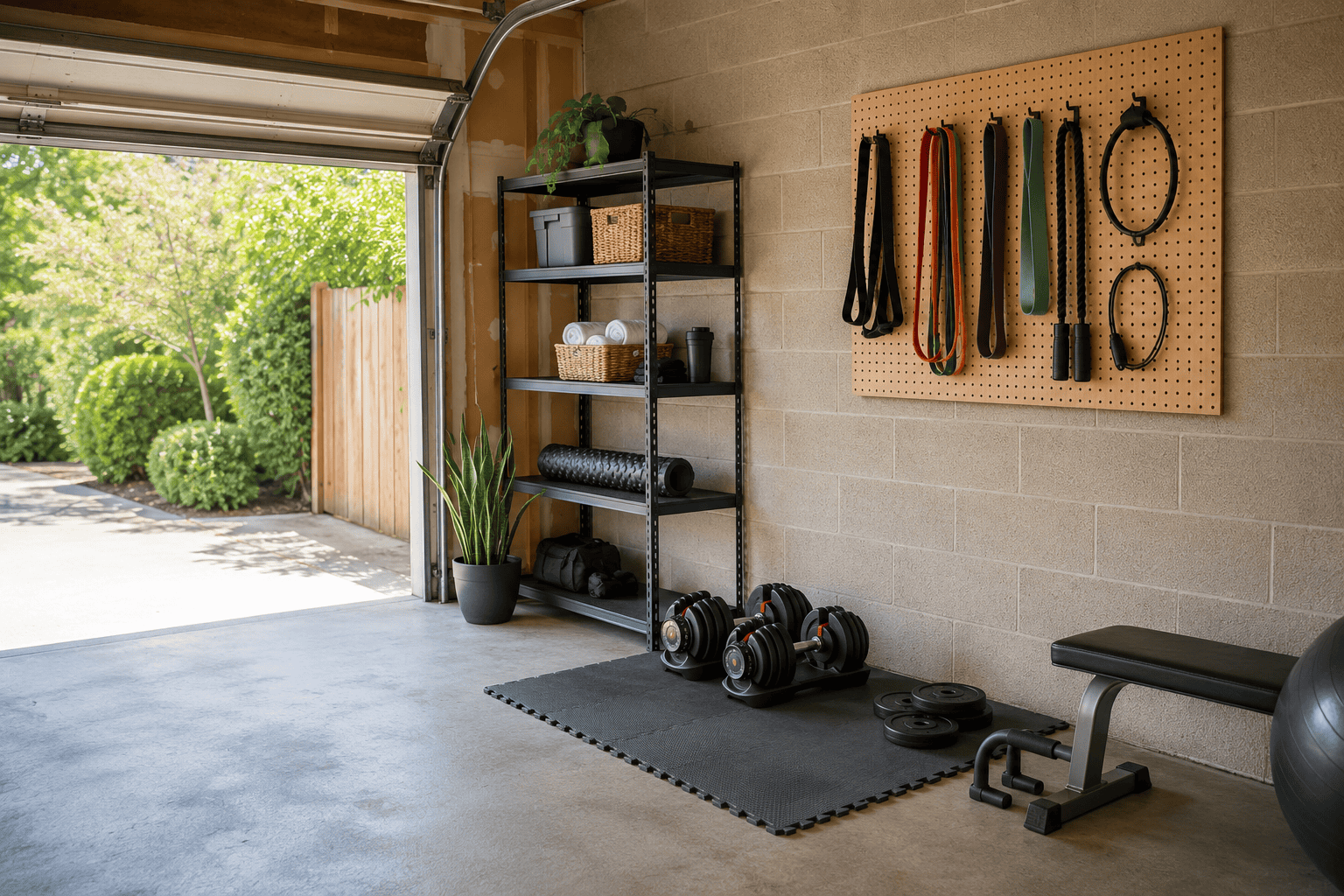
- A kettlebell ($30-$50) for swings and goblet squats
- A workout bench ($60-$100) for presses and step-ups
- An upgraded dumbbell set (adjustable dial-type) when you outgrow the plates
But don’t rush. The $197 setup handles more than enough for the first six months to a year.
$200 Is Enough
The fitness industry wants you to believe that an effective home gym requires a significant investment. It doesn’t.
$200 buys you a complete, functional, organized workout space that covers every muscle group and every training style. The rest is just showing up.
For more on building with less:
- What You Actually Need for a Home Gym (and Nothing Else)
- How to Set Up a Workout Corner in Your Bedroom
Download The 5-Minute Home Gym Setup Checklist — your one-page shopping list, layout guide, and setup plan. Everything you need. Nothing you don’t.
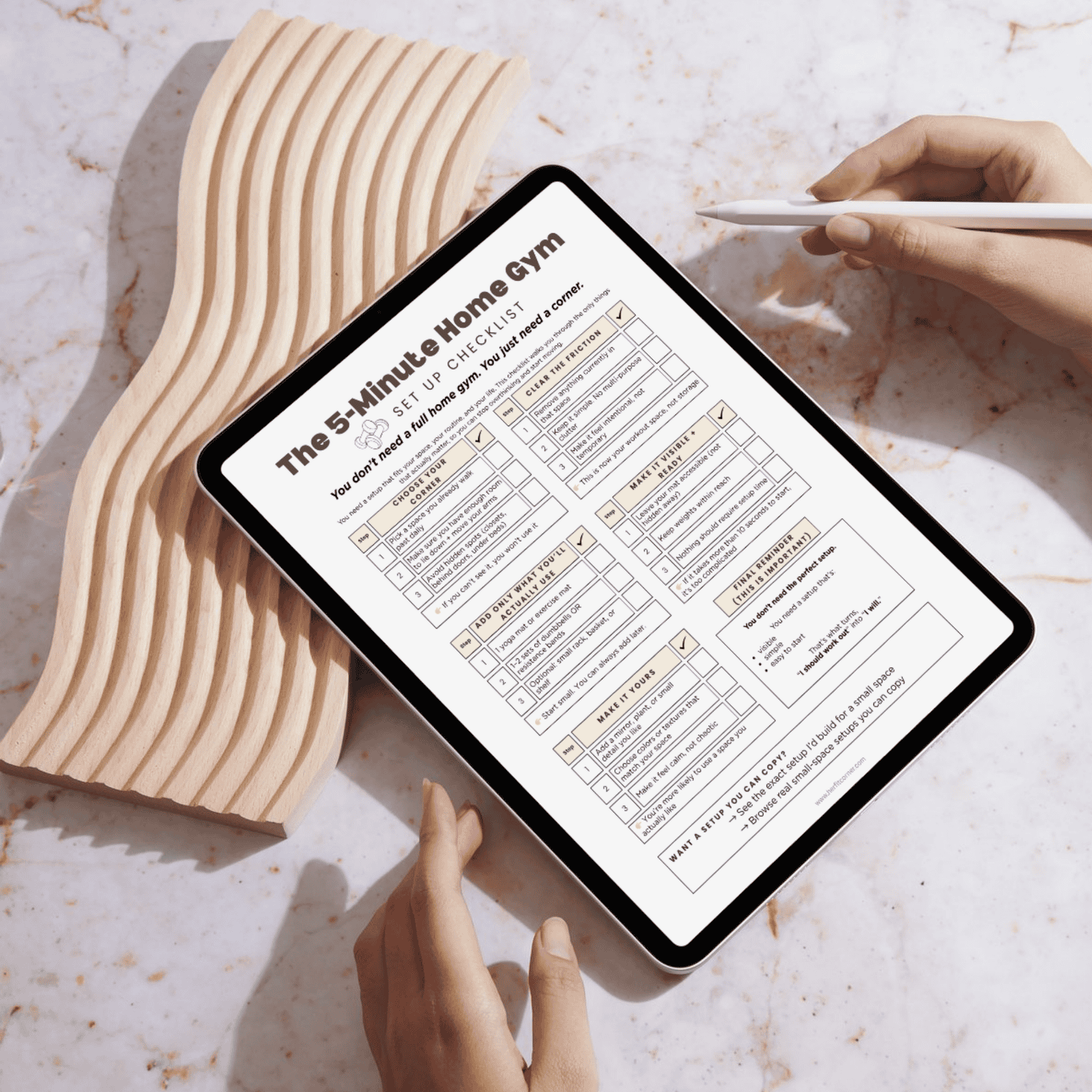
Free 5-Minute Home Gym Setup Checklist
You don’t need a full home gym. You just need a corner.
No spam. Unsubscribe anytime.
$200. A corner. Done.