A Beginner’s Guide to Setting Up a Home Gym (for Women)
The goal of every woman who types “home gym setup” into a search bar is simple: figure out how to work out at home without wasting money, space, or motivation on a setup that doesn’t stick.
But with thousands of equipment reviews, floor plan ideas, and “ultimate home gym” guides, it can be hard to know where to actually start. Especially when most of those guides are written for people who already know what a trap bar is.
Maybe you’ve been scrolling Pinterest for inspiration and wondering which of those beautiful gym photos are realistic for a one-bedroom apartment. Maybe you bought a few things and they’re currently collecting dust in the corner.
It can make you feel like home gyms are only for people with basements and budgets you don’t have.
Today, you’re in luck. I’m going to walk you through the entire process of setting up your first home gym, step by step, so you can start working out consistently, stop wasting money on equipment you don’t need, and actually enjoy the space you create, without spending more than a few hundred dollars.
I’ll cover how to choose your space, what equipment to buy (and what to skip), and how to set everything up so it looks and feels like a gym you’ll use.
Keep reading. By the end, you’ll have a plan.
What Is a Home Gym Setup (Really)?
A home gym setup for beginners is a small, intentional space in your home with a few key pieces of equipment that let you do a full workout without leaving the house. It aims to remove the friction of getting to a gym, give you privacy and convenience, and make exercise feel accessible instead of overwhelming.
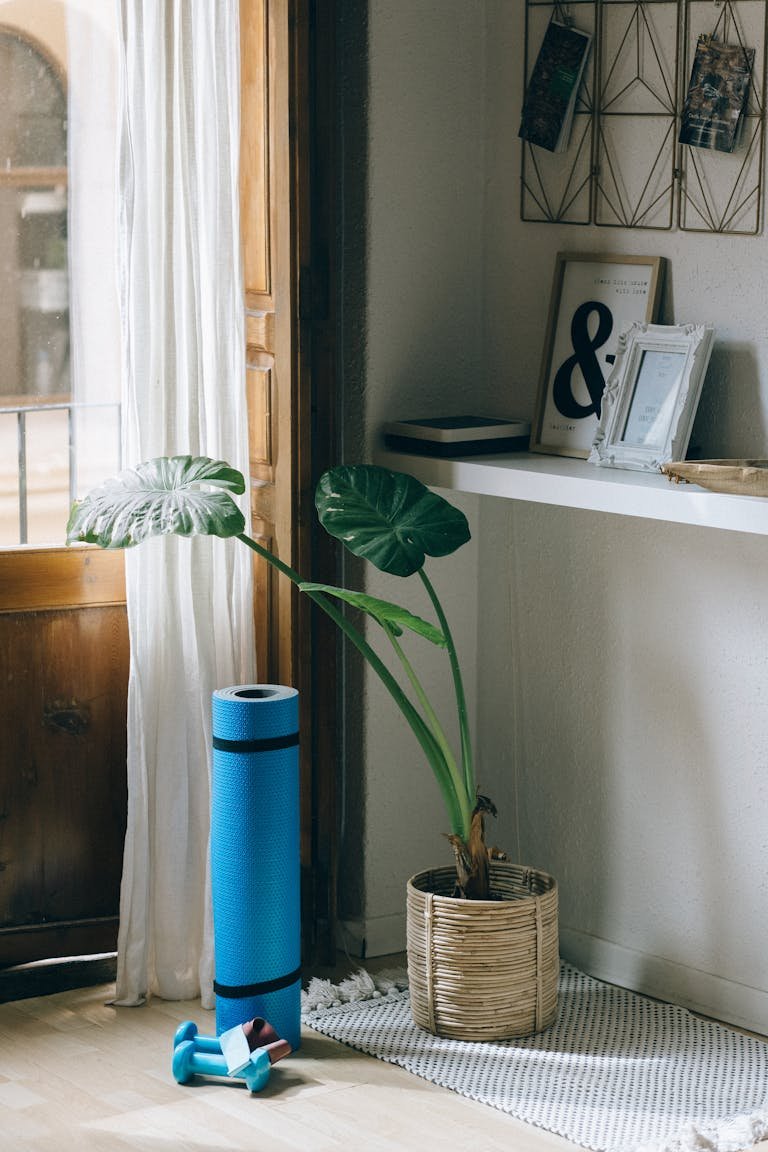
It works in apartments, houses, bedrooms, garages, and basements. The space can be as small as a 5×5 foot corner.
Anyone who has 15 minutes and a few square feet of open floor can benefit from a home gym. The idea behind it is simple: when working out is easy to start, you start more often.
Download The 5-Minute Home Gym Setup Checklist to follow along as you read.
Why Does a Home Gym Matter?
Studies show that the number one reason people skip workouts is inconvenience. Not lack of motivation. Not laziness. Just too many steps between deciding to exercise and actually doing it.
A home gym eliminates most of those steps. No driving. No packing a bag. No waiting for equipment. No feeling self-conscious.
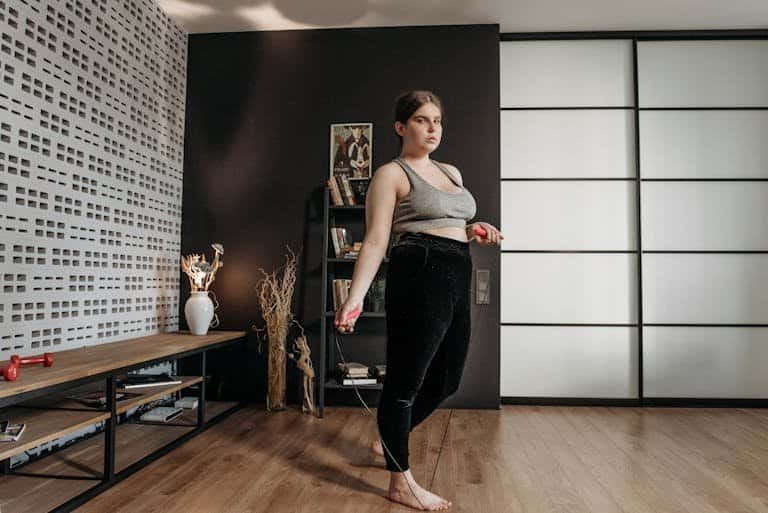
By setting up even a minimal home gym, you’ll be able to work out on your own schedule, in your own clothes, with your own music.
This way, you’ll actually be consistent. And consistency is what produces results.
Also, a home gym gives you the ability to train however you want (pilates, strength, yoga, HIIT) and adjust your space as your training evolves.
That means you won’t have to pay $50 a month for a membership you use three times.
Step 1: Choose Your Space
If the idea of “finding space” sounds overwhelming, I get it. Most homes feel like every square foot is already spoken for.
So let me simplify. Walk through your home and look for any area that has:
- A clear 5×5 foot zone (or potential for one after moving a few things)
- A flat floor
- Enough ceiling height to raise your arms overhead
Common spots that work:
- Bedroom corner (near the closet or window)
- Living room wall (behind the couch or next to a bookshelf)
- Garage (one wall section)
- Basement (even unfinished basements work)
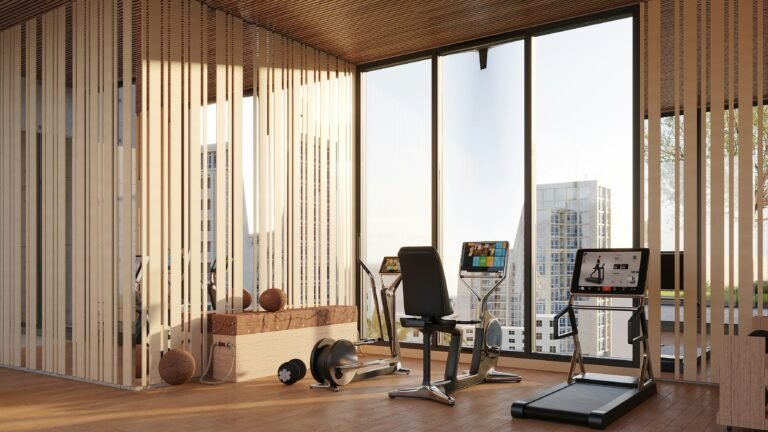
- Spare room (if you have one, this is the dream)
For a detailed guide on bedroom setups specifically, see how to set up a workout corner in your bedroom.
First step: Clear the zone completely. Move furniture, boxes, clothes. See the empty space before you plan anything.
Step 2: Set Your Budget
| Budget | What You Get |
|---|---|
| Under $100 | Mat, resistance bands, foam roller |
| $100 to $200 | Add adjustable dumbbells, jump rope, storage |
| $200 to $500 | Add a bench, kettlebell, pull-up bar, better dumbbells |
Start at whatever level feels comfortable. You can always add later. The most important thing is starting with something, not starting with everything.
For the full breakdown of the $200 setup, see the under $200 home gym setup that actually works.
Step 3: Buy the Essentials (and Only the Essentials)
- A yoga/fitness mat ($20-$40)
- Adjustable dumbbells or a starter dumbbell set ($50-$200)
- Resistance bands ($10-$30)
- A foam roller ($15-$30)
- A kettlebell ($25-$50)
That’s your foundation. Every other piece of equipment is a nice-to-have that you can add later based on how you train.
For the full breakdown, see what you actually need for a home gym (and nothing else).
First step: Buy items 1 through 3. That’s under $100 and covers full-body training.
Step 4: Organize Before You Start
This is the step most beginners skip, and it’s why most home gyms fall apart after a month.
Before your first workout, give every piece of equipment a home:
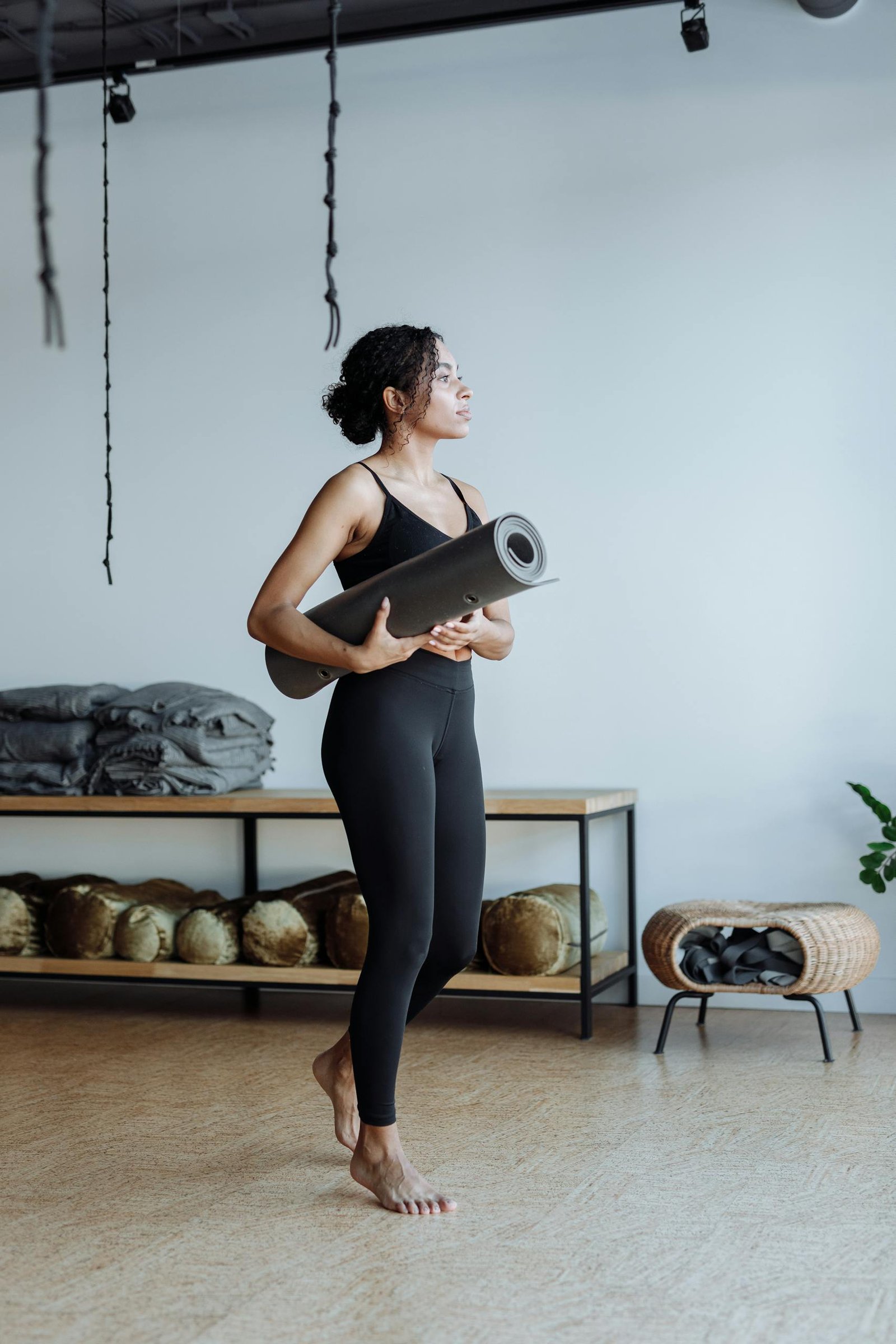
- Mat goes on the floor or hangs on a hook
- Dumbbells go on a shelf or in a rack
- Bands go in a basket or on hooks
- Foam roller stands upright in the corner
When everything has a place, cleanup takes two minutes after every session. When nothing has a place, the corner becomes a mess and you stop going.
First step: Buy a woven basket ($10-$15) and two to four wall hooks ($8-$10). That’s all the storage most beginners need.
Step 5: Make It Look Intentional
Your home gym should look like you designed it on purpose. This doesn’t require money. It requires thought.
Match your equipment colors to your room. Place one plant nearby. Add a mirror if you have one. Keep the area clean between workouts.
When the space looks good, you feel good walking into it. When it looks like a pile of equipment, you avoid it.
Step 6: Start Simple
- Walk to your corner
- Roll out the mat
- Do 10 squats, 10 push-ups, and a 30-second plank
- Roll the mat back up
Total time: 5 minutes. That’s a win. You used the gym. Tomorrow, do 10 minutes. The week after, 20.
The habit matters more than the workout. The space makes the habit possible.
Start Today
Setting up a home gym for beginners isn’t complicated. It’s just unfamiliar. And unfamiliar things feel bigger than they are.
You need a corner. A mat. A few pieces of equipment. A basket for storage.
That’s it. Everything else is optional, and you can add it later when you know what you actually use.
The best home gym isn’t the one with the most equipment. It’s the one you walk to every day.
Download The 5-Minute Home Gym Setup Checklist — a one-page guide with your space checklist, equipment list, and setup steps. Print it, follow it, and you’ll have a gym ready by this weekend.
Your corner is waiting. Go claim it.