How to Choose a Pull Up Bar for Your Home: 6 Options for Every Door Frame, Wall, and Weird Floor Plan
My girls are starting cheerleading this fall. My son just started jiu-jitsu. Somewhere in the middle of all that sign-up paperwork, my husband and I decided we weren’t going to be the parents who only drive and watch. We’re starting a family calisthenics practice. All of us.
Calisthenics is famously low-equipment, but it has one non-negotiable. You can improvise squats, push-ups, and dips off the edge of a chair. You can’t improvise a pull-up. Which is how I ended up walking my own house, staring at door frames and ceilings, trying to figure out where a pull-up bar could actually live.
A pull up bar is the one piece of home gym equipment your house chooses for you. Your door trim, your stud spacing, and your ceiling joists rule options in or out before your taste ever gets a vote.
That’s not bad news. It just means the search starts with your walls instead of the reviews. So here are six pull up bar options matched to six real structural situations, including the ones nobody warns you about. The splurge I’d actually save for is at the end.
Which Pull Up Bar Fits Your House? Read the Structure First
In design school, the rule was to measure the room before you fall in love with the furniture. Around here that principle is called Evaluate Before Equip: assess the room itself (privacy, climate, light, sound, schedule) before any equipment comes home. A pull up bar adds one more axis to evaluate, and it outranks all the others: structure.
Four questions build your entire shortlist:
- Can you drill holes, or is this a rental where you can’t?
- Do your door frames have molding, or are they flat and trimless?
- Are your doorways standard width, or are they wide, arched, or cased openings?
- Can you get to studs or exposed ceiling joists?
Answer those and the decision mostly makes itself. One more reason to care before we start: a Lancet study of nearly 140,000 adults found grip strength predicted heart disease risk better than blood pressure did. Hanging from a bar isn’t just back training. It’s one of the cheapest health markers you can own.
If You Rent and Can’t Drill: The Doorway Leverage Bar
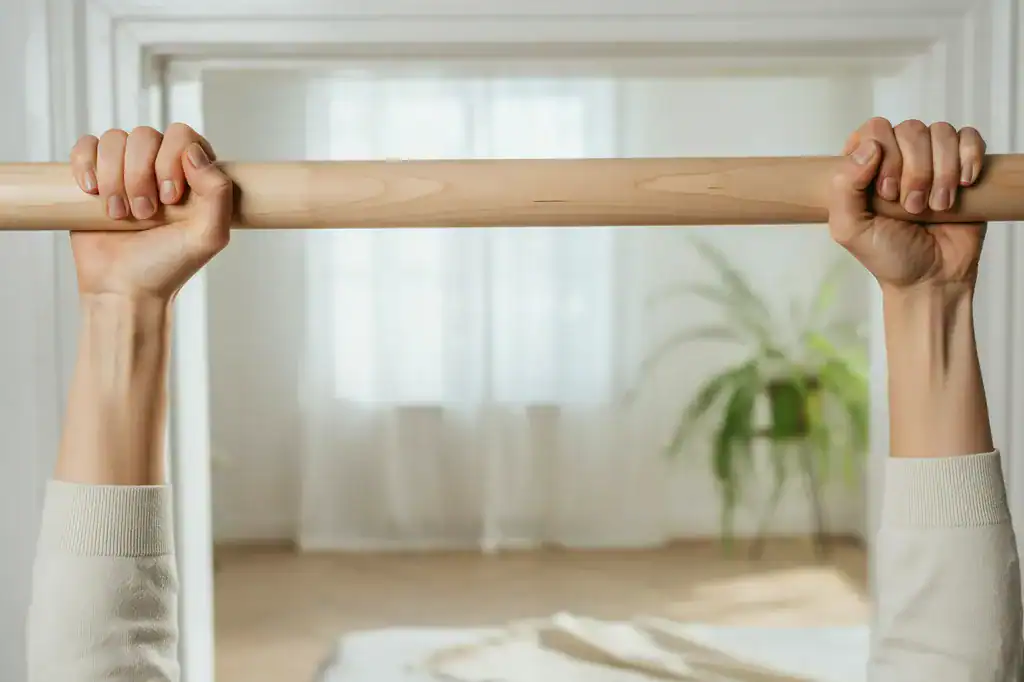
This is the bar most people picture when they hear pull up bar. A doorway leverage bar hooks over the top of your door frame and cantilevers against the wall above it. No screws, no holes, no landlord conversation, usually under $40.
The physics are the fine print. The bar grips by pressing down on the molding on the far side of the frame, so it needs real trim to hold onto. It also needs a standard-width doorway and a few inches of clear wall above the frame. If you have all three, this is the easiest yes in the category.
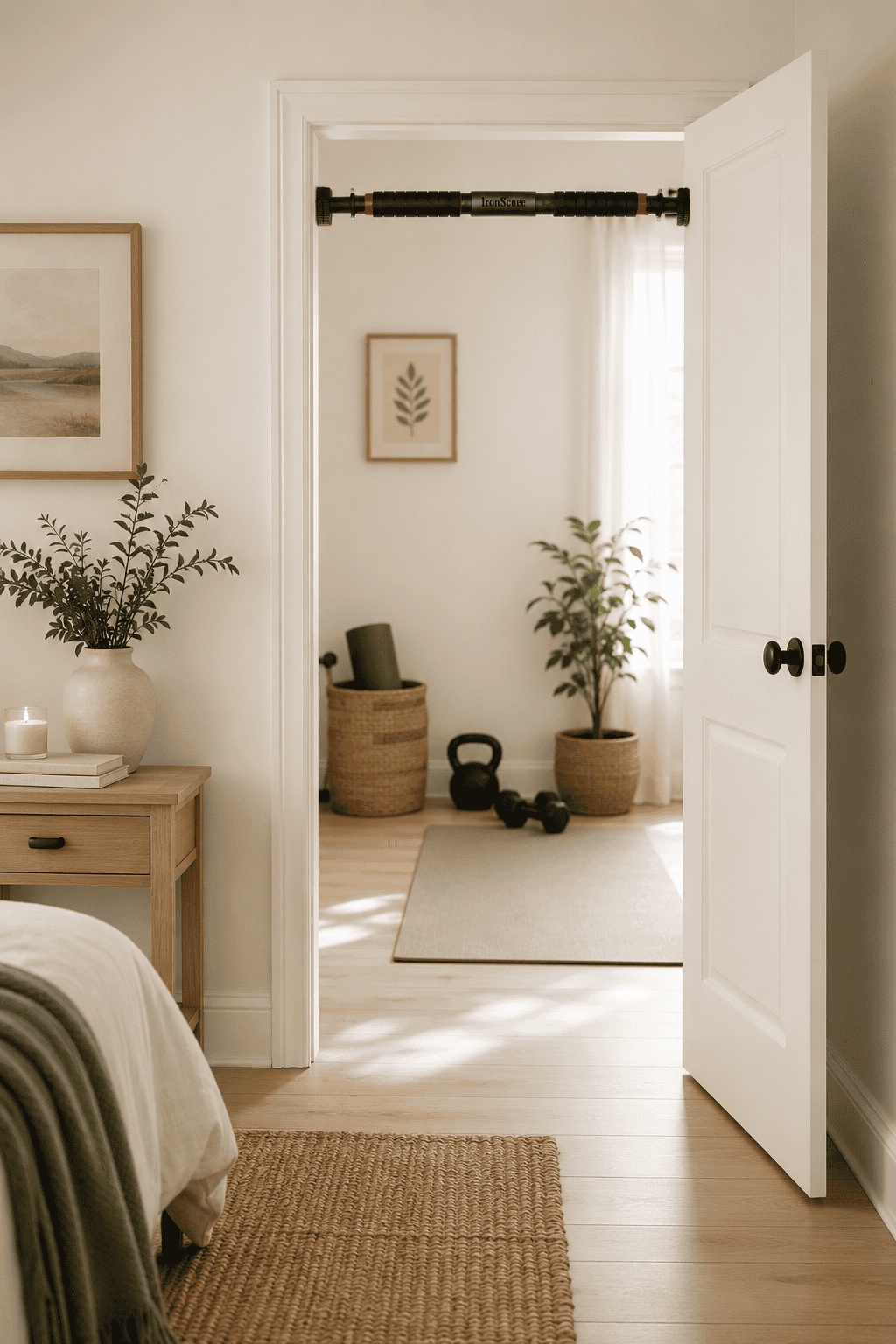
One habit worth building: lift it down when you’re done. It saves your trim from denting over time, and it keeps little hands from turning it into monkey bars while you’re in the other room.
If your whole setup has to survive a lease, our guide to the apartment home gym covers the rest of the no-drill kit.
If Your Door Frames Have No Molding
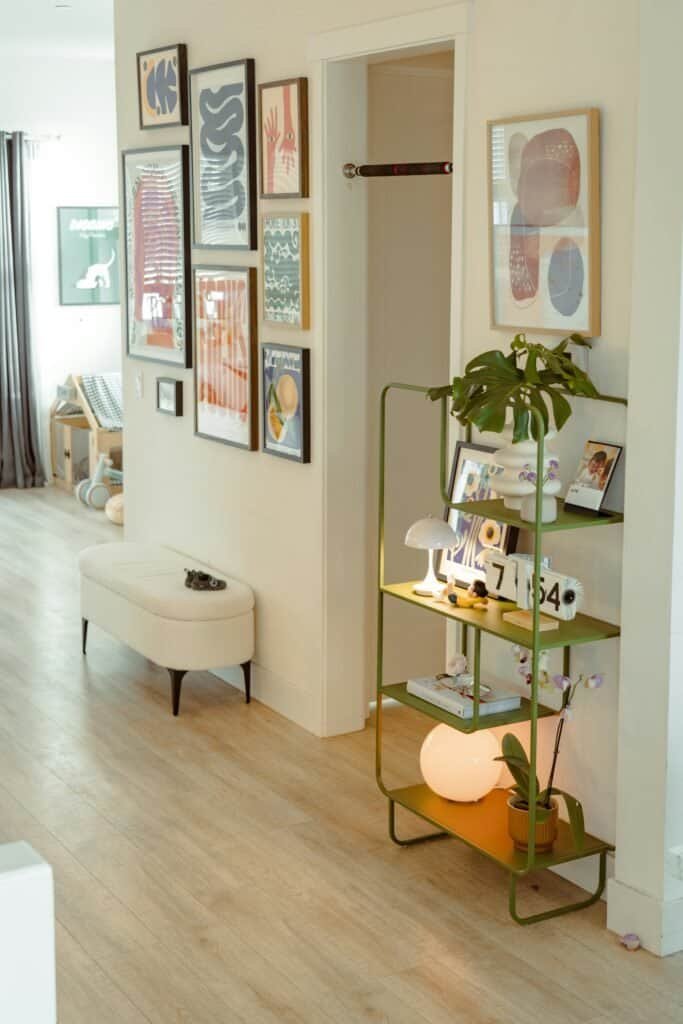
Flat, trimless frames are everywhere now. Modern builds, minimalist remodels, and plenty of apartments skip molding entirely, and without it a leverage bar has nothing to press against.
You have two honest options. The first is a telescoping tension bar, which twists outward and holds by friction inside the frame. It works, with caveats: lower weight ratings, no tolerance for slick paint, and zero forgiveness for a lazy install.
The second is to skip the doorway entirely and go free-standing (next section). Some women are fine trusting friction for slow, controlled reps. Some won’t hang from anything that isn’t bolted or braced. Both are valid. If your kids will be on this bar too, choose the braced option.
If You Don’t Have Typical Door Frames at All
Arched doorways, extra-wide openings, cased passages between rooms. Charming to live with, useless to hang from. This is the exact situation the free standing pull up bar was built for.
A free-standing tower needs zero installation and moves when you move. Most include dip handles and leg-raise pads, which makes it the closest thing to a full calisthenics station in one buy. Give it about a four-foot square of floor, and expect some wobble if you train explosively.
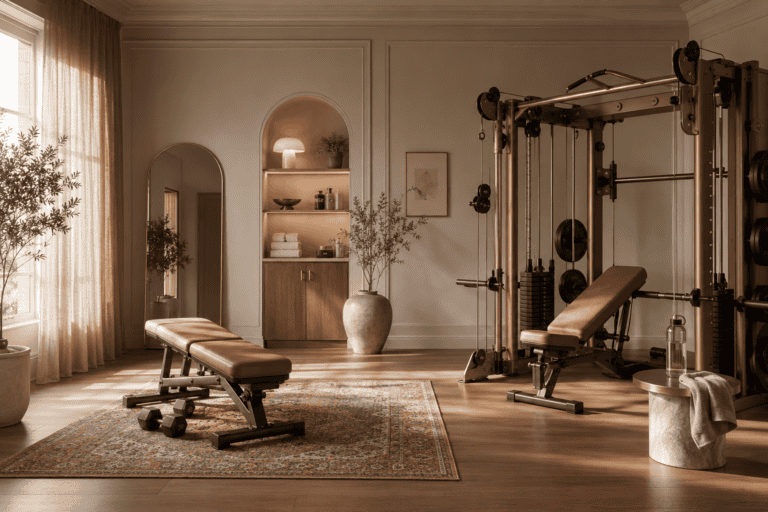
The tradeoff is visual. Most towers are black steel with commercial-gym energy, so place one where that reads as intentional. In a garage gym it looks right at home. In the corner of a soft, warm-toned bedroom setup, it will fight the room. Match the saturation of the space or hide it in plain sight behind a plant and a good rug.
If Your Studs Are Solid but Sit in the Wrong Places
Wall-mounted bars are the sturdiest budget option there is. The catch: their brackets assume studs sit at standard spacing, and older houses laugh at that assumption.
The fix is one trip to the lumber aisle. Bolt a backer board (a 2×6 works) horizontally across whatever studs you actually have, then mount the wall pull up bar to the board. The board spreads the load, ignores the odd spacing, and lets you center the bar where you want it instead of where the framing dictates.
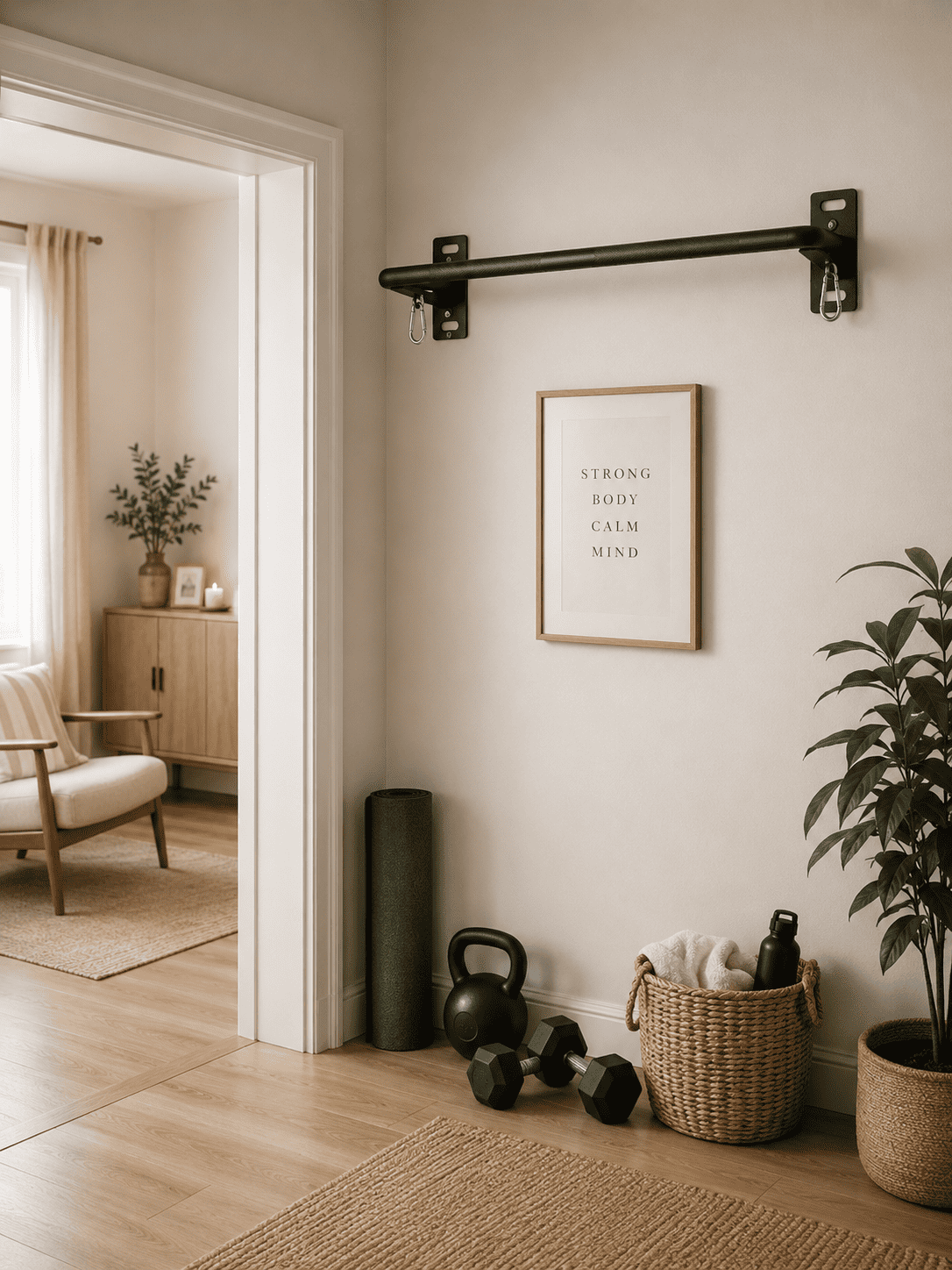
This one is permanent, so treat it like the design decision it is. Paint the board the wall color and it disappears. Stain it and it becomes a feature.
If You Have Exposed Joists, You Won the Pull Up Bar Lottery
Unfinished basements and garages come with the best mounting structure in the house already showing. A ceiling-mounted bar bolts straight into the joists, gives you the most clearance of any option, and opens up the full menu: toes-to-bar, hanging leg raises, full range of motion with no frame in your face.

The basement gym I’m building has exposed joists, and that’s exactly why the ceiling mount is high on my own shortlist. If your lower level is still a blank slate, start with our basement home gym ideas and design the bar in from the beginning instead of retrofitting it.
Mapping out the rest of the room while you’re at it? The free 5-Minute Home Gym Setup Checklist walks you through the space, corner by corner.

Free 5-Minute Home Gym Setup Checklist
You don’t need a full home gym. You just need a corner.
No spam. Unsubscribe anytime.
The Splurge: A Swedish Ladder Is the Anchor Piece
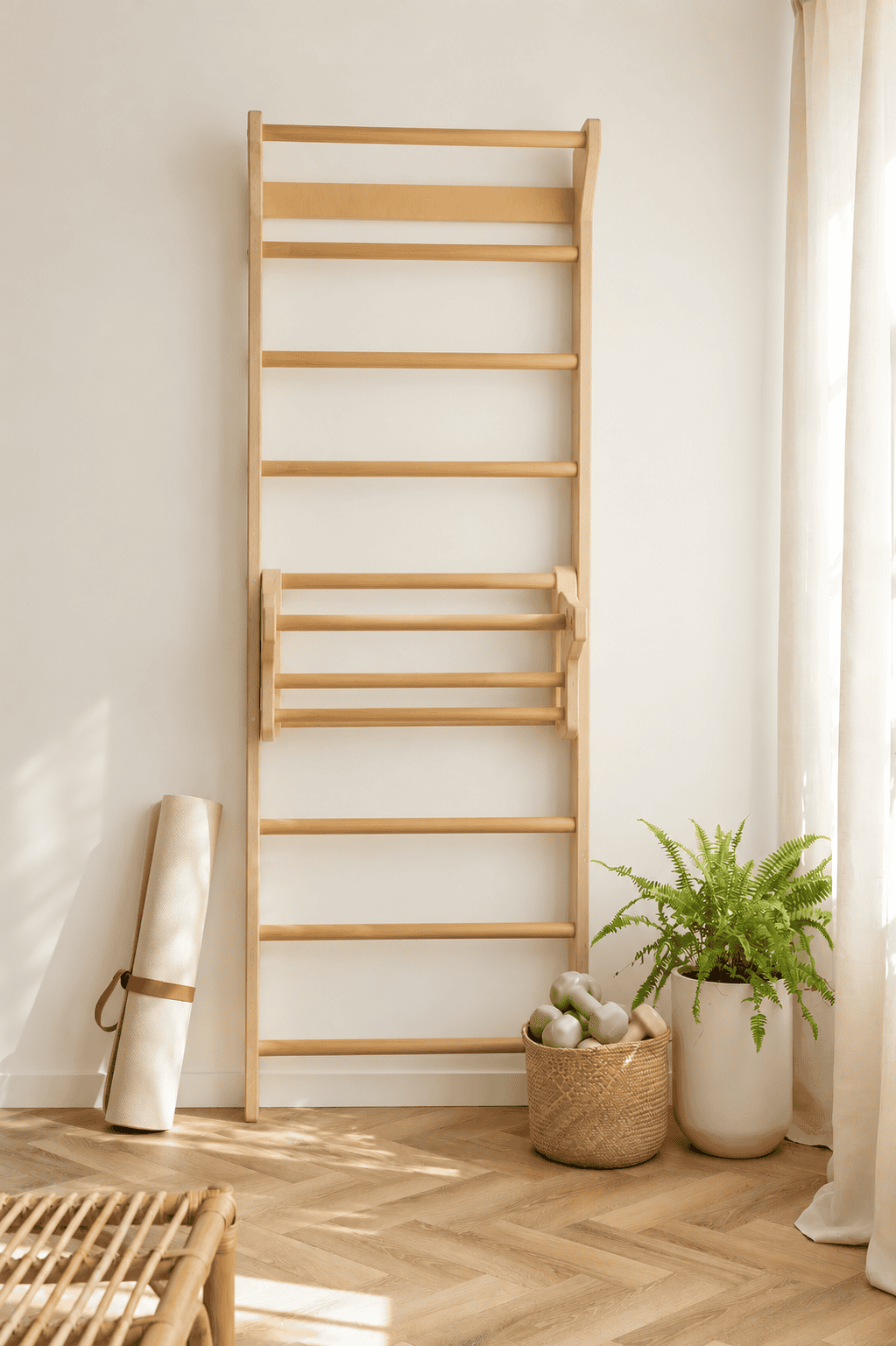
Now the one I’d actually save for. A Swedish ladder (also called stall bars or wall bars) is a floor-to-ceiling wooden ladder that bolts flat against the wall, with a pull-up attachment at the top.
Functionally it replaces a standard pull up bar and half a gym besides: hanging work, stretching, spine decompression, anchored core work. Aesthetically it’s in a different universe from everything else in this post. Solid cherry or beech, sculptural lines, the rare piece of fitness equipment that looks better in the room than out of it.
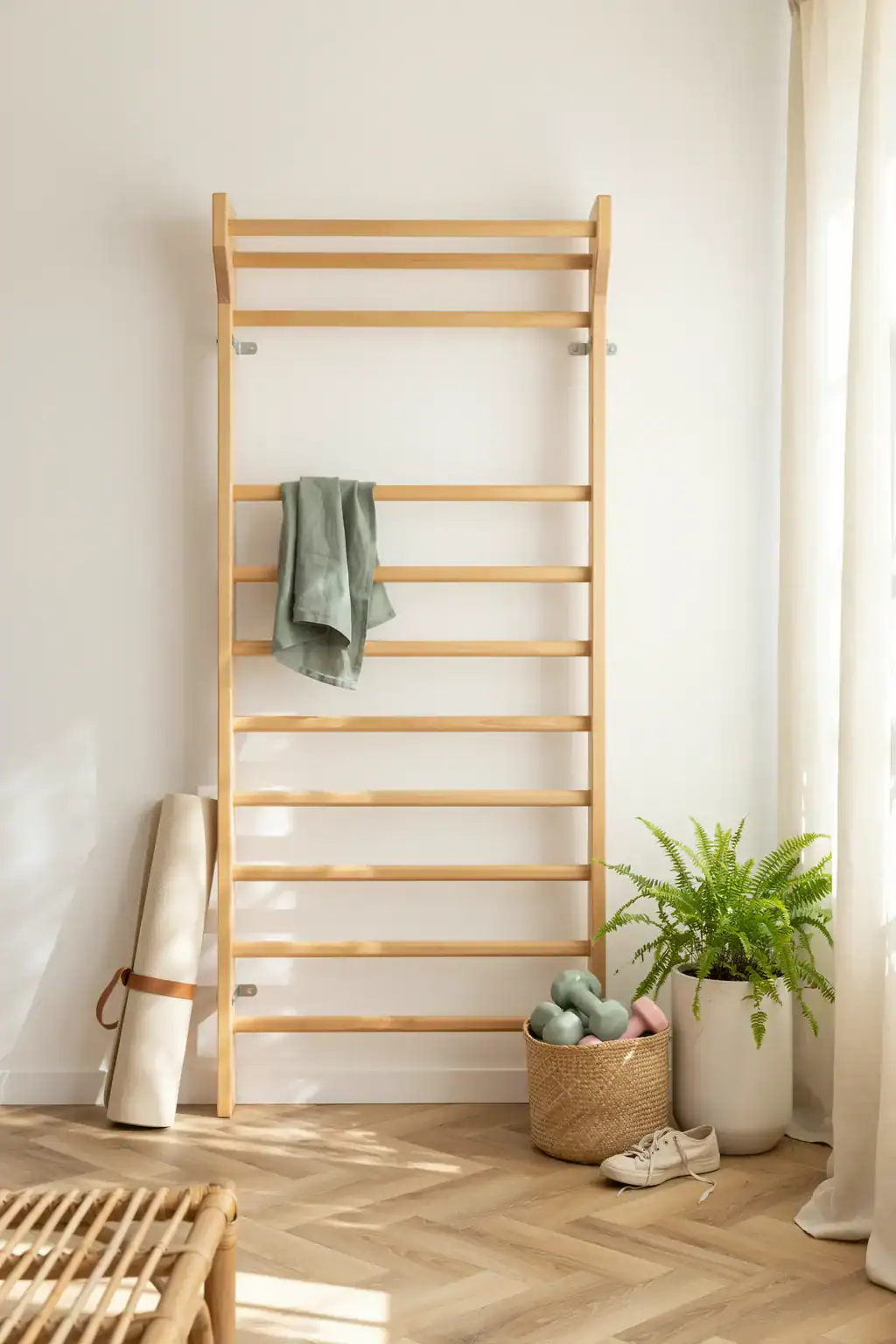
Quality matters more here than anywhere else on this list, because the whole family ends up on it. Kids climb it like it was made for them, because it basically was; stall bars started in Swedish gymnastics schools. Nala Moves builds theirs in Finnish birch with a detachable pull-up and dip extension. BenchK builds theirs in solid beech and steel with a ten-year warranty. Budget somewhere between $600 and $1,000 depending on the setup, and plan on never replacing it.
In a post full of workarounds, this is the option you choose on purpose. Splurge on the soul pieces and fill in around them: that rule was made for exactly this.
How We’re Turning One Bar Into a Family Practice
Back to my crew. Cheer is going to ask my girls for pulling strength and shoulder control. Jiu-jitsu is going to ask my son for grip. Calisthenics trains all of it on the same bar, which is why my husband and I picked it as the thing we do together instead of separately.
We’re following Calixper’s Skool program. They have everything from beginner to advanced. Because a program turns a bar in a doorway into an actual practice.
Experts recommend muscle-strengthening activity three days a week for kids, twice a week for adults. A pull-up bar mounted where everyone walks past it makes it ambient instead of scheduled. Somebody hangs, somebody copies them, and suddenly it’s just what your family does in that hallway.
Once the bar is up, the rest of the kit is shorter than you think. Our home gym equipment essentials list covers what’s actually worth buying first.
Somewhere in your house there’s a doorway, a wall, or a joist that’s been holding nothing since the day it was built. Give it a job.
My door-frame staring contest is over. By the time my girls learn their first stunt, the whole family will be logging pull-ups in the same room.
Building the rest of the space around your new bar? Grab the free 5-Minute Home Gym Setup Checklist and set up a corner that earns its keep.
Free 5-Minute Home Gym Setup Checklist
You don’t need a full home gym. You just need a corner.
No spam. Unsubscribe anytime.